Why Reading Accuracy Matters More Than Reading Speed in Grade 3–5 Learning
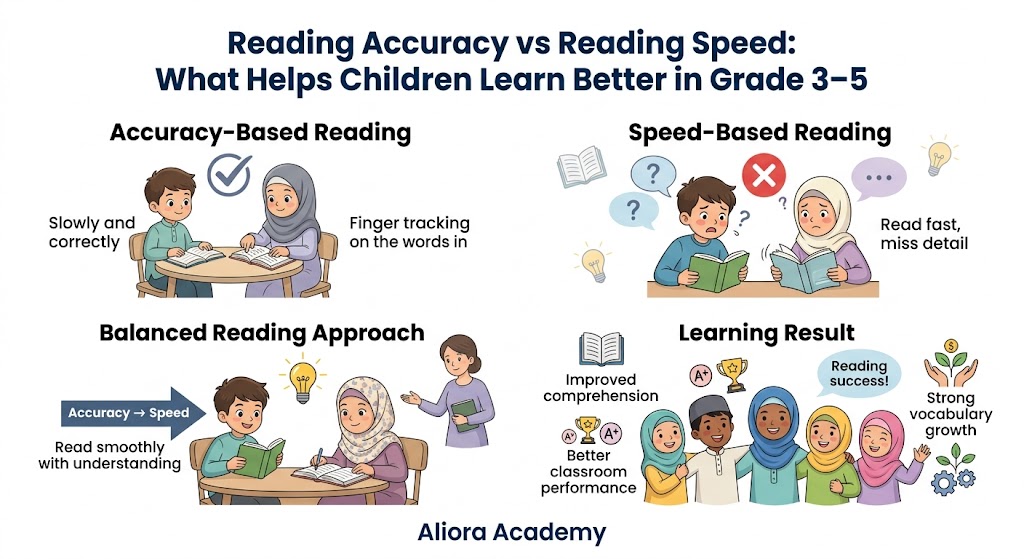
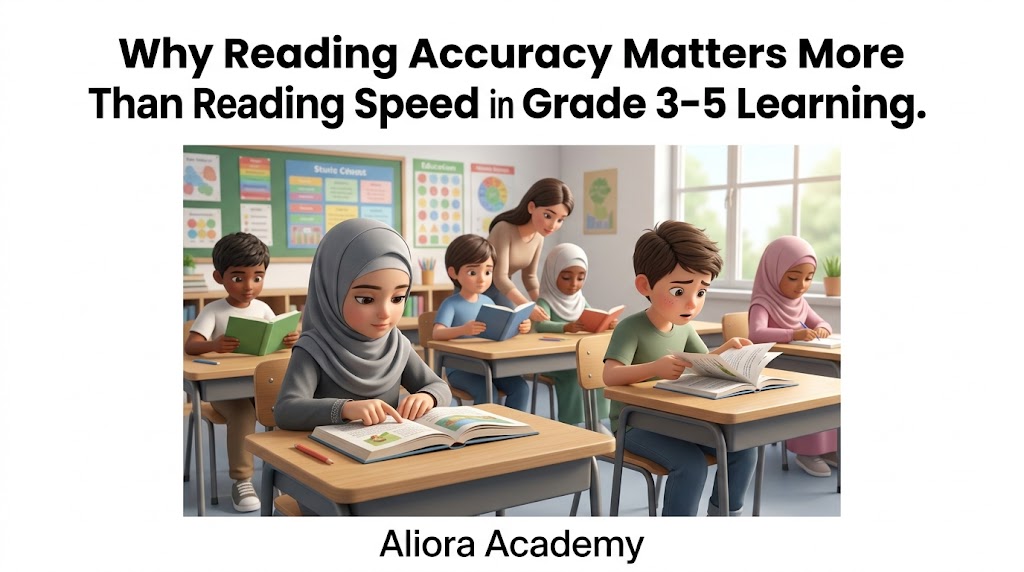
reading accuracy vs reading speed importance becomes very clear when students move from “learning to read” to “reading to learn” in Grade 3–5 classrooms. Many children can read quickly, but they make mistakes, skip words, or cannot explain what they just read. Teachers often notice this during classroom reading sessions where a child finishes first but cannot answer simple questions about the story. Parents also worry when homework takes too long or when their child reads aloud without understanding meaning.
In Grade 3, students struggle with word recognition and basic sentence flow. In Grade 4, they face difficulty understanding full paragraphs. By Grade 5, comprehension gaps become clearer in subjects like science and social studies. A common mistake is focusing only on speed instead of understanding each word correctly. The real improvement path is balancing accuracy, vocabulary, and comprehension through structured practice and guided reading support.
Why do students struggle with reading comprehension in Grade 3–5?
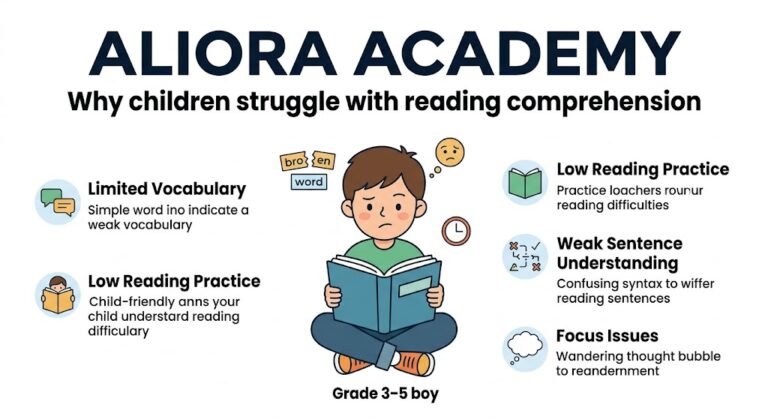
Students in Grade 3–5 struggle mainly because reading becomes more complex each year. In Grade 3, they are still decoding words, so accuracy is not strong yet. In Grade 4, sentences become longer and vocabulary becomes harder. In Grade 5, they must understand hidden meaning and make inferences, which requires thinking beyond the text.
Teachers often observe these common issues:
- Skipping difficult words instead of reading them
- Guessing meaning without understanding context
- Losing track of story flow in paragraphs
- Weak vocabulary foundation
For example, a Grade 3 student may read “The cat climbed the tree” correctly but struggle with “The cat climbed the tall mango tree quietly.” The added detail changes understanding.
Parents looking for structured support often explore an effective online English classes environment where guided reading improves both accuracy and comprehension together.
Another reason is lack of step-by-step reading practice. Students are often asked to read full pages without learning how to break sentences into meaning chunks. This creates confusion and weak understanding over time. Many families find that a structured English learning program helps fill these gaps with systematic instruction.
How can children improve reading skills at home?
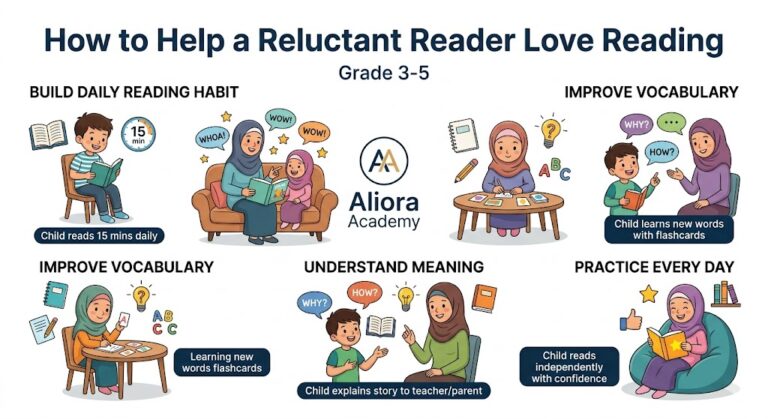
Home learning plays a strong role in building reading habits. Children improve faster when reading becomes a daily activity instead of a homework task. Many parents wonder how parents can improve child reading comprehension at home, and the answer lies in simple, consistent routines.
A simple home strategy includes:
- Reading short passages daily
- Asking simple “what happened” questions
- Highlighting new words
- Reading the same paragraph twice for clarity
A strong example is slow reading improvement techniques for kids Grade 3–5, where repetition and guided reading help students build confidence step by step. For more structured practice, you can explore how to improve reading fluency for elementary students.
Parents can also connect reading with real-life conversations. For example, after reading a story, ask the child to explain it in their own words. This improves memory and comprehension together.
Some families prefer structured support through an English learning program because it provides consistent reading practice, vocabulary growth, and teacher guidance in one place.
Consistency matters more than long study hours. Even 15–20 minutes daily reading improves fluency and understanding over time.
What is the importance of reading fluency in early education?
Reading fluency is not only about speed. It is about reading smoothly, correctly, and with meaning. In Grade 3, fluency means recognizing words quickly. In Grade 4, it means reading sentences without breaking meaning. In Grade 5, it means understanding tone, context, and deeper message. To fully understand these foundations, you can read what reading fluency is and why it matters.
Teachers define fluency using three parts:
- Accuracy: Reading words correctly
- Pace: Reading at a natural speed
- Expression: Understanding meaning while reading
A Grade 4 student working on Grade 4 reading understanding practice exercises may read a paragraph slowly at first. With practice, the same student learns to read with better flow and fewer mistakes. Support like English classes for Grade 4 provides the guided environment needed for this growth.
Fluency also improves classroom performance. Students who read fluently:
- Understand science and social studies faster
- Write better answers
- Learn new vocabulary quickly
For Grade 3 learners, structured support like English classes for Grade 3 helps build a strong foundation in phonics and word recognition before moving to complex texts.
How does a reading tool improve learning outcomes?
A structured reading tool helps students practice reading in a guided and measurable way. It is designed to improve accuracy, vocabulary, and comprehension step by step.
Key functions of a reading tool:
- Breaks text into small understandable parts
- Teaches correct pronunciation and word recognition
- Builds vocabulary through context learning
- Tracks reading progress over time
It solves a common classroom problem: students reading without understanding. Many children can read words but fail to connect meaning.
This tool is best for:
- Grade 3 students struggling with basic reading
- Grade 4 learners improving paragraph understanding
- Grade 5 students developing critical reading skills
For example, a Grade 5 student using structured support through English classes for Grade 5 learns how to analyze stories, identify main ideas, and answer inference-based questions. If your child struggles specifically with inferential understanding, our guide on teaching inference skills to children can be a valuable resource.
Over time, students become independent readers who do not depend on guessing.
What mistakes do students make in reading practice?
Many reading problems come from habits, not ability. Teachers often see similar mistakes across Grade 3–5 students.
Common mistakes include:
- Reading too fast without understanding
- Ignoring punctuation
- Not checking meaning of new words
- Avoiding difficult sentences
A child reads fast but does not understand text situation is very common in classrooms. The student may finish a page quickly but cannot explain the story properly. When this happens, it's often a sign that the child needs help with reading comprehension strategies.
To fix this, teachers use step-by-step correction:
- Slow reading first
- Understanding each sentence
- Then improving speed gradually
Parents also play a role by asking children to summarize what they read instead of just finishing pages. Structured programs like English classes for Grade 4 help students correct these habits through guided reading practice and teacher feedback. If your child has developed a dislike for reading due to these struggles, helping a reluctant reader fall in love with books can provide additional gentle strategies.
Real-Life Learning Examples
Example 1: Slow Reader in Grade 3
A student reads very slowly and struggles with new words. Solution: Guided phonics practice and repeated reading exercises. Outcome: Improved word recognition and smoother reading flow.
Example 2: Poor Comprehension in Grade 4
A student reads stories but cannot explain meaning. Solution: Paragraph breakdown and questioning technique. Outcome: Better understanding of story structure and main ideas.
Example 3: Weak Vocabulary in Grade 5
A student understands basic text but struggles with academic words. Solution: Context-based vocabulary building exercises. Outcome: Improved performance in school subjects like science and social studies. For more vocabulary strategies, explore vocabulary building techniques for elementary school children.
FAQ
How can my child improve reading at home?
Daily short reading sessions, asking questions after reading, and repeating passages help build strong comprehension skills.
What is the best way to build reading habits daily?
Set a fixed 15–20 minute reading time, choose age-appropriate books, and discuss the story together after reading.
How do reading tools improve comprehension skills?
They guide students step by step, improve vocabulary, and ensure children understand meaning instead of only reading words.
Conclusion
Strong reading development in Grade 3–5 depends on accuracy, not just speed. When students focus on correct reading, they naturally improve comprehension, vocabulary, and academic performance. Daily practice, guided reading, and structured learning support help children become confident readers. With consistent effort and the right learning environment, reading becomes clear, meaningful, and enjoyable for long-term academic success.
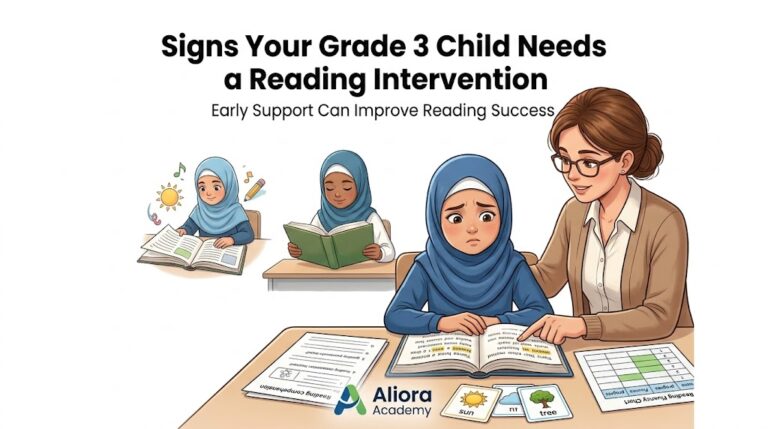
If you're uncertain whether your child might need extra help, review the signs your Grade 3 child needs a reading intervention to catch difficulties early. For more resources, visit the Aliora Academy blog or browse our reading category for additional tips and strategies.