Parent Guide to Building Strong Reading Habits at Home
Parent Guide to Building Strong Reading Habits at Home
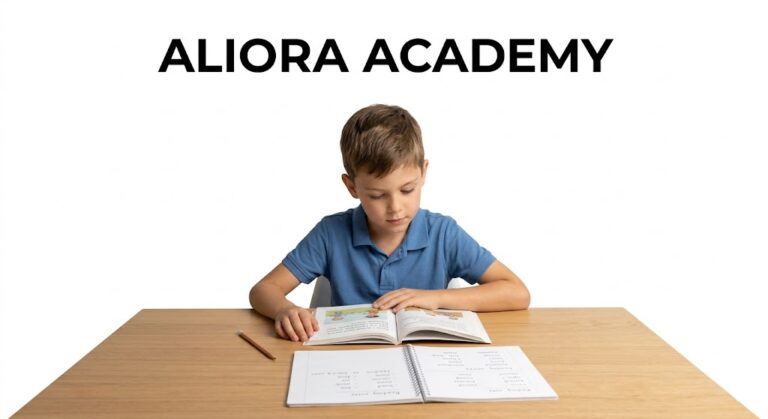
Building Strong Reading Habits at Home starts when a child sits with a short passage but cannot understand what they just read. A Grade 3 student may read words slowly but forget the meaning. A Grade 4 learner may read a paragraph but struggle to answer questions. A Grade 5 student may read fluently but fail to interpret deeper ideas in exams.
These situations are common in many homes and classrooms. The real issue is not just reading words but understanding meaning, building vocabulary, and developing confidence in English reading skills. Reading comprehension matters because it supports every subject, including science, social studies, and writing.
The good news is that improvement is always possible with the right daily habits, structured support, and guided practice. When parents create a consistent reading environment, children slowly develop strong comprehension, better vocabulary, and improved academic performance.
Why do children struggle with reading comprehension?
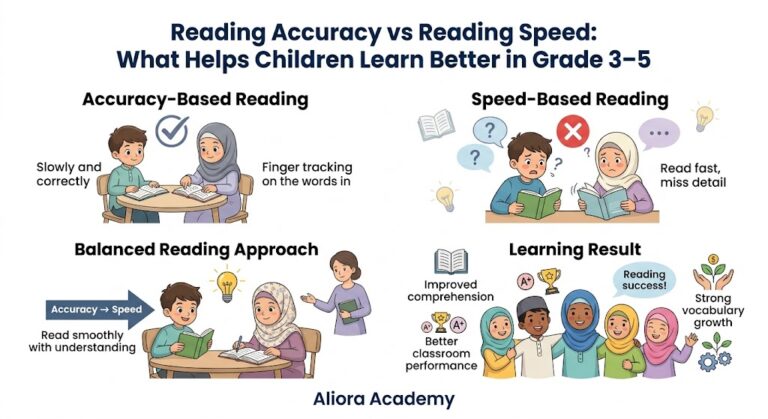
Children often struggle with reading comprehension because they focus only on reading words instead of understanding meaning. Many students can pronounce sentences correctly but cannot explain what the text is about. This gap affects academic reading and confidence in school tasks.
Common reasons include:
- Limited vocabulary development
- Weak sentence understanding
- Lack of daily reading practice
- Poor focus and attention skills
- No structured reading routine at home
For example, in Grade 3 reading, a child may read simple stories but not understand keywords. In Grade 4 reading, students start facing paragraph-level difficulty. By Grade 5, they are expected to analyze and infer meaning, which becomes challenging without consistent practice.
A simple solution is guided reading practice:
- Read short passages daily
- Ask “what happened?” after reading
- Teach 3–5 new words each day
- Encourage re-reading for clarity
Parents who follow these steps notice gradual improvement in comprehension skills and confidence.
How can students improve reading skills at home?
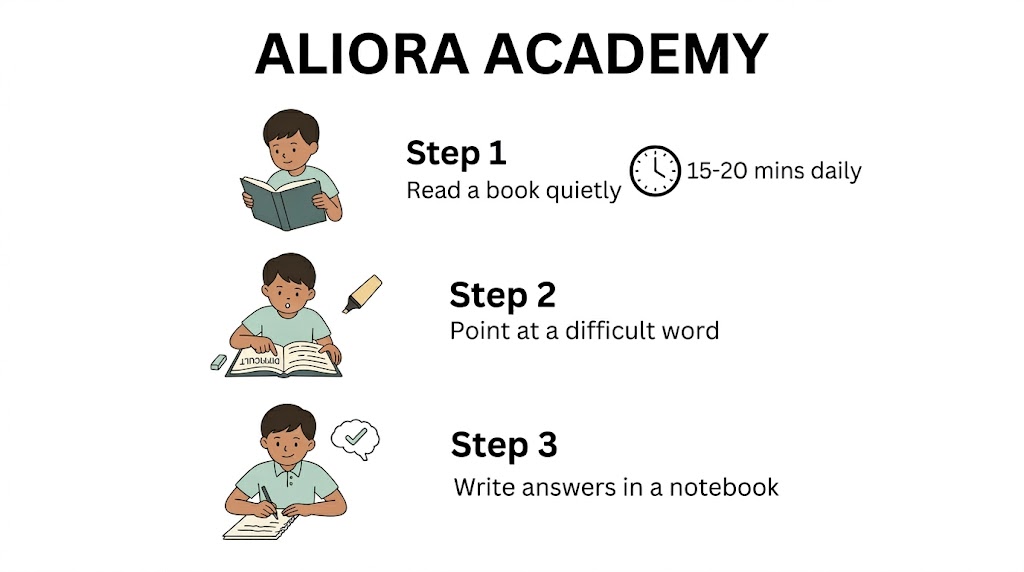
Students improve reading skills at home when reading becomes a daily habit rather than a task. A consistent routine helps the brain process language better and improves fluency over time.
A practical home strategy includes:
- Set a fixed reading time daily (15–20 minutes)
- Use age-appropriate books or passages
- Ask simple comprehension questions
- Encourage reading aloud for fluency
- Discuss the meaning of new words
For example, a structured home reading routine for elementary students helps them connect reading with real-life thinking. When a child reads regularly, their vocabulary development naturally improves, and they begin to understand sentence structure more clearly.
Parents can also support learning through structured programs like online reading classes that guide students step by step.
Consistency is more important than duration. Even short daily reading practice builds long-term literacy development.
What role does vocabulary play in reading success?
Vocabulary is the foundation of reading comprehension. Without understanding words, students cannot understand sentences, even if they can read them fluently.
When vocabulary is weak:
- Students guess meanings incorrectly
- Sentences lose clarity
- Comprehension becomes slow and confusing
When vocabulary improves:
- Reading becomes faster and smoother
- Understanding becomes deeper
- Academic reading performance improves
A strong reading improvement program focuses heavily on vocabulary development through repetition, context learning, and usage in sentences.
For example:
- Grade 3 students learn basic words like “happy,” “jump,” “home”
- Grade 4 students learn contextual words in paragraphs
- Grade 5 students understand academic and abstract vocabulary
This step-by-step vocabulary growth strengthens comprehension skills and improves writing ability as well.
How does reading improve writing skills?
Reading and writing are deeply connected. When children read regularly, they naturally absorb sentence structure, grammar in context, and expression styles.
Improvement happens in three stages:
- Exposure to correct grammar and sentence patterns
- Understanding how ideas are organized in paragraphs
- Learning how writers express thoughts clearly
A child who reads daily develops:
- Better sentence formation
- Improved spelling and grammar usage
- Stronger academic writing ability
For instance, Grade 4 students who practice structured reading classes for Grade 4 often show faster improvement in writing assignments because they already understand how ideas are connected in texts.
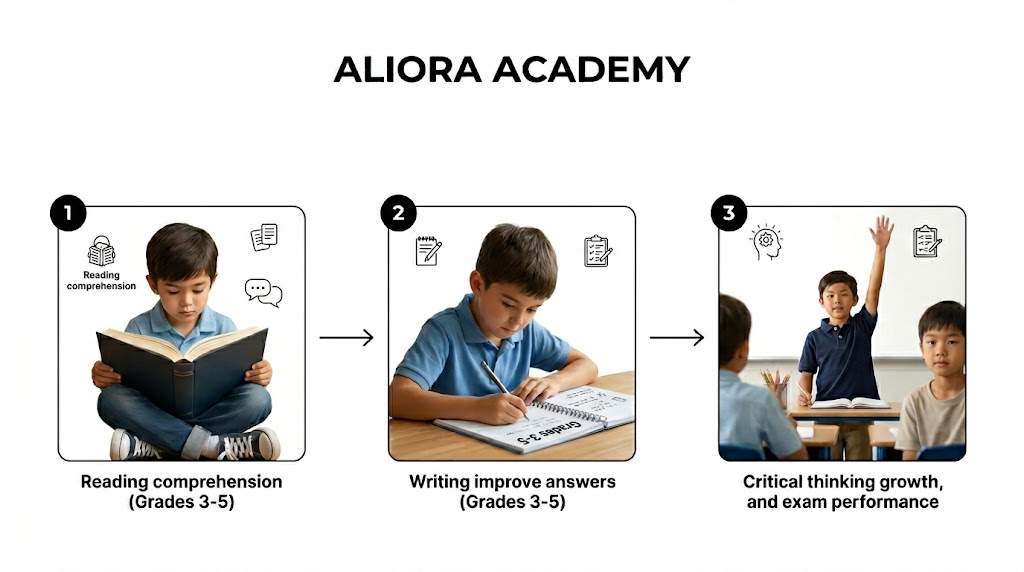
Reading also builds critical thinking, which helps students write more meaningful answers in exams.
Why is daily reading practice important for students?
Daily reading practice is important because language learning is a gradual process. Just like physical exercise strengthens muscles, reading strengthens comprehension and cognitive skills.
Without daily practice:
- Reading speed remains slow
- Vocabulary growth becomes limited
- Comprehension skills stay weak
With daily practice:
- Fluency improves naturally
- Understanding becomes automatic
- Academic performance strengthens
Parents can support this by:
- Keeping reading materials accessible
- Encouraging storytelling after reading
- Following structured reading classes for Grade 3, Grade 4, and Grade 5 based on grade level
Even 15 minutes of focused reading daily builds long-term literacy development and confidence in academic English.
Real-Life Examples
Example 1: Grade 3 Student Struggling with Reading Words
A young student could read letters but struggled with full words and short sentences.
Problem: Weak phonics and slow reading
Solution: Daily 10-minute reading aloud sessions with simple stories
Outcome: Improved word recognition and basic comprehension within weeks
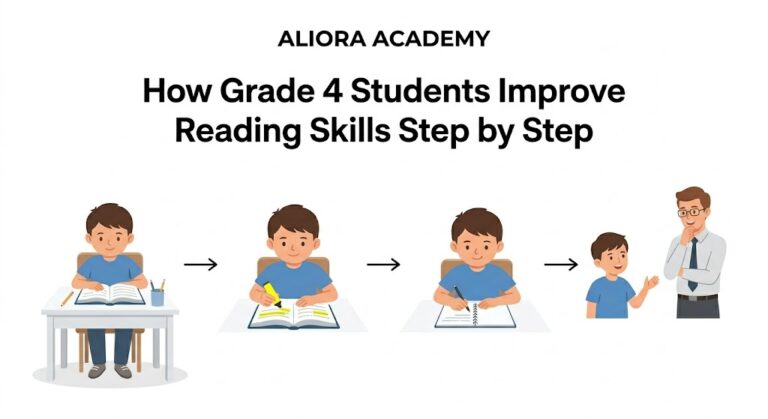
Example 2: Grade 4 Student Improving Comprehension Skills
A student could read paragraphs but failed to answer questions correctly.
Problem: Poor understanding of context
Solution: Guided practice through structured passages and questioning
Outcome: Better paragraph comprehension and improved test performance
Example 3: Grade 5 Student Preparing for Exams
A student read fluently but struggled with inference questions in exams.
Problem: Weak critical thinking in reading
Solution: Practice with higher-level comprehension exercises and discussion
Outcome: Improved analytical reading and higher exam confidence
How can parents support reading at home?
Parents play a key role in shaping reading habits. Children learn faster when guided with patience and consistency.
Effective strategies include:
- Creating a quiet reading environment
- Encouraging daily reading practice
- Asking simple comprehension questions
- Praising effort, not just results
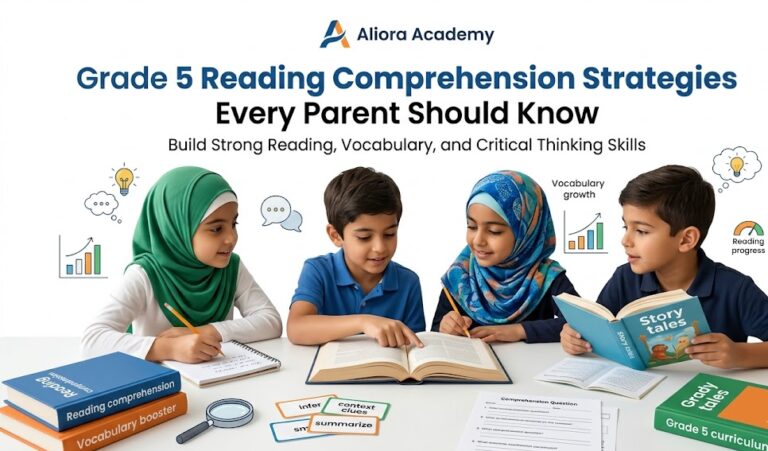
- Using structured reading classes for Grade 5 when needed
The goal is not pressure but steady improvement. When parents stay involved, children feel supported and more confident in their learning journey.
FAQs
How can my child improve reading comprehension skills?
Daily reading practice, vocabulary learning, and guided questioning help children understand texts better. Short, consistent sessions work more effectively than long irregular study.
What is the best age to improve reading ability?
Early elementary years (Grades 3–5) are the most important stages. At this age, children quickly build reading habits and comprehension skills that last long-term.
Do online reading classes really help students?
Yes, structured programs like reading classes for Grade 3 provide guided learning, step-by-step improvement, and consistent practice that supports home learning.
Conclusion
Strong reading habits shape a child’s entire academic journey. When children develop vocabulary, comprehension skills, and daily reading practice, they perform better in all subjects, including writing and academic English.
Parents who focus on Building Strong Reading Habits at Home create a strong foundation for lifelong learning. With consistency, guidance, and structured support, every child can improve their reading confidence and academic success.