How Online Reading Tutoring Helps Struggling Readers Catch Up
Many families turn to online reading tutoring when a child begins falling behind in reading during Grades 3–5. A student who once enjoyed books may suddenly avoid reading assignments, struggle to understand stories, or lose confidence in the classroom.
Parents often notice warning signs first. Homework takes longer, reading aloud becomes frustrating, and test scores begin to drop. Teachers may observe hesitation when students read independently, difficulty answering comprehension questions, or limited participation during reading activities.
Reading is one of the most important academic skills because it affects success across every subject. Students must read instructions, understand word problems, analyze information, and communicate their ideas clearly.
Common mistakes include skipping unfamiliar words, reading too quickly without understanding the meaning, and avoiding independent reading practice. These habits can create learning gaps that become harder to close over time.
The good news is that reading challenges can improve with the right support. Structured instruction, targeted practice, and consistent feedback help students build confidence and strengthen essential literacy skills.
Why Do Students Struggle With Reading Comprehension in Grade 3–5?
Reading difficulties often become more noticeable in upper elementary grades because texts become longer and more complex. Students move from learning to read toward reading to learn.
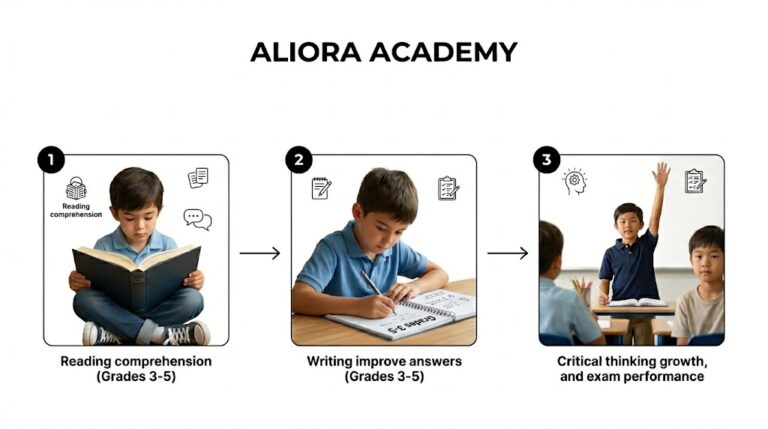
In Grade 3, children focus heavily on word recognition, sentence understanding, and developing basic reading fluency. Students who have not mastered these foundations may struggle to keep pace with classroom expectations. Parents exploring additional support often consider English classes for Grade 3 to strengthen core literacy skills.
Grade 4 introduces more detailed passages, chapter books, and informational texts. Students must understand main ideas, supporting details, and character development. Vocabulary becomes increasingly important. Families seeking academic support frequently look at English classes for Grade 4 to reinforce these growing literacy demands.
By Grade 5, students are expected to analyze information, make inferences, and explain evidence from texts. Academic reading requires stronger critical thinking skills. Many parents choose English classes for Grade 5 when students need help managing more advanced reading tasks.
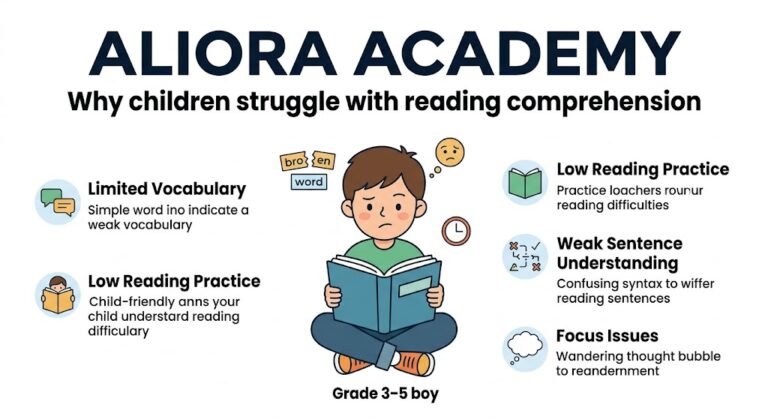
Several factors contribute to reading challenges:
- Limited reading practice
- Weak vocabulary knowledge
- Difficulty maintaining focus
- Lack of reading confidence
- Gaps in foundational skills
- Insufficient comprehension strategies
Students often understand individual words but struggle to connect ideas across an entire passage. This affects overall comprehension skills and academic performance.
How Does Structured Reading Support Help Students Catch Up?
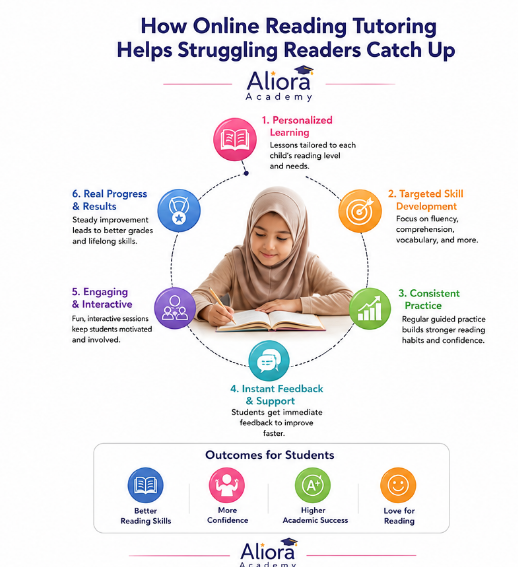
Effective reading instruction identifies specific skill gaps instead of using a one-size-fits-all approach. Many students need targeted support in particular areas of literacy development.
Teachers begin by assessing strengths and weaknesses. Some students need help with fluency, while others require support with comprehension or vocabulary. Structured instruction within an English learning program helps address these individual needs.
A systematic approach typically includes:
- Skill assessment
- Goal setting
- Guided reading practice
- Progress monitoring
- Targeted feedback
- Independent application
Students benefit when instruction follows a clear sequence. Lessons build upon previous learning rather than introducing disconnected activities.
Consistent practice helps students develop stronger reading habits. Over time, they become more comfortable with challenging texts and demonstrate greater independence.
Structured learning also helps students apply reading strategies across subjects, including science, social studies, and writing.
What Reading Skills Should Grade 3–5 Students Develop?
Elementary readers need a balanced set of literacy skills to succeed academically. Each skill supports overall reading development.
The first area is reading fluency. Fluent readers recognize words quickly, read smoothly, and focus their attention on understanding meaning. Many families supplement classroom instruction with online English classes that provide additional guided reading opportunities.
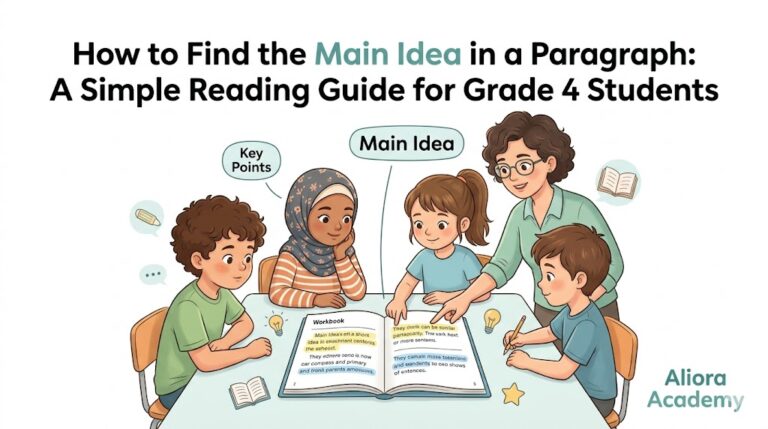
The second area is comprehension skills. Students must identify main ideas, summarize information, make predictions, and answer questions based on evidence from the text.
The third area is vocabulary development. Strong vocabulary helps readers understand increasingly complex academic texts. Students learn new words through reading, discussion, and context clues.
Additional literacy skills include:
- Sentence structure awareness
- Grammar in context
- Critical thinking
- Writing connections
- Communication skills
- Study habits
These skills work together. A student with strong vocabulary and fluency is more likely to understand what they read and express ideas clearly in writing.
As students advance through elementary grades, literacy instruction should gradually increase in complexity while maintaining foundational skill development.
How Can Parents Support Reading Growth at Home?
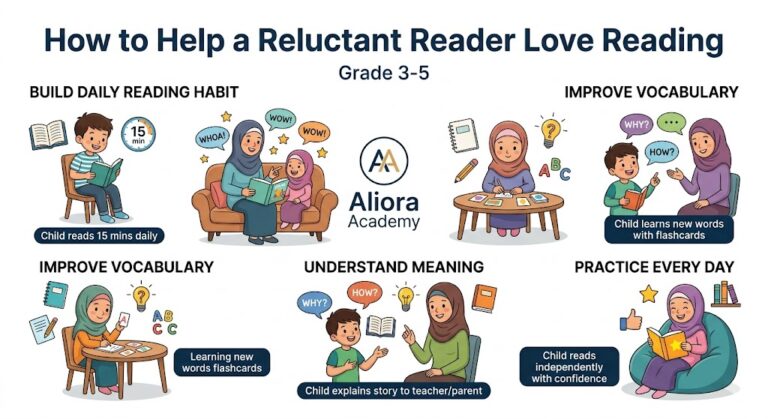
Home support plays an important role in reading improvement. Small daily habits often produce meaningful long-term results.
Parents can create a consistent reading routine by setting aside dedicated reading time each day. Students enrolled in online English classes often make faster progress when learning continues beyond formal instruction.
Reading together remains valuable even for older elementary students. Shared reading allows parents to model expression, discuss vocabulary, and ask comprehension questions.
Helpful home strategies include:
- Reading for 20 minutes daily
- Discussing books after reading
- Keeping reading materials accessible
- Encouraging curiosity about new words
- Praising effort and progress
- Limiting distractions during reading time
Parents should focus on progress rather than perfection. Confidence grows when children experience success with appropriately challenging texts.
It is also important to choose reading materials that match a student's interests. Motivation increases when children enjoy what they read.
What Real-Life Examples Show Reading Improvement Success?
Example 1: Slow Reading Student
A Grade 3 student read very slowly and frequently stopped to sound out common words. Through guided practice and repeated reading activities, the student improved reading speed and accuracy. Additional support from an English learning program reinforced classroom instruction.
Outcome: Improved fluency, greater confidence, and stronger classroom participation.
Example 2: Poor Comprehension Learner
A Grade 4 student could read passages accurately but struggled to explain what happened in the story. Instruction focused on summarizing, questioning, and identifying main ideas. The student also practiced strategies discussed in online English classes resources.
Outcome: Better understanding of texts and improved performance on comprehension assignments.
Example 3: Vocabulary Weak Student
A Grade 5 student frequently encountered unfamiliar academic words. Teachers introduced vocabulary-building activities, context clues, and discussion-based reading exercises. Families also explored literacy support through online English classes resources.
Outcome: Expanded vocabulary, improved text understanding, and stronger written responses.
These examples demonstrate how targeted instruction helps students overcome specific reading challenges.
Why Do Structured Reading Tools Work Better Than Random Practice?
Many students spend time reading but do not make significant progress because practice lacks direction. Random reading activities often fail to address underlying skill gaps.
Structured tools focus on measurable learning objectives. Students receive instruction that targets their specific needs rather than completing unrelated activities. Parents looking for ways to help my child become a better reader often discover that organized learning plans produce more consistent results.
Effective reading tools typically provide:
- Guided practice
- Skill-specific exercises
- Progress tracking
- Immediate feedback
- Age-appropriate content
- Clear learning goals
Students benefit when they understand what they are learning and why it matters. Purposeful instruction encourages deeper engagement and stronger retention.
Many educators use structured approaches because they support both short-term improvement and long-term literacy development.
For children identified as struggling readers in elementary school, targeted support can prevent learning gaps from expanding over time.
How Do Reading Skills Support Long-Term Academic Success?
Reading influences nearly every area of learning. Strong readers access information more effectively and participate more confidently in classroom discussions.
Students who receive personalized reading support for elementary students often demonstrate growth beyond reading itself. Literacy development contributes to writing quality, communication skills, and academic independence.
Reading also strengthens:
- Critical thinking
- Problem-solving
- Information analysis
- Academic English
- Written expression
- Learning confidence
As students move toward middle school, reading demands continue to increase. Those who build strong foundations during elementary years are better prepared for future academic challenges.
Families seeking ways to improve reading skills for Grade 5 students should focus on consistent practice, meaningful feedback, and structured literacy instruction.
Frequently Asked Questions
How can my child improve reading at home?
Create a daily reading routine, discuss books together, encourage vocabulary growth, and provide access to age-appropriate reading materials. Consistency is more important than long study sessions.
What is the best way to build reading habits daily?
Schedule a specific reading time each day, reduce distractions, allow students to choose interesting books, and celebrate progress regularly.
How do reading tools improve comprehension skills?
Reading tools provide guided practice, targeted instruction, structured exercises, and feedback that help students understand texts more effectively.
Conclusion
Reading success develops through consistent practice, strong instruction, and targeted support. Students in Grades 3–5 often face challenges with fluency, comprehension, vocabulary, and critical thinking, but these skills can improve with the right approach.
Parents and teachers play an important role by identifying learning needs early and providing meaningful support. Structured reading tools help students focus on specific skill gaps while building confidence and independence.
When students receive regular practice, clear guidance, and opportunities to apply literacy skills across subjects, they become stronger readers and more successful learners.