How to Help a Reluctant Reader Fall in Love With Books: Simple Steps for Grades 3–5 Parents
Many parents notice that their child avoids books, even simple storybooks. In Grade 3–5 classrooms, this is a common situation where students hesitate to read aloud, struggle with understanding sentences, or lose focus quickly. Teachers often see students skipping words, guessing meanings, or waiting for help instead of reading independently.
Parents get worried when grades drop in language subjects because reading is the base of all learning. Without strong reading skills, students struggle in English, science word problems, and even social studies comprehension.
In classrooms, teachers notice three common problems: slow reading speed, weak vocabulary understanding, and poor sentence connection. Students often know individual words but fail to understand the full meaning of a paragraph.
Improving reading is not about forcing more books. It is about building comfort, confidence, and interest step by step through guided practice, daily habits, and structured support systems.
Why do students struggle with reading comprehension in Grade 3–5?
Students in Grade 3–5 face reading challenges for several reasons connected to their cognitive and language development stage.
In Grade 3, children are still building basic reading fluency. They focus on word recognition and simple sentence understanding. If they struggle here, reading becomes slow and tiring. You can learn more about what reading fluency is and why it matters in our detailed guide on reading fluency fundamentals.
In Grade 4, texts become longer. Students need paragraph comprehension and stronger vocabulary. Many children start losing interest because they cannot connect ideas in a story. At this stage, targeted support through English classes for Grade 4 can help bridge comprehension gaps.
In Grade 5, reading shifts toward critical reading and inference skills. Students must understand hidden meanings, character thoughts, and academic content. Without strong basics, this becomes difficult. For strategies to build these higher-level skills, see our article on Grade 5 reading comprehension strategies.
Common reasons for struggle include:
- Weak vocabulary foundation
- Lack of daily reading practice
- Limited exposure to story-based learning
- No structured reading support
- Overdependence on memorization instead of understanding
Parents can explore structured learning support like an English learning program to strengthen consistent reading habits.
How can children improve reading skills at home?
Improving reading at home requires routine, patience, and the right strategy. Parents play a key role in shaping reading behavior.
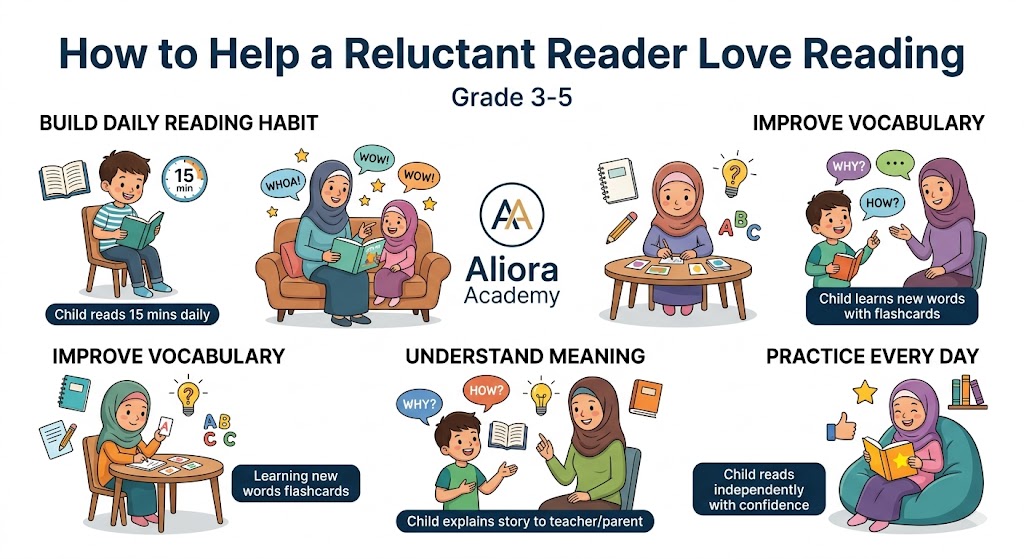
A simple daily method includes:
- Reading together for 15–20 minutes
- Asking simple “what happened?” questions
- Encouraging child to read aloud slowly
- Explaining difficult words in context
- Connecting stories with real-life examples
For Grade 3 learners, focus on simple sentences and pronunciation. For Grade 4, focus on story meaning and vocabulary expansion. For Grade 5, focus on deeper thinking and summarizing ideas. To further support vocabulary growth, you can use vocabulary building techniques for elementary school children at home.
Parents can also enroll children in structured support like online English classes where guided practice improves consistency. Reading improves faster when children see it as a shared activity, not homework pressure.
What is the importance of reading fluency in early education?
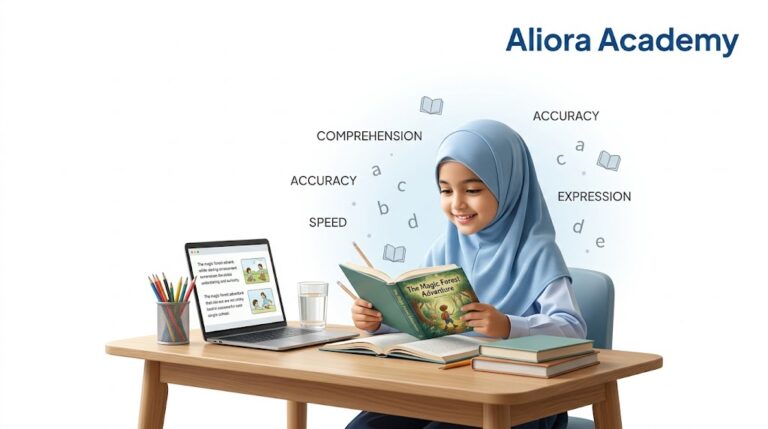
Reading fluency is the ability to read smoothly, correctly, and with understanding. It is the bridge between decoding words and understanding meaning.
In Grade 3, fluency helps children read without stopping at every word. In Grade 4, it supports story understanding. In Grade 5, it improves academic comprehension across subjects.
Key benefits of fluency:
- Better reading speed
- Improved comprehension
- Stronger confidence in class participation
- Easier vocabulary learning
- Better academic performance overall
A student who reads fluently spends less energy decoding words and more energy understanding ideas. Programs like English classes for Grade 3 help build this foundation early. For additional tips, check out how to improve reading fluency for elementary students.
How does a reading tool improve learning outcomes?
A structured reading tool helps students move from confusion to clarity by guiding them step by step.
It works by:
- Breaking passages into small parts
- Teaching vocabulary in context
- Improving sentence understanding
- Providing guided reading practice
- Tracking student progress over time
This is especially helpful for students who feel lost during independent reading. For example, Grade 3 students improve word recognition, Grade 4 students improve paragraph understanding, and Grade 5 students develop inference skills.
Parents often notice improvement when structured practice replaces random reading. Such tools are commonly used in English classes for Grade 4 where guided instruction supports steady progress. If your child has been struggling for a while, you might also consider how online reading tutoring helps struggling readers catch up with personalized attention.
What mistakes do students make in reading practice?
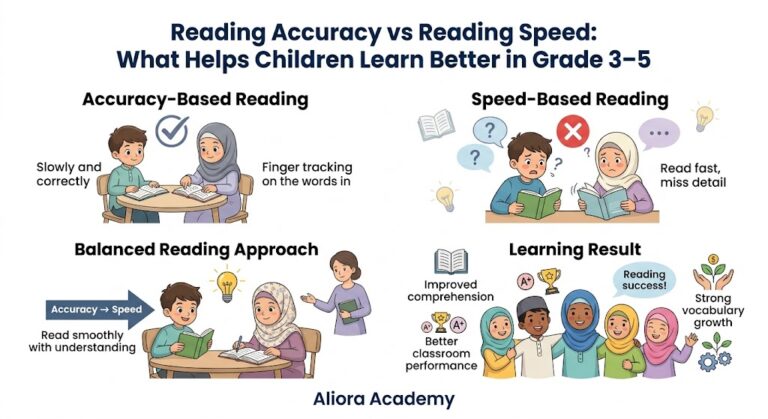
Many students struggle not because they cannot read, but because they practice incorrectly.
Common mistakes include:
- Reading too fast without understanding
- Ignoring unknown words
- Not asking questions while reading
- Memorizing instead of understanding
- Skipping daily reading practice
Teachers observe that students often think reading means finishing pages quickly. In reality, it means understanding ideas clearly.
Correct approach:
- Read slowly
- Understand meaning of each sentence
- Highlight new vocabulary
- Retell the story in simple words
- Practice daily, even for short time
Students who join structured learning like English classes for Grade 5 improve faster because they follow guided methods instead of random practice. If your child is showing persistent comprehension issues, it may be time to read about the signs a child struggles to understand what they read.
Real-Life Examples from Classroom Practice
Example 1: Slow Reading Student (Grade 3)
A student struggled with reading each word slowly and often stopped mid-sentence. The issue was weak fluency. After guided reading sessions and phonics practice, the student improved speed and started reading simple stories confidently.
Example 2: Poor Comprehension Learner (Grade 4)
A Grade 4 student could read fluently but failed to explain story meaning. Through structured questioning and paragraph breakdown, comprehension improved significantly. The student started summarizing stories in own words.
Example 3: Vocabulary Weak Student (Grade 5)
A Grade 5 student avoided reading due to unknown words. With vocabulary building exercises and contextual learning, the student began understanding academic passages and improved school performance.
How do parents support reading development effectively?
Parents can support reading development by building a positive reading environment at home.
Effective strategies include:
- Keeping storybooks at home
- Reading with child daily
- Avoiding pressure or punishment
- Celebrating small improvements
- Connecting reading with daily life
Children learn faster when reading feels safe and enjoyable rather than forced. For more structured guidance, you can explore our reading category or visit the Aliora Academy blog for regular tips.
What is the role of structured reading tools in learning?
A structured reading system helps organize learning in a way that matches student ability levels. It is suitable for struggling readers, average learners needing improvement, and advanced students improving comprehension.
It improves:
- Vocabulary development
- Grammar understanding in context
- Sentence structure awareness
- Academic reading skills
This is more effective than random reading because it follows a step-by-step curriculum designed for Grade 3–5 learners. If you're wondering whether your child might need additional intervention, look at the signs your Grade 3 child needs a reading intervention to assess the situation.
FAQ
How can my child improve reading at home?
Daily short reading sessions, parent-guided reading, and asking simple comprehension questions help build strong habits over time.
What is the best way to build reading habits daily?
Start with 15 minutes of reading, use interesting storybooks, and avoid pressure. Consistency matters more than duration.
How do reading tools improve comprehension skills?
They break reading into structured steps, teach vocabulary in context, and guide students to understand meaning instead of memorizing text.
Conclusion
Reading is the foundation of all academic learning. In Grade 3–5, building strong reading habits shapes future success in every subject. Students improve most when they practice daily, receive guided support, and learn at their own pace.
Structured reading support, combined with parent involvement, creates steady progress in fluency, vocabulary, and comprehension. With the right approach, even reluctant readers can develop confidence and start enjoying books naturally.