What Is Reading Fluency and Why It Matters for Grades 3–5: Building Strong Readers for Academic Success
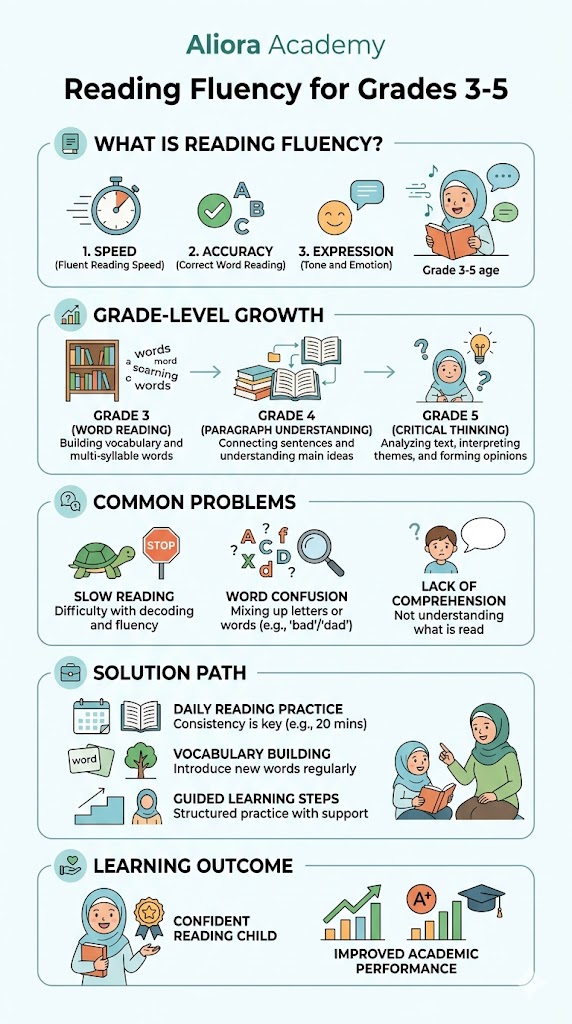
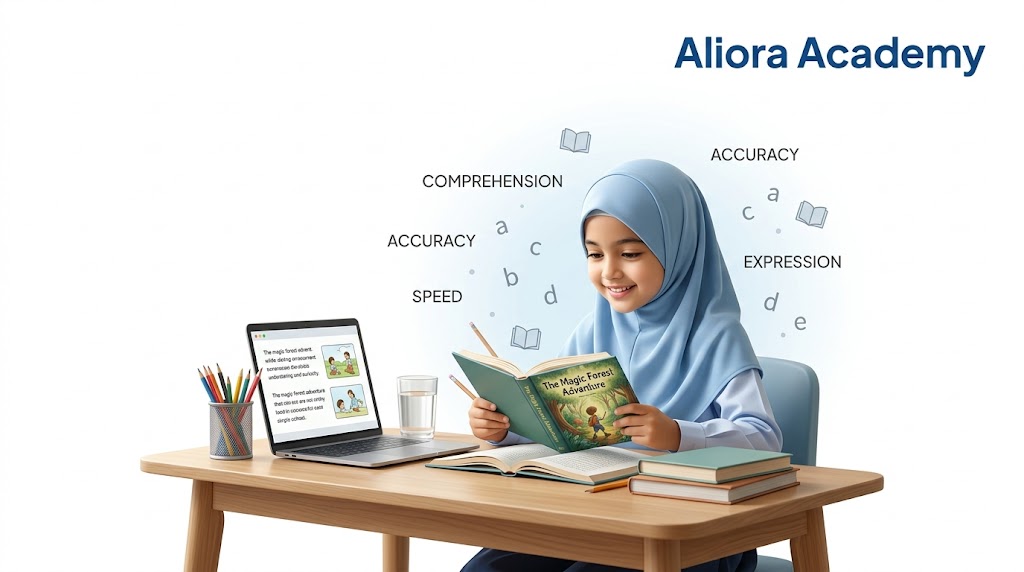
Reading fluency refers to how smoothly a child can read with correct speed, accuracy, and expression while understanding the meaning of the text. In many classrooms, especially in Grades 3–5, teachers often notice students who can pronounce words correctly but still struggle to understand the story. This creates a gap between reading and learning.
Parents also feel concerned when children take too long to read a simple paragraph or fail to explain what they just read. In school, this leads to weak performance in science, social studies, and even math word problems because reading is the base of all subjects.
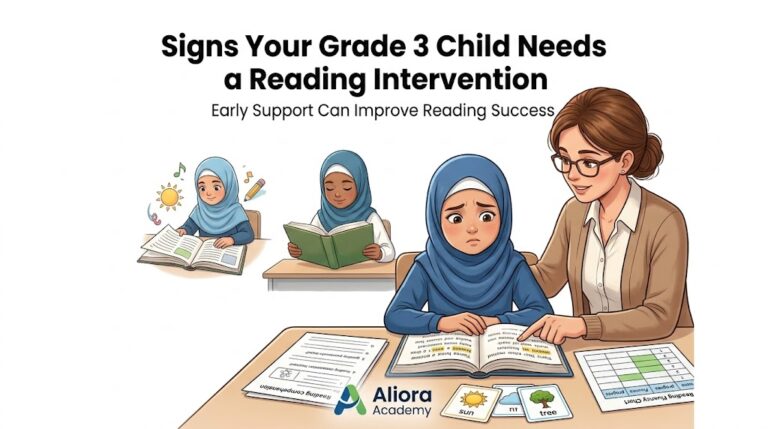
Teachers observe that students often make common mistakes such as reading word by word, skipping punctuation, or guessing meanings without understanding context. These issues slow down overall academic progress.
A simple improvement path includes daily reading practice, vocabulary building, and guided support through structured learning. When students practice in the right way, their confidence improves naturally.
Why do students struggle with reading comprehension in Grade 3–5?
Students in Grades 3–5 often struggle with reading because they are shifting from “learning to read” to “reading to learn.” This stage requires stronger comprehension skills, but many students still focus only on pronunciation.
In Grade 3, students mainly deal with word recognition and simple sentence reading. They may read slowly because they are still decoding each word. For example, a child may read “The cat is running” but pause after every word.
In Grade 4, reading becomes more complex. Students are expected to understand paragraphs and short stories. At this stage, weak vocabulary becomes a barrier, and students lose meaning while reading longer texts.
In Grade 5, students must develop critical reading skills and infer meaning from text. Without proper support, they struggle to connect ideas between sentences, which affects overall academic understanding.
Common reasons include:
- Weak vocabulary foundation
- Lack of daily reading practice
- Over-focus on memorization instead of understanding
- Limited exposure to story-based learning
To address these gaps, targeted reading help for Grade 3 focuses on building foundational word recognition and fluency, while Grade 4 reading support strengthens comprehension. For more advanced skills, Grade 5 reading strategies develop critical thinking and inference abilities.
How can children improve reading skills at home?
Improving reading at home requires consistency rather than long study hours. Parents play a key role in building confidence and daily habits. The goal is not pressure, but guided practice.
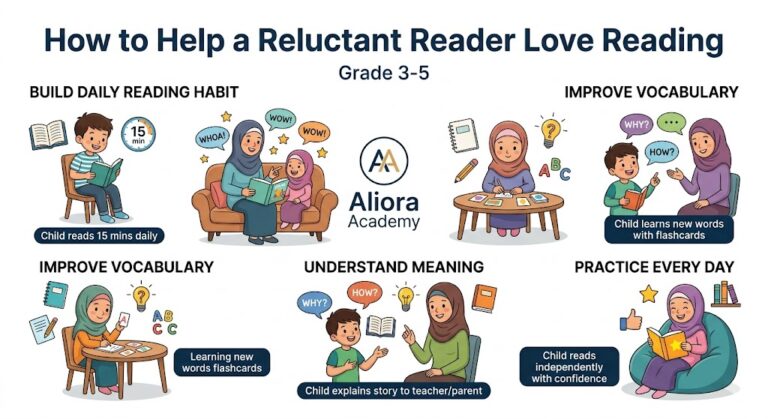
One effective method is reading together for 15–20 minutes daily. Parents can listen, correct gently, and ask simple questions like “What happened in the story?” This builds vocabulary development and understanding.
Teachers often suggest breaking reading into steps:
- Read a paragraph slowly
- Identify difficult words
- Understand meaning
- Retell in simple words
For Grade 3 learners, focus on simple sentences and word recognition. For Grade 4 students, encourage paragraph understanding. For Grade 5, guide them toward deeper thinking and inference.
Parents looking for structured guidance can explore Aliora Academy’s reading program, which supports step-by-step reading improvement through guided lessons. A helpful starting point is understanding how to improve reading fluency with simple daily routines.
What is the importance of reading fluency in early education?
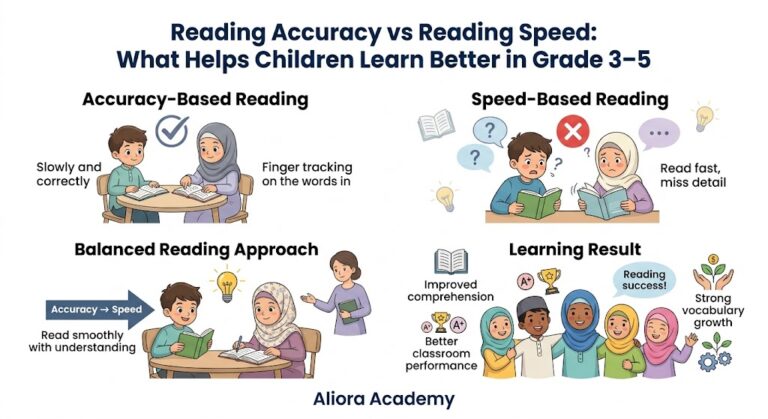
Reading fluency is not just about speed; it connects directly with understanding and learning success. A fluent reader can focus more on meaning instead of decoding words.
In Grade 3, fluency helps students recognize words quickly. This builds confidence and reduces reading fear. For example, a child who reads smoothly is more likely to enjoy storybooks.
In Grade 4, fluency supports better sentence structure understanding and improves storytelling ability. Students start connecting ideas across paragraphs.
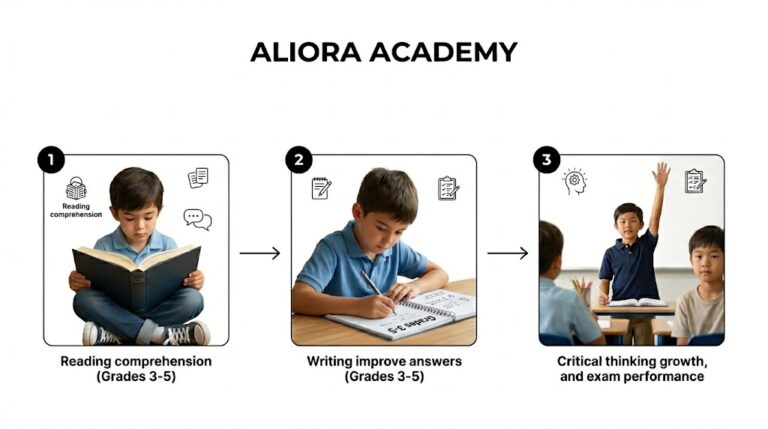
In Grade 5, fluency helps students handle academic texts. They can understand explanations in science and social studies more effectively, improving overall performance.
Key benefits include:
- Better academic performance
- Stronger communication skills
- Improved writing ability
- Higher confidence in classroom reading
Structured programs like English reading classes for Grade 3 help build strong fluency foundations early, while Grade 4 reading classes and Grade 5 advanced reading ensure continued growth.
How does a reading tool improve learning outcomes?
A structured reading tool supports students by breaking reading into manageable steps. Instead of random reading practice, students follow a guided system that builds skills gradually.
Such tools help improve:
- Reading fluency through repeated practice
- Vocabulary development through context-based learning
- Comprehension skills through guided questions
For example, a Grade 3 student struggling with slow reading can practice short passages repeatedly. Over time, speed and confidence improve.
Grade 4 learners benefit from story-based comprehension activities, while Grade 5 students improve through inference-based questions and critical thinking exercises.
Parents searching for structured learning can consider online reading classes for kids that combine reading, grammar, and comprehension practice in one system. If your child is facing deeper comprehension issues, this guide on helping a child who struggles with comprehension offers additional support.
What mistakes do students make in reading practice?
Many students do not fail because they cannot read, but because they practice incorrectly. One common mistake is reading without understanding meaning.
Another issue is skipping punctuation, which changes the meaning of sentences. Students also often rush reading without focusing on clarity.
Common mistakes include:
- Reading too fast without understanding
- Ignoring difficult words
- Not practicing regularly
- Avoiding storytelling practice
For example, a Grade 4 student may read a paragraph quickly but fail to explain the main idea. This shows weak comprehension, not lack of ability.
Structured practice like English reading classes for Grade 4 helps correct these mistakes through guided learning and feedback. Creating a positive reading environment at home also matters; tips for reducing learning stress can make practice more enjoyable.
Real-Life Examples of Reading Improvement
Example 1: Slow Reading Student (Grade 3)
A Grade 3 student reads very slowly and avoids reading aloud. The issue is weak word recognition. After using guided short passages and repetition practice, the student improves reading speed and starts enjoying stories. Outcome: improved confidence and smoother reading.
Example 2: Poor Comprehension Learner (Grade 4)
A Grade 4 student can read but cannot explain stories. The problem is lack of understanding. With structured comprehension questions and vocabulary support, the student begins summarizing paragraphs correctly. Outcome: better understanding and classroom performance.
Example 3: Vocabulary Weak Student (Grade 5)
A Grade 5 student struggles with complex words in textbooks. After focused vocabulary exercises and contextual reading practice, the student starts understanding academic texts more easily. Outcome: improved academic reading and writing skills.
Parents can further support by enrolling in English reading classes for Grade 5, where advanced reading strategies are taught step by step. For additional insights, visit the Aliora Academy blog or explore the reading category for more articles.
FAQ
1. How can my child improve reading at home?
Daily short reading sessions, guided questioning, and consistent vocabulary practice help improve reading naturally without pressure.
2. What is the best way to build reading habits daily?
Set a fixed reading time every day, use age-appropriate books, and discuss the story after reading.
3. How do reading tools improve comprehension skills?
They provide structured practice, step-by-step learning, and targeted exercises that improve understanding and fluency together.
Conclusion
Reading skills form the foundation of all academic learning in Grades 3–5. When students develop fluency early, they perform better in all subjects and gain confidence in classroom learning. Daily practice, combined with structured support, helps students grow steadily. Guided learning tools ensure students do not just read words but understand meaning, think critically, and express ideas clearly.