How to Choose the Right Online Reading Program for Your Child (Grade 3–5 Guide)
An online reading program for children becomes important when a child in Grade 3, Grade 4, or Grade 5 starts struggling with reading fluency, understanding stories, or answering simple comprehension questions. Many parents notice that their child can read words but cannot explain what the text means, which creates frustration during homework time and exams.
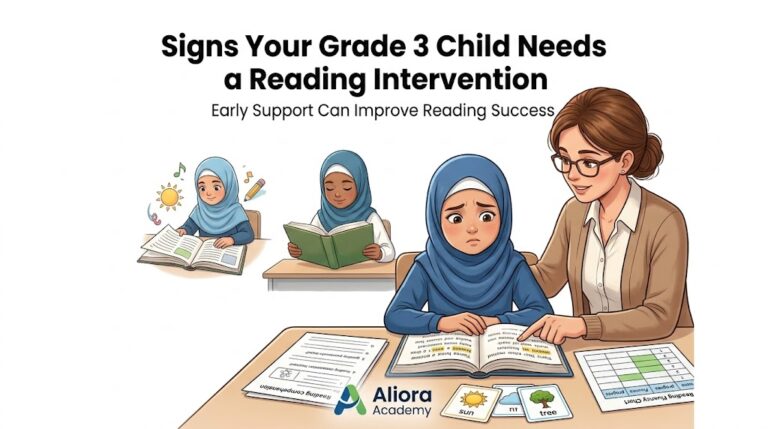
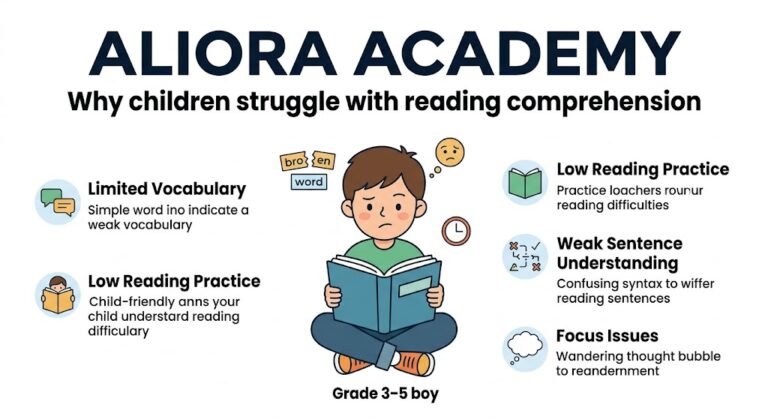
In classrooms, teachers often observe that students read slowly, skip difficult words, or lose focus halfway through a paragraph. Parents at home may see their child avoiding reading tasks or depending too much on help. These are early signs that reading support is needed. If you recognize these patterns, reviewing the signs your Grade 3 child needs a reading intervention can help you decide on next steps.
Reading is not just a school subject; it is the foundation of all learning. A child who reads well performs better in science, social studies, and even math word problems. However, many students make common mistakes such as guessing words, ignoring punctuation, or not understanding sentence meaning.
A clear improvement path includes structured reading practice, vocabulary building, and guided comprehension exercises that slowly build confidence and accuracy.
Why do students struggle with reading comprehension in Grade 3–5?
Students in Grade 3–5 often face reading challenges because learning becomes more complex each year.
In Grade 3, children are still developing basic reading fluency, focusing on word recognition and simple sentence reading. If this foundation is weak, they struggle later. Structured support through English classes for Grade 3 can help strengthen these early skills.
In Grade 4, texts become longer. Students must understand paragraphs, not just sentences. This requires vocabulary development and attention to detail. Many families find that English classes for Grade 4 provide the guided practice needed at this stage.
In Grade 5, students are expected to think critically. They must identify hidden meanings, make inferences, and connect ideas across paragraphs. For deeper strategies, explore our guide on Grade 5 reading comprehension strategies.
Common reasons for struggle include:
- Weak vocabulary foundation
- Lack of daily reading practice
- Memorizing instead of understanding
- No guided reading support
At home, parents often try random reading practice, but without structure, progress remains slow. Schools also have limited time for individual attention, which leaves gaps in learning. This is why many families turn to online reading tutoring for structured, consistent support.
How can children improve reading skills at home?
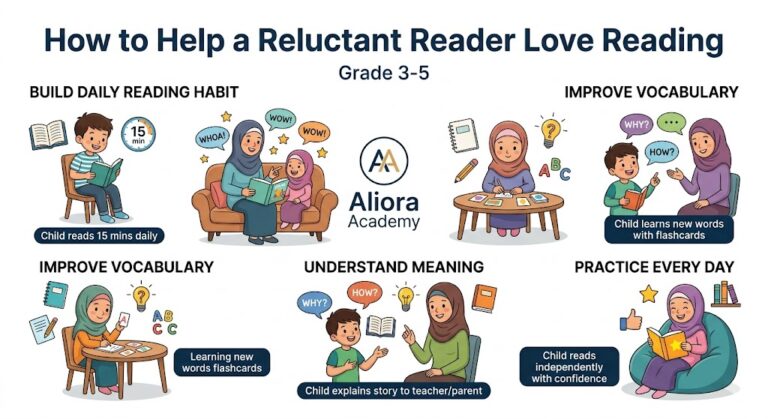
Improving reading skills at home requires consistency, not pressure.
A simple routine can help:
- Read 15–20 minutes daily
- Ask 2–3 questions about the story
- Encourage child to explain meaning in their own words
- Introduce new words daily
- Re-read difficult passages for clarity
For Grade 3 students, focus on simple stories and word pronunciation. For Grade 4 students, focus on paragraph meaning and vocabulary usage. For Grade 5 students, focus on deeper understanding and inference skills.
Many parents combine this practice with structured learning like online English classes, which helps children stay consistent and guided by expert teachers.
A strong reading habit at home builds confidence and reduces fear of complex texts in school. To further strengthen vocabulary, you can also explore vocabulary building techniques for elementary school children.
What is the importance of reading fluency in early education?
Reading fluency is the ability to read smoothly, accurately, and with expression. It directly affects comprehension. When a child reads slowly, their brain spends too much energy decoding words, leaving less focus for understanding meaning. Learn more about this in our detailed guide on what reading fluency is and why it matters.
In Grade 3, fluency helps in word recognition and builds reading confidence. In Grade 4, it helps understand story flow and improves paragraph reading speed. In Grade 5, it supports academic comprehension and helps in exam preparation and time management.
Teachers often notice that fluent readers perform better not because they read more, but because they understand faster. Many parents enroll children in an English learning program to improve fluency in a structured way. You may also want to read about how to improve reading fluency for elementary students for additional practical tips.
How does a reading tool improve learning outcomes?
A structured reading tool works like a guided teacher at home. It does not just give reading material; it builds skills step by step.
It focuses on:
- Comprehension skills through guided questions
- Vocabulary development with context-based learning
- Grammar in context instead of memorization
- Sentence structure understanding
- Critical thinking through story analysis
Unlike random reading, structured tools ensure progress is measurable and consistent. A well-designed tool supports weak readers who need step-by-step help, average readers who want improvement, and advanced learners who need challenge.
Parents looking for English classes for Grade 3 often prefer such structured tools because they reduce confusion and improve learning speed.
What mistakes do students make in reading practice?
Many students struggle not because they cannot read, but because they follow the wrong methods.
Common mistakes include:
- Reading without understanding meaning
- Ignoring punctuation and sentence flow
- Skipping difficult words instead of learning them
- Not practicing regularly
- Memorizing answers instead of learning concepts
Teachers observe that students who fix these habits improve quickly within weeks. For example, a Grade 3 student reads word-by-word but cannot tell the story. A Grade 4 student reads fast but misunderstands questions. A Grade 5 student knows words but fails in inference questions.
Structured support like English classes for Grade 4 helps correct these habits with guided practice and feedback. If comprehension is the main concern, our article on helping a child who struggles with reading comprehension offers targeted strategies.
Real-Life Learning Examples
Example 1: Slow Reading Student (Grade 3)
A student reads very slowly and struggles with word recognition. After structured reading practice focusing on phonics and repetition, the child improved fluency and started reading simple stories confidently.
Example 2: Poor Comprehension Learner (Grade 4)
A student could read paragraphs but could not answer questions. After guided comprehension sessions, the student learned how to identify key ideas and improved test scores significantly.
Example 3: Weak Vocabulary Student (Grade 5)
A student understood basic English but struggled with academic words. With vocabulary-based reading practice, the student improved understanding in science and social studies texts.
Parents often see better results when combining home practice with English classes for Grade 5, where structured lessons support consistent growth. For more success stories and tips, browse the Aliora Academy blog or explore our reading category for additional resources.
FAQ
How can my child improve reading at home?
Daily short reading sessions, asking simple questions, and practicing new words help build strong reading habits over time.
What is the best way to build reading habits daily?
Set a fixed reading time, start with easy stories, and slowly increase difficulty based on the child's level.
How do reading tools improve comprehension skills?
They guide students step by step, helping them understand meaning, learn vocabulary in context, and build structured thinking.
Conclusion
Strong reading skills are essential for academic success in Grade 3 to Grade 5. When children develop fluency, vocabulary, and comprehension together, they perform better in all subjects. Daily practice at home builds consistency, but structured support ensures proper direction and measurable progress.
A guided learning approach helps children move from basic reading to confident understanding, preparing them for higher academic levels with clarity and confidence. Whether your child needs foundational support in Grade 3, comprehension development in Grade 4, or advanced skills in Grade 5, the right combination of home practice and structured instruction makes all the difference.