What is Place Value and Why Does It Matter in Grade 3 Math?

Place value is one of the most important concepts in Grade 3 math because it teaches children how numbers are structured. It explains what each digit means depending on its position in a number. For example, in 245, the 2 represents hundreds, the 4 represents tens, and the 5 represents ones. Without understanding place value, children struggle with addition, subtraction, multiplication, and overall number sense. A strong understanding of place value builds the foundation for all future math learning.

Explore our core pathways: access targeted lessons in the Grade 3 Math System, view all academic tracks at the central Aliora Math Portal, or return to our Academy Homepage.
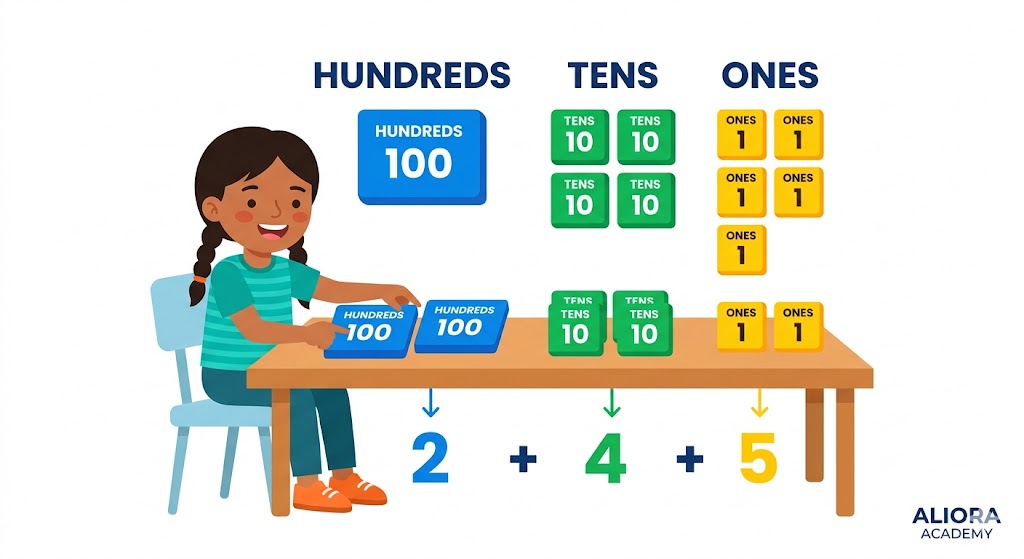
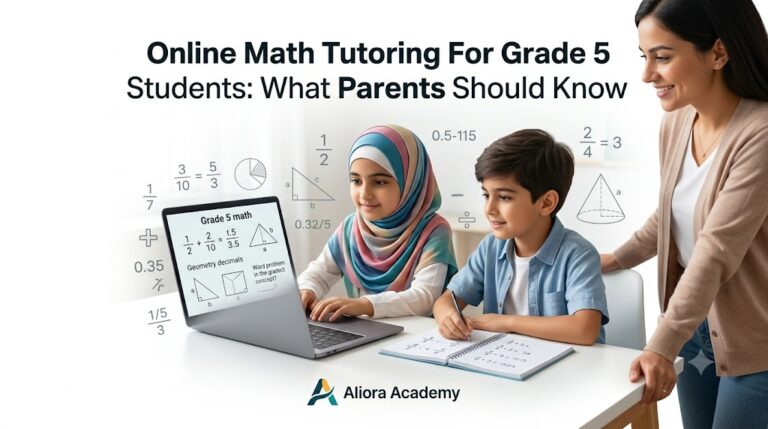
Grade 3 student learning mathematical place value configurations and numerical systems

Understanding Place Value in Simple Words

Place value means the value of a digit based on its position in a number. Each position represents units like ones, tens, hundreds, and so on. This helps children understand that numbers are not just symbols but have meaning. For example, in the number 532, the digit 5 means 500, not just 5.

Deepen your child's operational math skills: access the targeted Grade 3 System Core, explore resources inside the centralized Aliora Mathematics Portal, or browse our comprehensive Math Category Library.

H

Hundreds Position

In a 3-digit configuration like 532, the leftmost digit dictates the total number of complete groups of one hundred.

T

Tens Position

The middle column scales numerical groups of ten, translating the digit 3 into a real logical value of thirty.

O

Ones Position

The terminal final anchor position measures individual single units from zero through nine.

Why Place Value Is Important in Grade 3 Math

Place value is the foundation of all arithmetic operations. Without it, children cannot properly add, subtract, or understand larger numbers. It helps students break numbers into parts, making calculations easier and more logical. Strong place value understanding improves confidence and reduces math mistakes.

Deepen your roadmap: explore our Parent Playbook for Strong Foundations, review advanced benchmarks in the Grade 4 Structural Core, or evaluate comprehensive tracks inside the central Aliora Math Portal.

📊

Decomposition

Allows students to seamlessly break large numeric clusters into modular, digestible subsets ($hundreds$, $tens$, and $ones$) for simpler mental arithmetic operations.

⚙️

Algorithmic Precision

Prevents structural execution failures during column alignment for multi-digit addition and complex regrouping or borrowing algorithms.

Common Problems Children Face in Place Value

Many Grade 3 students confuse digits and their values. They may think 305 is the same as 35 or struggle to identify tens and hundreds correctly. Weak number sense and lack of practice are the main reasons behind this confusion.

Address critical learning gaps early: discover actionable strategies to improve Grade 3 multiplication skills, read our parental guide if your child struggles with word problems, or review the core milestones of our Grade 3 Math Framework.

0

The Zero Placeholder Blindspot

Treating the digit '0' as completely empty space rather than an essential structural column lock, mistakenly reading numbers like 305 as 35.

#

Digit vs. Absolute Value Confusion

Struggling to recognize that a isolated numeral's scale increases ten-fold with each shift to the left across columns.

Simple Ways to Teach Place Value to Kids

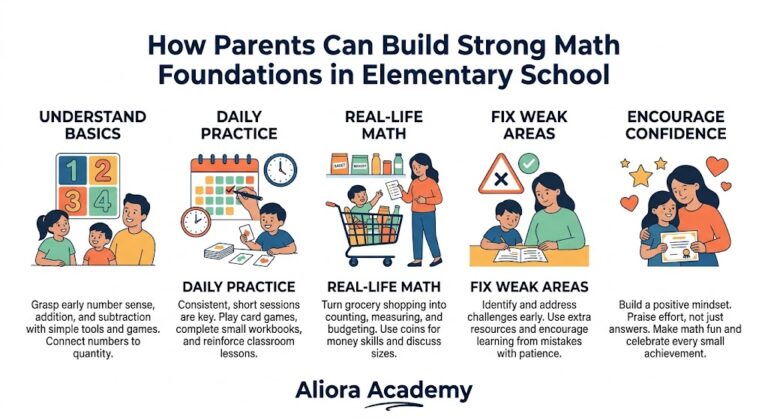
Parents and teachers can use real-life examples like money, blocks, or objects to explain place value. Breaking numbers into hundreds, tens, and ones helps children understand easily. Visual learning methods are highly effective at this stage.

Optimize home instruction: explore targeted exercises in our Grade 3 Lesson Core, download the complete Parent Guide for Early Foundations, or look over total curriculums at the Aliora Math Hub.

01

Concrete Manipulatives

Utilize real, physical physical items—like stacking blocks, bundled craft sticks, or realistic play currency—to turn abstract numeric values into tangible objects kids can see and count.

02

Expanded Form Writing

Have students physically pull three-digit integers completely apart to write them as sums ($345 = 300 + 40 + 5$), showing how each column works.

How Place Value Improves Overall Math Skills

Place value strengthens number sense, which is essential for all math topics. It helps children perform mental calculations faster and understand complex problems more easily. It also improves accuracy in arithmetic operations.

Prepare your student for advanced operational tracks: analyze subsequent benchmarks inside the Grade 4 System Core, explore fractional transitions within our Grade 5 Curriculum, or return to the centralized Aliora Mathematics Portal.

Rapid Mental Estimation

Enables children to immediately round numbers and look at equations to see if their answers make logical sense without relying entirely on physical scratch paper.

🎯

Operational Scalability

Establishes the precise logic required to transition effortlessly from simple arithmetic into multi-digit multiplication grids and division frameworks.

How Daily Practice Improves Place Value Understanding

Regular practice helps children master place value naturally. Simple exercises like breaking numbers into parts or writing numbers in expanded form make learning easier. Consistency is more important than long study sessions.

Reinforce mathematical consistency: apply your skills to improve Grade 3 multiplication fluency, review benchmarks within the Grade 3 Lesson Framework, or browse centralized learning pathways at the Aliora Math Hub.

The 15-Minute Rule

Short, focused daily intervals prevent working memory fatigue and help transfer numeric column rules into permanent long-term recall.

✏️

Expanded Deconstructions

Regularly writing multi-digit values as distinct parts clarifies the mathematical weights of different columns, turning abstract symbols into logical values.

```

How Online Math Classes Help with Place Value

Online math classes provide visual explanations, interactive exercises, and step-by-step learning that make place value easier to understand. Children can revisit lessons and practice until concepts become clear.

Find the ideal digital environment for your child: compare our recommendations for the Best Online Math Classes for Grade 4, review the structured digital curriculum for Grade 3 Mathematics, or browse the complete course library at the Aliora Math Portal.

🖥️

Adaptive Visualization

Digital platforms utilize dynamic block-manipulation tools that allow students to physically regroup 'tens' into 'hundreds' on-screen, building an instant, intuitive grasp of column shifts.

🔄

Infinite Revisit Loops

Unlike traditional classroom instruction, online platforms allow students to pause, rewind, and re-attempt specific conceptual lessons until they achieve total mastery.

``` ```
```

What is Place Value and Why Does It Matter in Grade 3 Math?
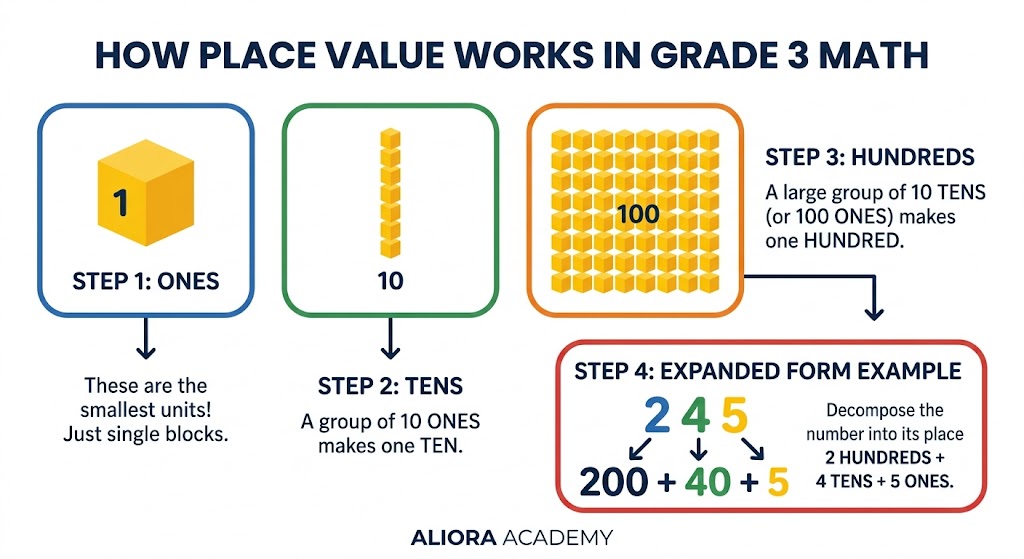
Comprehensive visual guide to understanding place value in Grade 3 mathematics

Defining Place Value

At its core, place value is the fundamental concept that the position of a digit within a number determines its value. In our base-ten system, each position to the left represents a value ten times greater than the position to its right. This system allows us to represent an infinite amount of numbers using only ten digits (0-9).

For Grade 3 students, moving from simple counting to understanding that a digit in the hundreds column represents "100" rather than just "1" is the most significant cognitive leap in their early mathematical journey. You can explore more about these core concepts at our Aliora Math Portal.

The Importance in the Number System

Without place value, our number system would be chaotic. It allows for the efficient notation of large quantities. Understanding this system is the difference between a student who simply memorizes equations and a student who understands numerical magnitude.

Hundreds, Tens, and Ones: A Structural Breakdown

Breaking down a number like 472 is the standard pedagogical approach:

  • 4 (Hundreds): This represents 4 groups of 100, or 400.
  • 7 (Tens): This represents 7 groups of 10, or 70.
  • 2 (Ones): This represents 2 single units, or 2.

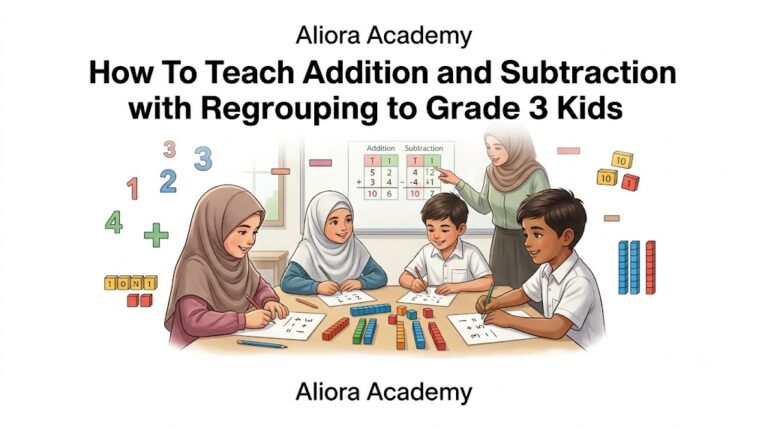
Mastering this breakdown is essential for students in our Grade 3 Math curriculum, as it prepares them for multi-digit addition and subtraction.

Common Mistakes Students Make

The most frequent struggle involves the "zero" as a placeholder. When a student sees 305 and reads it as "35," they are missing the structural role of the zero in the tens column. If your child struggles with word problems, it often stems from this foundational misunderstanding of numeric value.

Teaching Methods for Parents

The best way to teach place value is through concrete manipulatives. Use everyday items—coins, dry pasta, or LEGO bricks—to physically build numbers. For a comprehensive strategy, consult our Parent Guide to Building Strong Math Foundations.

Role in Arithmetic Operations

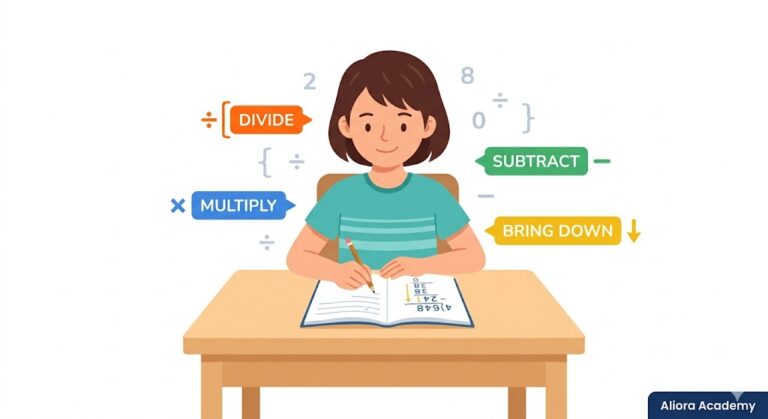
Place value is the silent engine behind all arithmetic. When we "carry" a number in addition or "borrow" in subtraction, we are actually performing place value regrouping. Without this logical foundation, calculations become rote memorization prone to error.

Importance in Higher-Grade Math

As students advance, place value becomes the gateway to decimals, percentages, and algebraic functions. Students who lack this foundation will face significant hurdles in Grade 4 Structural Math and even more so in Grade 5 Curriculum transitions. Building a solid base now is the best investment in their long-term STEM potential.

Benefits of Online Learning Support

Online platforms offer dynamic visual tools that physical textbooks cannot replicate. Interactive modules allow students to manipulate columns in real-time, providing immediate feedback that solidifies understanding. This tailored approach allows for the repetition necessary for mastery.
Help Your Child Master Place Value Today

A strong understanding of place value builds the foundation for all future math learning. With proper guidance and practice, children can easily master number sense and improve overall math performance. Start your journey with Aliora Academy's proven educational frameworks.

Frequently Asked Questions

What is place value in simple words?

Place value is the system where the value of a digit depends on its position in a number. For example, in 352, the '3' represents 300 because it is in the hundreds place, not just the value of 3.

Why is place value important in Grade 3 math?

It is the foundation for all arithmetic. Without understanding place value, children cannot correctly perform multi-digit addition, subtraction, or regrouping, leading to significant confusion with larger numbers.

How can children learn place value easily?

Using concrete objects like base-ten blocks, money, or even bundled craft sticks allows children to physically see how groups of ten form a hundred. Visualizing these quantities makes abstract numbers tangible.

What are common place value mistakes?

The most common mistake is misinterpreting zero as a non-value rather than a placeholder, leading students to mistake 305 for 35, or struggling to distinguish between the 'tens' and 'hundreds' columns.

Does practice improve place value skills?

Yes. Consistent, short practice sessions—such as writing numbers in expanded form or decomposing digits—are far more effective for long-term retention than infrequent, long study sessions.

How does place value help in higher math?

Place value is the gateway to decimals, percentages, and complex algebraic operations. A strong grasp of column logic in Grade 3 ensures students can transition smoothly into these advanced topics later on.

Similar Posts