How to Improve Multiplication Skills for Grade 3 Students at Home
How to Improve Multiplication Skills for Grade 3 Students at Home
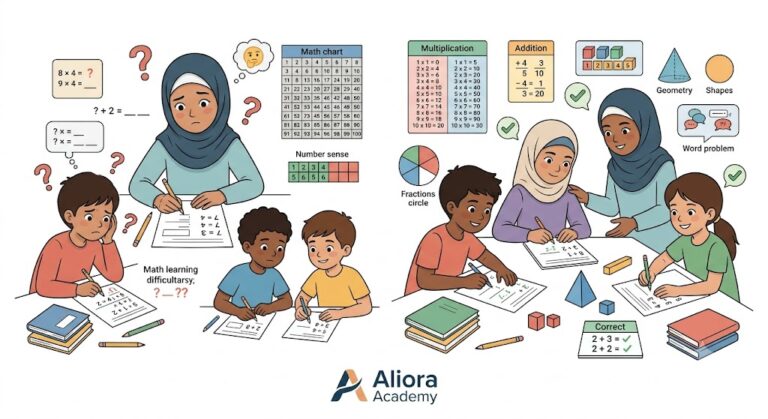
Many parents search for ways to improve multiplication skills for Grade 3 students when they notice their child struggling to remember multiplication facts, solve math homework, or keep up in class.
A common situation is a Grade 3 student who understands addition and subtraction but becomes confused when multiplication lessons begin. The child may spend too much time solving simple questions, make repeated mistakes, or lose confidence during math activities.
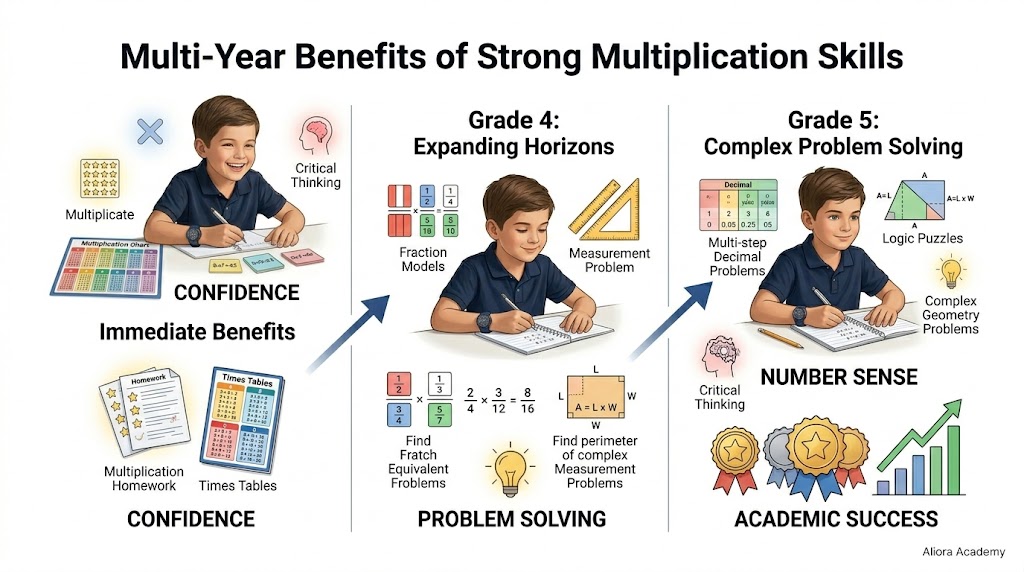
This challenge matters because multiplication is one of the most important foundations of elementary mathematics. Students use multiplication when learning division, fractions, measurement, geometry, and advanced problem-solving skills in later grades.
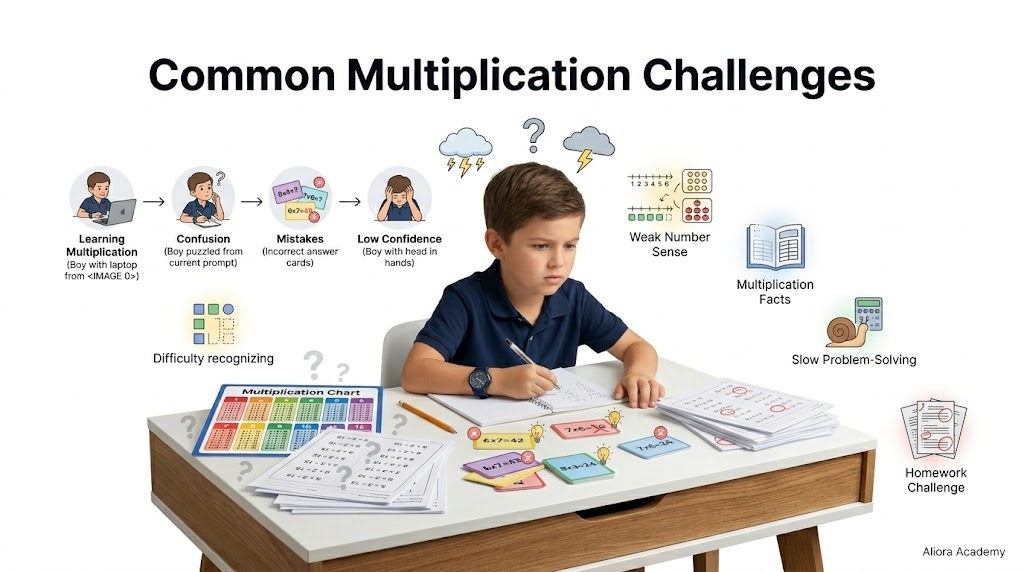
There are many reasons children struggle with multiplication. Some students have weak number sense, while others rely on memorization without understanding the concept behind multiplication. Limited practice, math anxiety, and lack of confidence can also affect learning progress.
The good news is that with consistent practice, supportive guidance, and effective learning strategies, students can strengthen their multiplication skills and develop a positive attitude toward mathematics learning.

Why Do Some Grade 3 Students Struggle With Multiplication?
Multiplication is often the first major step from basic arithmetic into more advanced mathematical thinking. Many Grade 3 students find this transition difficult because multiplication requires understanding patterns, groups, and repeated addition.
A child may know that 4 + 4 + 4 equals 12 but struggle to understand why 3 × 4 also equals 12. This gap between understanding and application can slow learning progress.
Common causes include:
- Weak number sense
- Difficulty recognizing number patterns
- Limited multiplication practice
- Math anxiety
- Inconsistent homework habits
Students who have not fully mastered addition and subtraction may also experience difficulties. Since multiplication builds on earlier arithmetic skills, gaps in foundational knowledge can affect performance.
Parents should remember that struggling with multiplication does not mean a child lacks ability. Most students simply need more guided practice and opportunities to apply concepts in meaningful ways.
For additional support, structured online math classes can provide personalized instruction that targets specific learning gaps.
How Can Parents Help Children Learn Multiplication at Home?
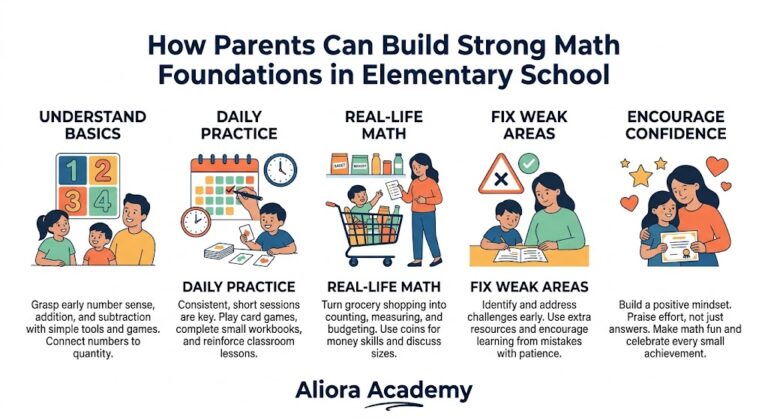
Parents play an important role in helping children build strong multiplication skills.
One effective strategy is to connect multiplication to daily life. Children learn faster when they see how mathematics applies to real situations.
For example:
- 4 plates with 3 cookies each
- 5 rows of 2 chairs
- 3 packs containing 6 pencils
These examples help children visualize multiplication as equal groups rather than random numbers.
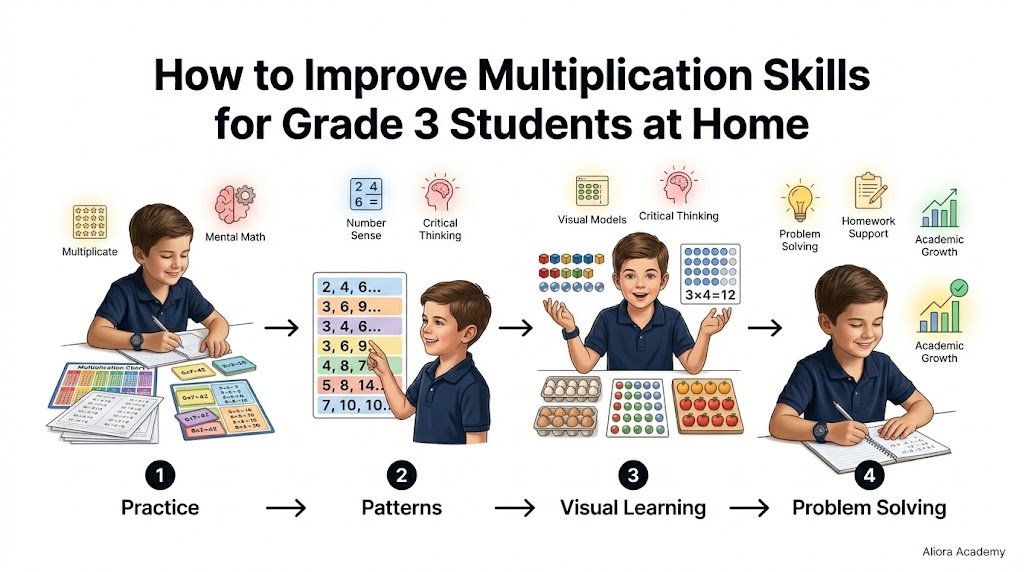
Parents can also establish a short daily math routine. Just 10–15 minutes of focused practice each day often produces better results than long study sessions once a week.
Helpful home activities include:
- Flash cards
- Multiplication games
- Skip counting practice
- Array drawings
- Math puzzles
Students who need additional guidance may benefit from a structured math learning program that combines practice, feedback, and teacher support.
Consistency matters more than intensity. Small daily improvements often lead to long-term success.
Why Is Number Sense Important for Multiplication Success?
Number sense is the ability to understand numbers, relationships, and patterns. It forms the foundation of strong mathematics skills.
When children develop number sense, they begin to notice multiplication patterns naturally.
For example:
- Multiples of 2 are even numbers.
- Multiples of 5 end in 0 or 5.
- Multiples of 10 always end in 0.
These observations help students solve problems faster and with greater confidence.
Strong number sense also supports:
- Mental math
- Estimation
- Problem solving
- Logical thinking
- Mathematical reasoning
Instead of memorizing facts blindly, students learn to recognize relationships between numbers.
Activities such as skip counting, number pattern exercises, and multiplication charts can significantly strengthen this skill.
Students enrolled in math classes for Grade 3 often spend time developing number sense before moving into more advanced multiplication concepts.
What Are the Best Ways to Practice Multiplication Every Day?
Daily practice is one of the most effective ways to strengthen multiplication skills. However, practice should be engaging rather than repetitive.
Parents can rotate different activities throughout the week:
Monday
Multiplication flash cards
Tuesday
Skip counting exercises
Wednesday
Multiplication games
Thursday
Word problems
Friday
Mental math challenges
Children learn best when practice includes variety and real-world application.
For example, ask:
If one box contains 4 apples, how many apples are in 6 boxes? Questions like this encourage deeper mathematical thinking.
Regular practice also improves speed and accuracy, which are important for future test preparation and academic success. As students progress into upper elementary grades, strong multiplication skills make transitions into math classes for Grade 4 much smoother.
Why Are Word Problems Challenging for Many Students?
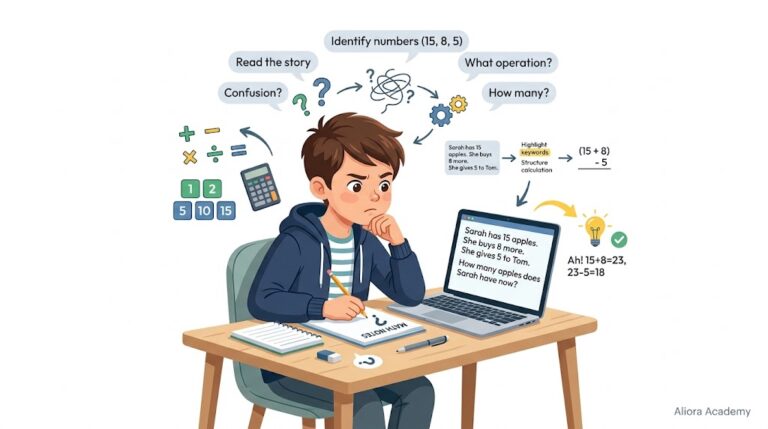
Many children can solve multiplication equations but struggle when the same concept appears in a word problem.
The difficulty often comes from reading comprehension rather than mathematics itself.
Students must:
- Understand the situation
- Identify important information
- Choose the correct operation
- Solve the problem accurately
For example:
“A classroom has 5 rows of desks. Each row contains 4 desks. How many desks are there altogether?”
The student must recognize that multiplication is needed.
Parents can help by encouraging children to:
- Read problems slowly
- Highlight key information
- Draw pictures
- Use arrays
- Explain their reasoning aloud
These strategies improve both problem solving and critical thinking skills.
Strong word-problem skills become even more important as students move toward fractions, measurement, and geometry concepts.
How Can Students Build Confidence in Mathematics?
Confidence grows when students experience success regularly.
Many children lose confidence because they focus only on mistakes rather than progress.
Parents should celebrate small achievements such as:
- Learning a new multiplication table
- Solving a difficult word problem
- Completing homework independently
- Improving test scores
Positive reinforcement encourages persistence.
Students should also understand that mistakes are part of learning. Every error provides information about what needs more practice.
Helpful confidence-building strategies include:
- Setting realistic goals
- Tracking progress
- Practicing consistently
- Asking questions
- Reviewing mistakes
A supportive learning environment helps students develop resilience and a positive mindset toward mathematics.
What Can Parents Learn From Real Student Success Stories?
Example 1: Grade 3 Student Improves Multiplication Skills
A Grade 3 student struggled to remember multiplication facts and often avoided math homework.
The solution involved daily 10-minute multiplication practice, flash cards, and visual arrays.
After several weeks, the student solved problems more quickly and gained confidence in class.
Example 2: Grade 4 Student Learns Fractions Through Visual Models
A Grade 4 student found fractions confusing and difficult.
The student used visual fraction bars and hands-on activities to understand part-whole relationships.
Over time, fraction concepts became easier, improving overall problem-solving abilities in math classes for Grade 4.
Example 3: Grade 5 Student Gains Confidence With Multi-Step Problems
A Grade 5 student struggled with complex word problems involving multiple steps.
Teachers encouraged breaking problems into smaller parts and checking work carefully. This strategy improved accuracy, critical thinking, and performance in math classes for Grade 5. These examples show that consistent support and effective learning strategies can make a significant difference.
How Do Online Learning Programs Support Mathematics Growth?
Online learning can provide structured support for students who need additional practice.
Quality programs often include:
- Interactive lessons
- Guided instruction
- Immediate feedback
- Homework support
- Progress tracking
Students can learn at their own pace while receiving personalized guidance.
Parents should look for programs that emphasize conceptual understanding rather than memorization alone.
At Aliora Academy, mathematics instruction focuses on building strong foundations, improving problem-solving abilities, and helping students develop confidence in their learning journey.
FAQs
How can my child improve math skills at home?
Encourage daily practice, use real-life math examples, review homework together, and create a consistent study routine. Short practice sessions often produce better results than long, infrequent sessions.
What is the best way to learn multiplication tables?
Students learn multiplication tables best through a combination of understanding, repetition, visual models, skip counting, and regular practice. Memorization works better when children first understand the concept behind multiplication.
How do online math classes help students succeed?
Online classes provide structured lessons, personalized guidance, interactive activities, and regular feedback. These features help students strengthen mathematics skills and build confidence over time.
Conclusion
Parents looking to improve multiplication skills for Grade 3 students should focus on consistent practice, strong number sense, and positive learning habits. Multiplication is an essential foundation for future topics such as division, fractions, measurement, geometry, and advanced problem solving.
Children learn best when mathematics feels meaningful, achievable, and connected to everyday life. Daily practice, supportive guidance, and effective learning strategies can help students strengthen their arithmetic skills, build math confidence, and develop critical thinking abilities.
By encouraging healthy study habits and providing the right support, parents can help children become more confident, independent, and successful learners throughout their mathematics journey.