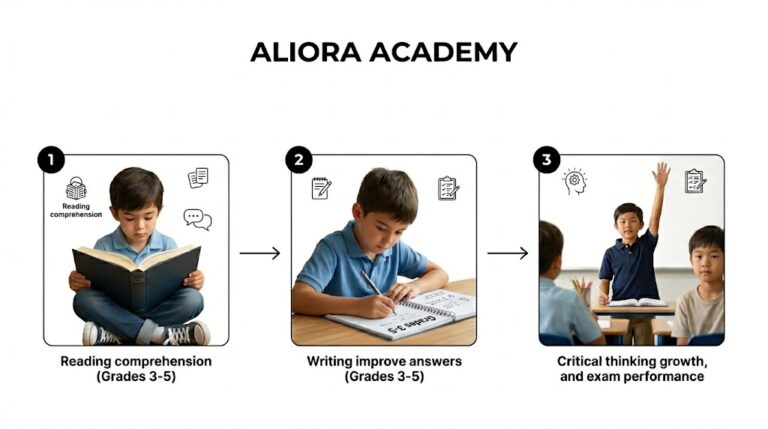
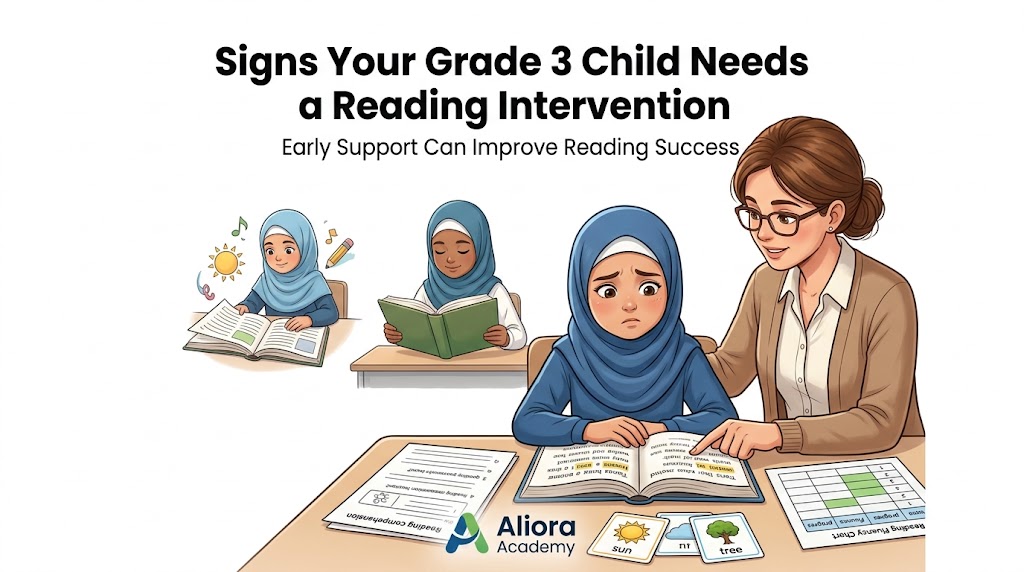
Signs Your Grade 3 Child Needs a Reading Intervention
Signs Your Grade 3 Child Needs a Reading Intervention often become noticeable when a child begins falling behind classmates in reading tasks, classroom discussions, and independent learning activities.
Many Grade 3, Grade 4, and Grade 5 students work hard but still struggle to read smoothly, understand what they read, or explain ideas from a text. Parents may notice frustration during homework, while teachers often observe hesitation when students are asked to read aloud or answer comprehension questions.
Reading challenges rarely appear overnight. In the classroom, educators frequently see students skip words, guess unfamiliar vocabulary, lose track of sentences, or have difficulty explaining the main idea of a passage. These issues can affect confidence and academic performance across multiple subjects.
Strong reading skills support success in science, social studies, writing, and everyday communication. Students who read effectively can absorb information faster, develop stronger thinking skills, and participate more confidently in learning activities.
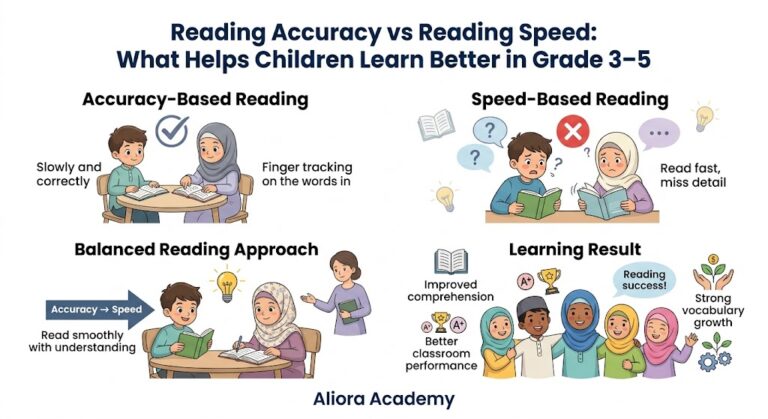
Common mistakes include rushing through passages, ignoring punctuation, relying on guessing instead of decoding words, and reading without checking understanding. Fortunately, early support and structured instruction can help students strengthen essential literacy skills before learning gaps become larger.
Why Do Some Grade 3–5 Students Struggle With Reading Development?
Reading growth depends on several connected skills. A student may read words accurately but struggle to understand meaning. Another student may understand stories when listening but find reading independently difficult.
Teachers often notice that students facing challenges need additional support with reading fluency, decoding, or attention to text details. These difficulties become more visible as classroom materials become longer and more complex. Families exploring structured support often consider an online English classes option to reinforce literacy skills outside school.
In Grade 3, students transition from learning to read toward reading to learn. This shift requires stronger word recognition and sentence-level understanding. Students experiencing reading difficulties in Grade 3 students situations may struggle with this important transition.
Grade 4 introduces longer paragraphs, informational texts, and expanded vocabulary. Students must identify main ideas, supporting details, and author purpose. Many families use an English learning program to provide consistent reading practice and guided instruction.
By Grade 5, students encounter more advanced texts that require analysis, inference, and evidence-based thinking. Reading challenges at this stage often affect performance across academic subjects because students must process increasingly complex information.
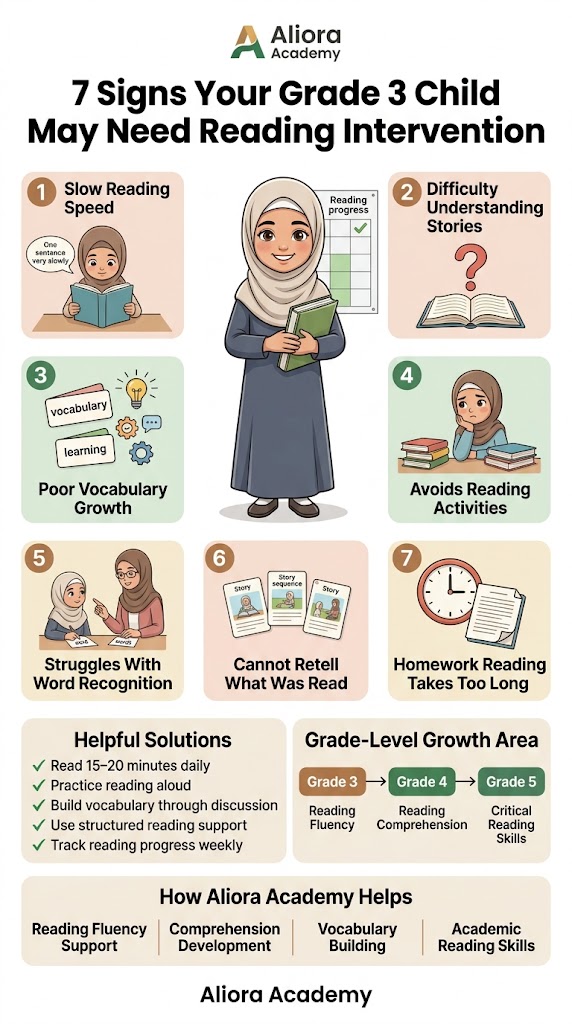
Common warning signs include:
- Frequent word guessing
- Slow reading pace
- Difficulty retelling stories
- Limited vocabulary knowledge
- Avoidance of reading activities
- Trouble following written instructions
What Are the Most Common Signs That a Child May Need Additional Reading Support?
One major sign is difficulty reading grade-level material independently. Students may pause frequently, skip words, or become frustrated when reading unfamiliar passages.
Another indicator is weak comprehension skills. Some students can read every word correctly but cannot explain what the text means afterward. Teachers often notice this issue during class discussions and reading assessments. Additional literacy support through English classes for Grade 3 can help address these gaps.
Limited vocabulary development also affects reading success. Students who do not understand key words struggle to connect ideas within a passage and often miss important details.
Parents may observe homework taking much longer than expected. A child might reread the same paragraph repeatedly without understanding the content. Structured support through English classes for Grade 4 can help students develop more effective reading strategies.
Another warning sign involves reduced confidence. Students who once enjoyed books may begin avoiding reading altogether. They may choose easier materials or refuse reading tasks because they fear making mistakes.
Behavioral signs can include:
- Complaining that reading is too difficult
- Becoming distracted during reading tasks
- Avoiding independent reading time
- Showing anxiety when asked to read aloud
- Struggling to summarize information
Recognizing these signs early and connecting with structured support like Grade 3 reading classes can make a significant difference in a child's academic trajectory.
How Does Reading Development Change Across Grades 3, 4, and 5?
Grade 3 focuses heavily on building automatic word recognition and basic fluency. Students should read simple texts with accuracy while understanding sentence meaning.
At this stage, teachers expect children to recognize common patterns and read with appropriate pacing. Students enrolled in English classes for Grade 3 often receive guided support that strengthens these foundational skills.
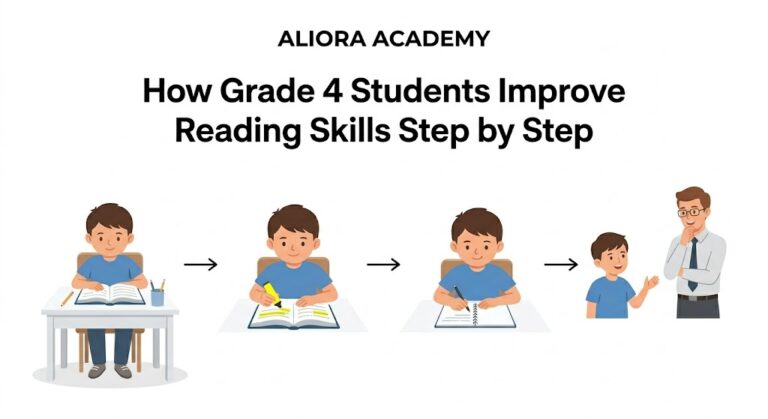
Grade 4 introduces greater emphasis on paragraph-level understanding. Students must identify themes, sequence events, and understand character motivations. Vocabulary growth becomes increasingly important because texts contain more academic language.
Students participating in English classes for Grade 4 frequently practice reading longer passages while developing stronger comprehension strategies.
Grade 5 requires higher-level thinking. Students analyze information, compare viewpoints, and make logical inferences. They also connect ideas across multiple texts and subjects.
Support through English classes for Grade 5 can help learners strengthen critical reading habits while preparing for more advanced academic expectations.
Grade-level literacy expectations include:
- Grade 3: Word recognition and sentence understanding
- Grade 4: Paragraph comprehension and vocabulary growth
- Grade 5: Critical reading and inference development
How Can Parents Support Reading Growth at Home?
Home support plays an important role in literacy development. Small daily habits often create meaningful progress over time.
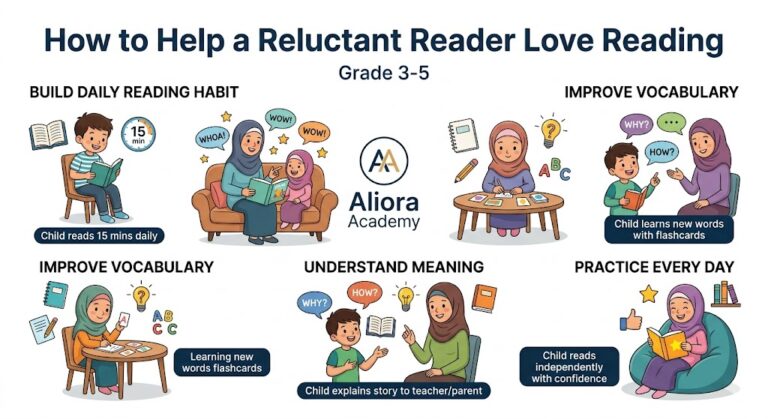
Start by establishing a consistent reading routine. Even 15–20 minutes of focused reading each day can strengthen fluency and comprehension. Many parents seeking how to help a child who struggles with reading find that consistency matters more than lengthy study sessions.
Reading together provides valuable opportunities for discussion. Ask questions about characters, events, and key ideas. Encourage children to explain answers using evidence from the text.
Create a print-rich environment with books, magazines, informational articles, and age-appropriate reading materials. Students in an English learning program often benefit when classroom instruction is reinforced at home.
Parents should also model reading habits. Children who regularly see adults reading are more likely to view reading as an important and enjoyable activity.
Helpful strategies include reading aloud together, discussing new vocabulary, tracking daily reading goals, practicing expressive reading, and encouraging questions about texts.
What Reading Tools and Structured Strategies Help Students Improve?
Effective reading tools provide targeted practice rather than random activities. They focus on specific literacy skills and measure progress over time.
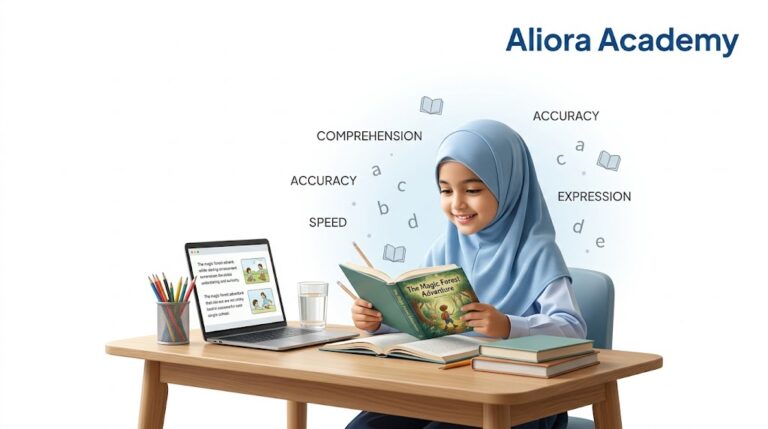
A quality reading tool identifies weaknesses in fluency, comprehension, vocabulary, or reading accuracy. Teachers use this information to create focused learning plans. Families exploring online English classes often look for programs that include these structured assessments.
Reading tools can support improving reading skills for elementary students by providing guided exercises that match individual learning needs.
Structured practice is effective because it follows a clear sequence:
- Assess current reading performance
- Identify skill gaps
- Practice targeted strategies
- Monitor improvement
- Adjust instruction as needed
Unlike random reading activities, structured literacy tools provide intentional practice that builds confidence and measurable progress. For deeper insight into how fluency connects to overall reading success, explore what reading fluency is and why it matters.
Many educators recommend combining reading practice with writing activities because reading and writing strengthen one another. Students improve sentence structure, grammar awareness, and academic communication through this integrated approach.
What Real-Life Examples Show the Impact of Early Reading Support?
Example 1: Slow Reading Student
A Grade 3 student read accurately but very slowly. The reading tool identified weak fluency patterns and provided guided practice activities. After consistent support, the student began reading more smoothly and participated more confidently in classroom discussions. Outcome: improved reading speed and classroom confidence.
Example 2: Poor Comprehension Learner
A Grade 4 student finished passages quickly but struggled to answer questions. The reading tool focused on comprehension monitoring strategies and main-idea identification. Over time, the student improved understanding and retention of information. Outcome: stronger comprehension and better test performance.
Example 3: Vocabulary Weak Student
A Grade 5 learner frequently encountered unfamiliar academic words. The reading tool introduced targeted vocabulary exercises connected to reading passages. As word knowledge expanded, overall comprehension and classroom performance improved. Outcome: expanded vocabulary and improved academic reading.
These examples demonstrate why early reading intervention for struggling readers can help prevent small literacy challenges from becoming larger academic obstacles. To learn more about addressing comprehension challenges specifically, read about how to help a child who struggles with reading comprehension.
Why Is Consistent Reading Practice More Effective Than Occasional Support?
Reading development follows the same pattern as any other skill. Consistent practice creates stronger results than occasional intensive efforts.
Students benefit when reading becomes a regular part of daily life. Frequent exposure to books improves fluency, comprehension, vocabulary knowledge, and confidence.
Teachers often observe that students who practice regularly make faster progress because skills remain active and reinforced. Families participating in an English learning program often see better outcomes when lessons are supported by daily reading habits.
Consistent practice also strengthens:
- Reading fluency
- Comprehension skills
- Vocabulary development
- Grammar awareness
- Critical thinking
- Communication skills
Over time, these improvements contribute to stronger academic performance across all subjects. For practical tips on creating a calm learning environment, check out strategies for reducing homework stress at home. You can also explore how to improve reading fluency for elementary students for additional guidance.
Frequently Asked Questions
How can my child improve reading at home?
Create a daily reading routine, discuss stories together, review unfamiliar vocabulary, and encourage reading materials that match your child's interests and skill level.
What should students do when they do not understand a passage?
Students should reread the section, identify unfamiliar words, look for context clues, and summarize information in their own words before moving forward.
How do reading tools improve comprehension skills?
Reading tools identify specific learning gaps, provide targeted practice, track progress, and help students build stronger understanding through structured instruction.
Conclusion
Reading success depends on much more than simply recognizing words. Students need strong fluency, comprehension, vocabulary knowledge, and critical thinking skills to succeed academically. When parents and teachers recognize warning signs early, they can provide support before challenges become long-term obstacles.
Daily practice, guided instruction, and structured reading tools help students build confidence and strengthen literacy skills over time. With consistent support and effective learning strategies, Grade 3–5 students can become stronger readers who are prepared for future academic success.
For more reading resources and strategies, visit the Aliora Academy blog or browse our reading category for additional articles on literacy development. Explore our complete reading program to find the right support level for your child.