How To Teach Addition and Subtraction with Regrouping to Grade 3 Kids
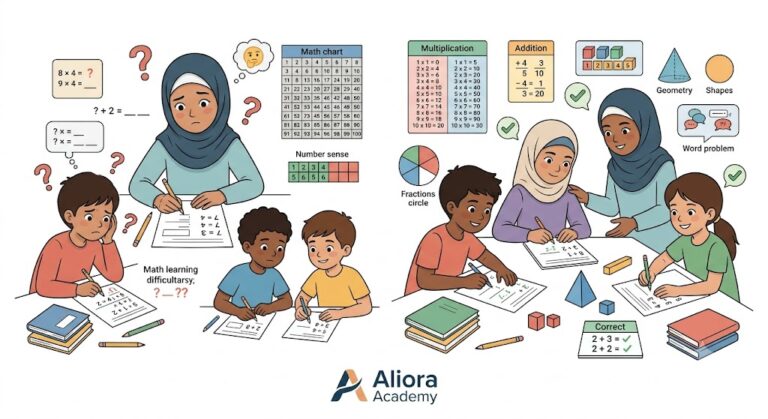
How to teach addition and subtraction with regrouping for grade 3 students becomes a real concern for many parents when their child suddenly struggles with multi-digit numbers. A student who was once confident with simple sums often gets confused when numbers “carry over” or “borrow” starts appearing in homework. For example, a child may correctly solve 23 + 15, but freeze when asked 58 + 47 because they don’t understand why numbers move between place values.
This difficulty usually appears because children are still developing strong number sense and place value understanding. Without these foundations, regrouping feels like a trick rather than a logical step. Many students start memorizing steps instead of understanding the meaning behind them, which leads to confusion and mistakes.
The good news is that regrouping can be taught in a simple, visual, and structured way. When children see numbers as groups of tens and ones, they begin to understand why carrying and borrowing happens naturally. With the right guidance, practice routines, and real-life examples, students can build confidence and accuracy in both addition and subtraction.
Aliora Academy focuses on building this strong foundation through structured learning paths like our math classes for Grade 3, where concepts are taught step by step using real understanding rather than memorization.
Why do children struggle with addition and subtraction with regrouping?
Many Grade 3 students struggle with regrouping because they do not fully understand place value. They see numbers as single digits rather than groups of tens and ones. For example, in the number 42, they may not clearly understand that 4 represents 40.
Another reason is weak number sense. Without strong number sense, students cannot estimate whether their answer makes sense. They may add 58 + 47 and get an answer like 95 or 105 without realizing something is wrong.
Common learning gaps include:
- Confusion between tens and ones places
- Weak mental math foundation
- Over-reliance on memorized steps
- Lack of visual learning tools
- Limited practice with real-life problems
In classroom learning, regrouping is sometimes introduced too quickly. Children are expected to “carry” or “borrow” without fully understanding why it happens. This creates frustration and fear of math. This is at the heart of how children learn borrowing and carrying in Grade 3 math.
A structured math learning program that builds concepts gradually helps solve this issue by reinforcing understanding before introducing complex operations.
How can students understand place value before learning regrouping?
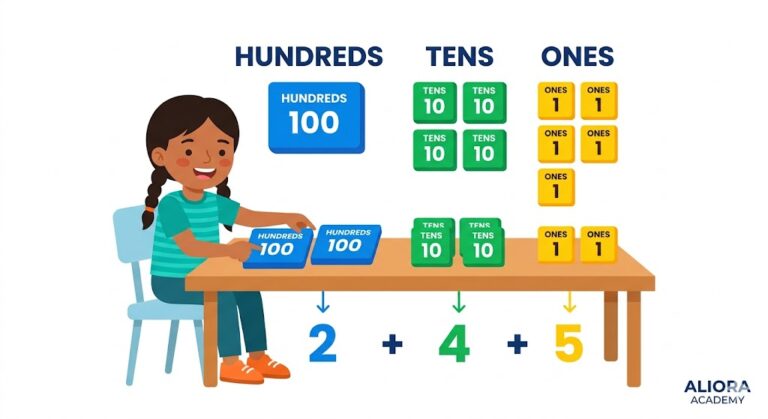
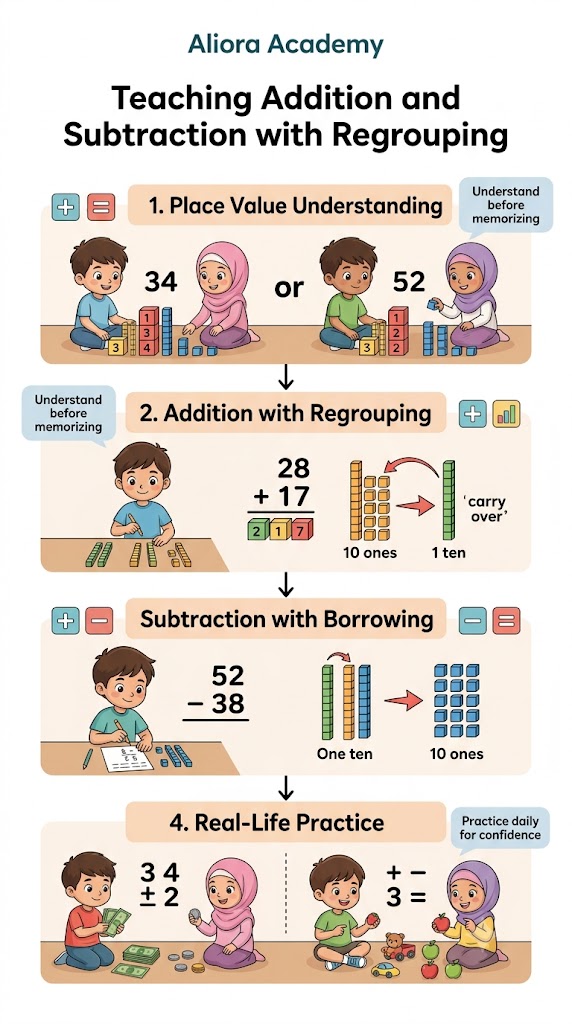
Before teaching regrouping, children must clearly understand that numbers are built in groups of tens and ones. This is the foundation of all multi-digit operations. This is an essential part of teaching regrouping in addition and subtraction for elementary students.
A simple teaching method is using physical objects like sticks, beads, or blocks. For example:
- 10 single sticks = 1 bundle (1 ten)
- 3 bundles + 5 single sticks = 35
When children physically see this grouping, they understand why numbers “change places” during regrouping.
Teachers and parents can also use drawings:
- Draw boxes for tens and ones
- Write numbers separately in columns
- Show how 1 ten becomes 10 ones during borrowing
This builds strong mathematics skills and reduces confusion later. Students who master place value usually perform better in online math classes because they can visualize abstract concepts more easily.
What is the easiest way to teach addition with regrouping?
Addition with regrouping should always start with simple examples before moving to complex ones. This is one of the easy methods to teach multi-digit addition and subtraction for kids.
A step-by-step method works best:
- Start with no regrouping (e.g., 23 + 14)
- Move to single regrouping (e.g., 28 + 17)
- Use visual models (place value blocks)
- Explain “carrying” as forming a new ten
Example: 28 + 17
- Ones: 8 + 7 = 15 → 5 ones, 1 ten carried
- Tens: 2 + 1 + 1 = 4
- Answer: 45
Children understand better when they see regrouping as “making a new group of ten” instead of a random rule.
A strong multiplication practice and addition foundation helps students handle more complex math later, especially in Grade 4 topics like fractions and multi-digit operations. Aliora Academy reinforces this through guided learning in math classes for Grade 4, where students connect basic operations to advanced problem-solving.
How can subtraction with regrouping be made simple for kids?
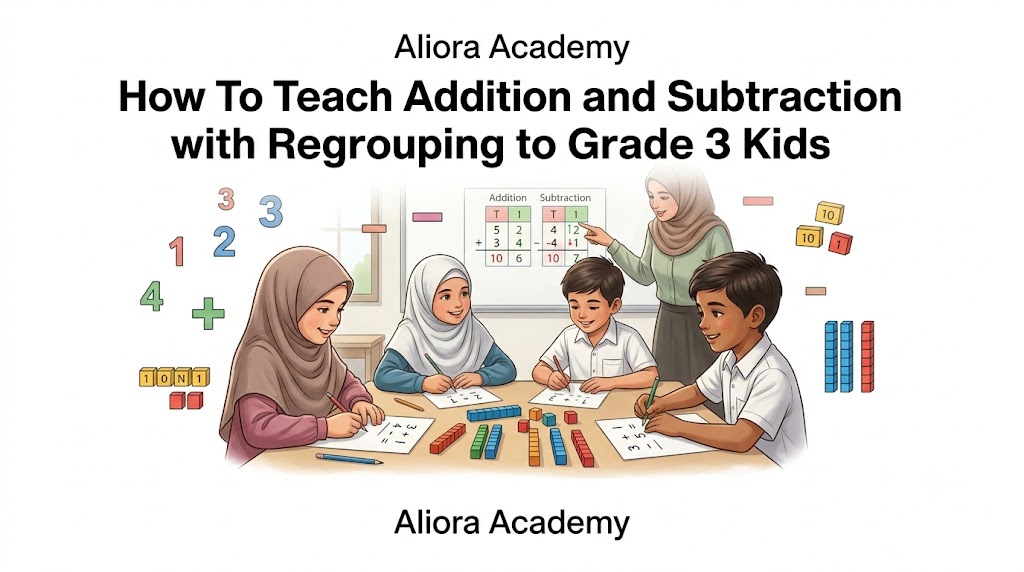
Subtraction with regrouping is often more difficult than addition because it involves “breaking a ten.” Students need to understand that when there are not enough ones, we borrow from the tens place.
A clear teaching sequence:
- Start with simple subtraction (no borrowing)
- Use number blocks or drawings
- Show borrowing as “breaking a ten into 10 ones”
- Practice step-by-step slowly
Example: 52 − 38
- 2 is smaller than 8, so borrow 1 ten
- 5 tens become 4 tens
- 2 ones become 12 ones
- 12 − 8 = 4
- 4 − 3 = 1
- Answer: 14
This method builds critical thinking because students understand why borrowing is necessary instead of memorizing steps blindly. These step-by-step regrouping strategies for parents helping Grade 3 math homework make the process much less intimidating.
Students who master this concept early perform better in multi-step word problems in higher grades. Building strong mental math strategies also supports regrouping fluency.
What real-life methods help children learn regrouping faster?
Children learn faster when math is connected to real life. Abstract numbers alone do not build understanding.
Effective methods include:
- Using money (coins and notes)
- Counting objects at home
- Shopping-based addition problems
- Story-based subtraction problems
Example 1: Grade 3 Student Using Coins
A Grade 3 student struggles with 36 + 28. After using coins (tens and ones), they understand regrouping and solve similar problems independently. The result is improved number sense and confidence.
Example 2: Grade 4 Student Learning Fractions
A Grade 4 student learns fractions using pizza slices and drawings. This visual approach builds strong problem-solving skills, which later supports regrouping in decimals and multi-digit operations. For more on fractions, see our guide on understanding decimals for Grade 4 and 5.
Example 3: Grade 5 Student Tackling Word Problems
A Grade 5 student initially struggles with multi-step word problems. After practicing structured thinking in a math classes for Grade 5 program, they start breaking problems into smaller steps and solve them correctly. Additional support through online math tutoring for Grade 5 can provide personalized guidance.
How can parents support regrouping practice at home?
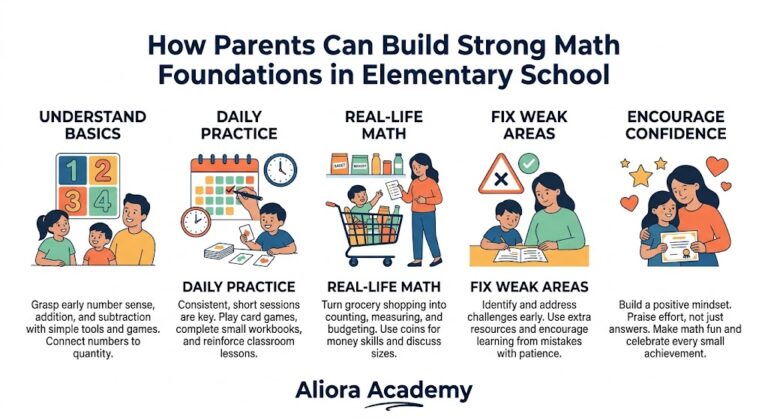
Parents play a key role in building math confidence. The goal is not to give answers but to guide thinking.
Effective strategies:
- Practice 10–15 minutes daily
- Use simple worksheets with visuals
- Ask “why” instead of only “what”
- Encourage estimation before solving
- Avoid pressure or negative feedback
Children learn better when math feels safe and predictable. A calm learning environment improves math confidence and reduces fear. If your child has developed a strong dislike for math, our guide on helping a child who hates math develop confidence offers additional strategies.
For structured support, parents can explore online math classes, which provide step-by-step guidance and consistent practice routines. A homeschool math program can also offer a comprehensive curriculum for at-home learning.
How can students build long-term confidence in math?
Math confidence grows when students understand concepts deeply and practice regularly. Regrouping is not just a topic; it is a foundation for advanced mathematics.
Key habits include:
- Daily short practice sessions
- Using visual learning tools
- Asking questions without hesitation
- Reviewing mistakes carefully
- Connecting math to real life
Students who develop strong logical thinking and independent learning skills perform better in higher grades like Grade 4 and Grade 5, especially in decimals, fractions, and geometry basics. If you notice persistent struggles, it's wise to check the signs your child is falling behind in math to intervene early.
FAQs
1. How can my child improve addition and subtraction with regrouping?
Regular practice using place value blocks, drawings, and step-by-step worksheets helps children understand regrouping logically instead of memorizing steps.
2. Why is regrouping important in Grade 3 math?
Regrouping builds the foundation for multi-digit operations, fractions, and decimals. Without it, students struggle in higher-level math.
3. Do online math classes help with regrouping?
Yes, structured online math classes provide visual explanations, guided practice, and personalized support that make regrouping easier to understand.
Conclusion
Teaching regrouping in Grade 3 requires patience, clarity, and strong foundational teaching. When children understand place value, they naturally understand why carrying and borrowing happen. With consistent practice, real-life examples, and guided learning, students build strong math confidence and problem-solving ability.
A strong foundation in addition and subtraction supports future topics like multiplication, fractions, and advanced reasoning. With the right approach, every child can develop strong mathematical thinking and long-term academic success. Explore our math learning resources for more tips and structured guidance.