How to Help a Child Who Hates Math Develop Confidence
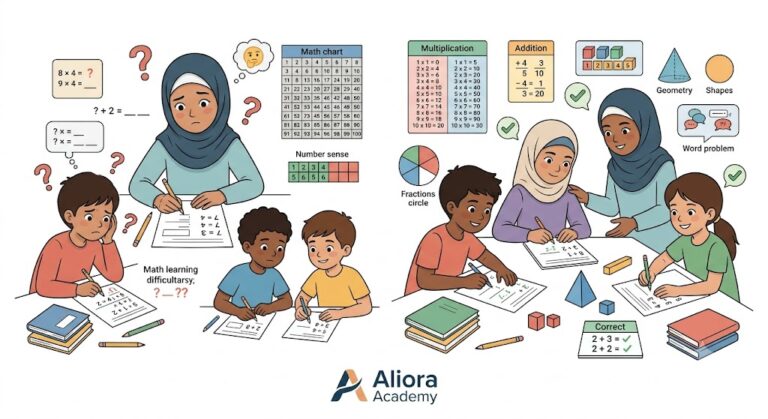
Many parents quietly worry when their child shows dislike or fear toward math. A common situation is a Grade 4 student who avoids homework, feels nervous during tests, and says, "I am just bad at math." In most cases, the issue is not ability but confidence and weak foundations in early number sense.
Understanding how to help a child who hates math develop confidence is important because math is not just a school subject. It builds logical thinking, problem-solving ability, and decision-making skills used in daily life. When a child loses confidence early, it can affect performance in higher grades like Grade 5 and beyond.
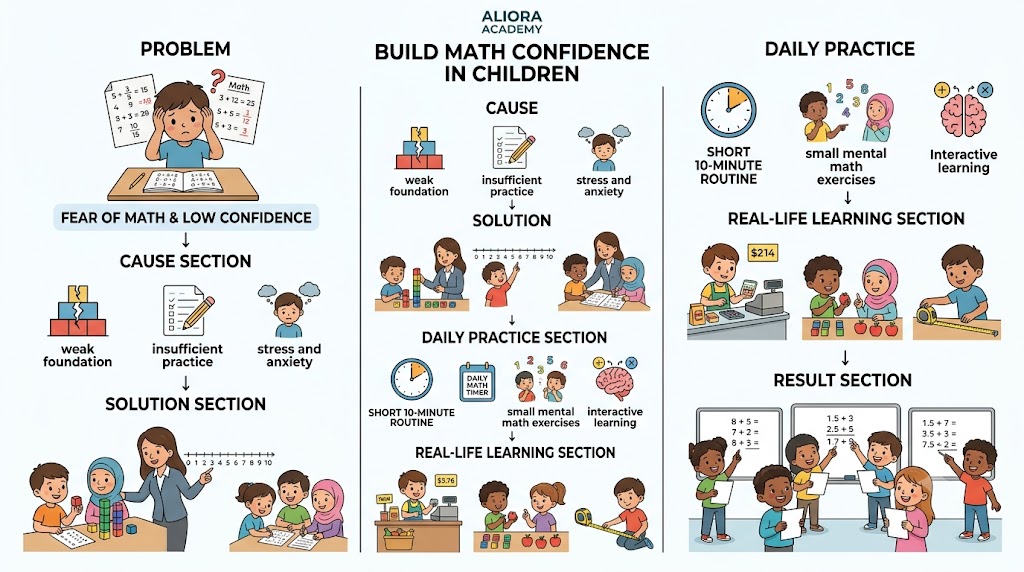
The most common causes include gaps in basic arithmetic, lack of practice, pressure during learning, and unclear explanations. Some children also struggle with multiplication practice or fractions help, which creates fear and avoidance.
The good news is that confidence in math can be rebuilt with the right guidance, structured learning, and consistent practice at home and in supportive environments like Aliora Academy.
Why do children struggle with math and lose confidence early?
Children usually do not "hate math" naturally. The dislike develops due to repeated confusion or negative experiences in class. One major reason is weak number sense, where a child cannot quickly understand how numbers relate to each other. This is at the heart of why children struggle with mathematics skills in school.
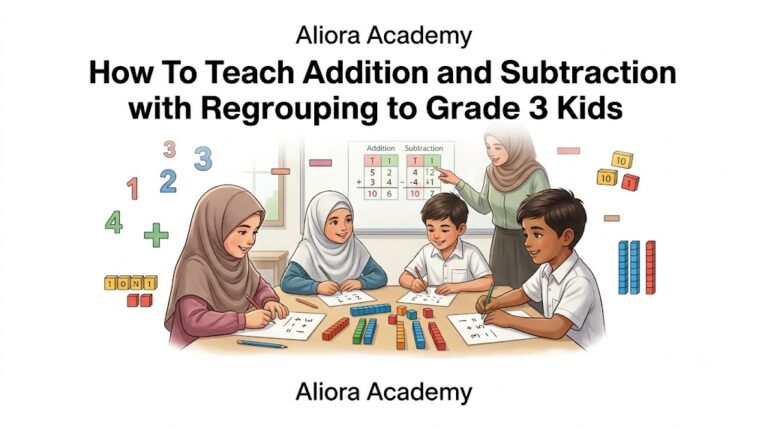
Another common issue is gaps in foundational topics. For example, a Grade 3 student who has not mastered addition and subtraction will struggle later with multiplication and division. This creates a chain reaction of confusion in higher topics.
Emotional pressure also plays a big role. When a child feels rushed or compared with others, anxiety increases. This reduces focus and leads to more mistakes, which further damages confidence.
Key reasons include weak understanding of basic operations, lack of consistent practice, fear of making mistakes in front of others, and poor explanation methods in early learning.
When these issues are addressed early, improvement becomes much easier and faster. If you're noticing persistent struggles, it may help to review the signs your child is falling behind in math to catch issues before they grow.
How can parents build math confidence at home step by step?
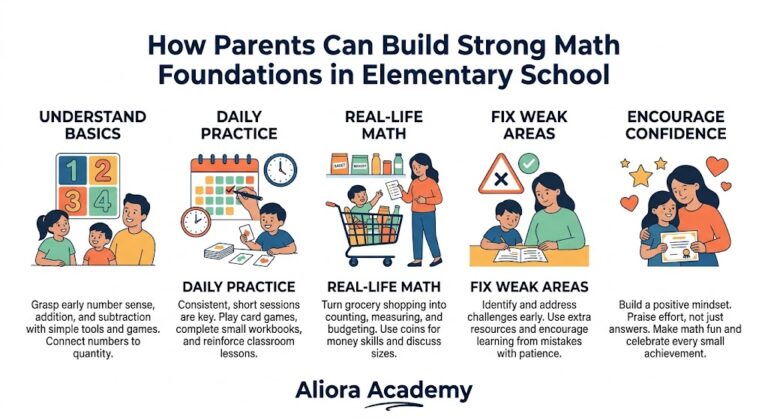
Parents play a central role in shaping a child's attitude toward math. The goal is not to increase pressure but to create a safe learning environment. This is one of the most effective ways to build math confidence in children at home.
Start by making math part of daily life. Simple activities like counting objects, measuring ingredients in cooking, or calculating shopping totals can improve problem solving skills naturally.
It is also important to break learning into small steps. Instead of forcing long exercises, focus on short, clear practice sessions that build understanding gradually.
Practical strategies include using real-life examples like money and time, practicing 10–15 minutes daily instead of long sessions, praising effort instead of correct answers only, and encouraging questions without judgment.
For structured learning support, parents can explore online math classes through Aliora Academy, where concepts are taught step-by-step for Grades 3–5 students. Building strong mental math strategies at home also accelerates confidence growth.
Why is number sense important in building long-term math success?
Number sense is the foundation of all mathematics learning. It helps children understand how numbers behave, compare values, and estimate answers quickly.
Without strong number sense, students often rely on memorization instead of understanding. This becomes a problem when they face multi-step questions in higher grades.
For example, Grade 5 students working on decimals or fractions need a strong understanding of how numbers relate, not just formulas.
To strengthen number sense:
- Use number lines for visual learning
- Practice mental math daily
- Encourage estimation before solving problems
- Use games and puzzles for engagement
A strong number sense makes topics like multiplication, fractions, and word problems much easier to handle. For early learners, math classes for Grade 3 focus heavily on building these foundational skills.
How can structured learning improve Grade 3, 4, and 5 math performance?
Structured learning ensures that students build skills in the correct order. For example, Grade 3 focuses on addition, subtraction, and multiplication basics, while Grade 4 introduces fractions and geometry basics. Grade 5 moves toward advanced fractions and multi-step problems.
Without structure, students often jump between topics and miss important foundations. This is where online math classes for improving student confidence in Grade 3 to 5 become especially valuable.
Aliora Academy provides structured pathways such as:
- Math classes for Grade 3 focusing on strong foundations
- Math classes for Grade 4 covering fractions and measurement
- Math classes for Grade 5 focusing on advanced problem solving
This step-by-step approach helps students connect concepts instead of memorizing them. For fifth graders who need extra support, online math tutoring for Grade 5 provides personalized attention.
Can real-life examples improve math understanding and reduce fear?
Yes, real-life examples are one of the most effective ways to reduce math fear. When children see math in daily life, it becomes meaningful instead of abstract. This approach is central to helping kids overcome fear of math learning.
Example 1: Grade 3 Multiplication Practice
A student struggled with multiplication tables. The teacher used snack distribution (e.g., 3 chocolates for each of 4 friends). The challenge was memorization; the solution was visual grouping. The outcome was improved recall and reduced fear.
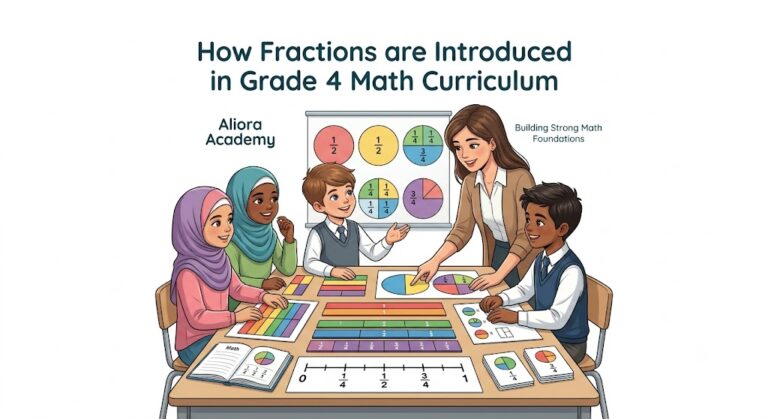
Example 2: Grade 4 Fractions Learning
A child found fractions confusing. Using pizza slices and drawing models helped simplify the concept. The challenge was abstract thinking; the solution was visual learning. The outcome was better understanding and confidence.
Example 3: Grade 5 Multi-Step Problems
A student struggled with word problems. Breaking them into smaller steps helped identify operations clearly. The challenge was confusion; the solution was step-by-step reasoning. The outcome was improved accuracy and logical thinking.
These examples show how practical learning reduces fear and improves math confidence.
How do online math classes support struggling learners effectively?
Many students hesitate in classroom environments because they fear judgment. Online math classes provide a flexible and supportive learning space where students can learn at their own pace.
The key advantage is personalized attention. Students can repeat concepts like fractions help, multiplication practice, or critical thinking without pressure.
Benefits include:
- Flexible learning schedule
- Focused concept-based teaching
- Step-by-step explanations
- Reduced performance anxiety
Aliora Academy's math learning program focuses on clarity, repetition, and gradual skill building, which is essential for long-term improvement.
What role does practice play in improving math confidence?
Practice is the backbone of mathematics learning. Without practice, even simple topics become difficult over time.
However, practice must be meaningful, not repetitive without understanding. Short, focused exercises work better than long worksheets.
Effective practice methods:
- Daily 10-minute revision sessions
- Mixed problem sets (addition, subtraction, word problems)
- Mental math exercises
- Real-world application tasks
Consistent practice builds fluency, reduces hesitation, and strengthens mathematics skills over time. Explore our math learning resources for more practice ideas and structured guidance.
FAQs
How can my child improve math skills at home?
Focus on daily short practice, real-life examples, and positive reinforcement. Avoid pressure and encourage small improvements consistently.
What is the best way to learn multiplication tables?
Use visual patterns, repetition in small chunks, and real-life grouping activities instead of memorization alone.
How do online math classes help students succeed?
They provide structured learning, personalized attention, and flexible pacing, helping students understand concepts deeply and build confidence.
Conclusion
Building math confidence in children is a gradual process that depends on understanding, patience, and consistent practice. When children develop strong number sense, they begin to see math as logical rather than difficult. Supporting them through structured learning, real-life examples, and guided practice creates long-term improvement.
Parents and educators must focus on reducing fear, improving problem solving, and strengthening foundational skills in Grades 3, 4, and 5. With the right support system like Aliora Academy, students can move from fear to confidence in mathematics step by step.