Mental Math Strategies That Help Children Calculate Faster
Mental math strategies for kids play a major role in helping students become confident and fast at solving calculations without depending too much on written steps or calculators. Many parents notice that their child knows the basics of addition or multiplication but still takes a long time to solve simple problems. For example, a Grade 4 student may struggle to quickly solve 48 + 37 in their head even after learning the concept in school. This slow calculation speed often affects confidence and classroom performance.
In many cases, the problem is not lack of intelligence but weak number sense and limited practice with mental calculation methods. Children are usually taught step-by-step written methods first, but they are not trained enough to think flexibly with numbers. As a result, they become dependent on paper instead of learning how numbers behave in real time.
Improving mental calculation skills is important because it directly supports problem solving, critical thinking, and overall mathematics skills. When children can calculate faster in their head, they perform better in exams, understand word problems more easily, and develop stronger confidence in math learning. This is one of the best ways to build fast calculation skills in kids from an early age.
This article explains practical and research-based strategies that help students from Grade 3 to Grade 5 improve speed, accuracy, and confidence in mathematics.
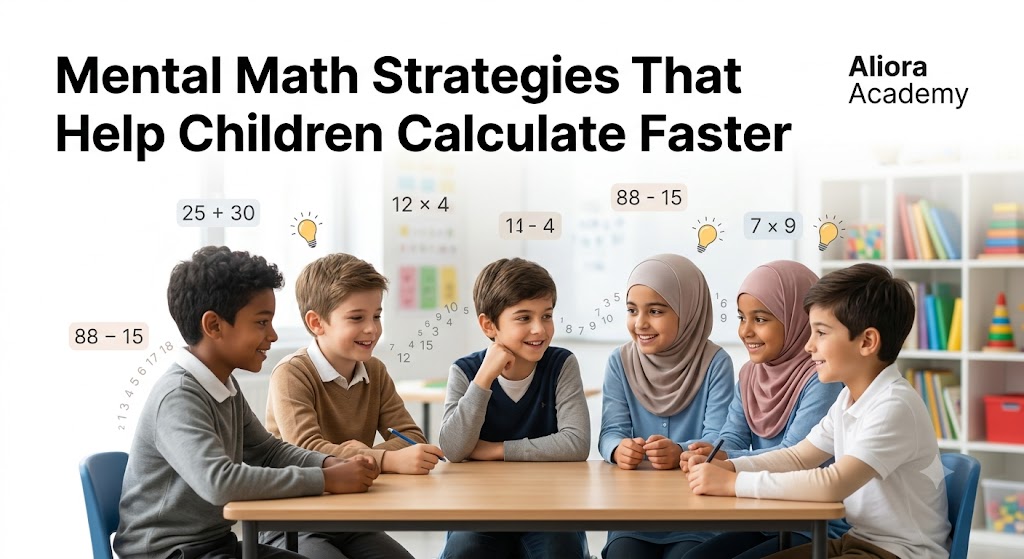
How can mental math improve a child's calculation speed and confidence?
Mental math improves a child's ability to understand numbers without relying on written methods. When students regularly practice thinking in numbers, their brain starts recognizing patterns quickly, which reduces hesitation during problem solving. This is the foundation of mental math techniques for children to improve calculation speed.
One important benefit is the development of number sense. Children begin to understand how numbers can be broken, grouped, or adjusted to make calculations easier. For example, instead of solving 29 + 36 directly, a child learns to think 30 + 35 = 65, which is faster and simpler.
Mental math also reduces exam pressure. Students who can calculate quickly feel more relaxed during tests because they do not get stuck on basic steps. This improves overall academic performance in subjects like mathematics and science.
Key improvements seen in students include faster addition and subtraction, better multiplication recall, improved focus during word problems, and higher confidence in classroom participation.
A structured approach like an online math learning program can further strengthen these skills by providing guided practice and daily exercises.
What are the best mental math strategies for Grade 3, Grade 4, and Grade 5 students?
Different grade levels need different mental math approaches because their learning capacity changes with age. These easy mental math tricks for Grade 3, Grade 4, Grade 5 students can be applied at home and in the classroom.
Grade 3 Strategies
For Grade 3 students, the focus is on building strong foundations. Simple strategies include:
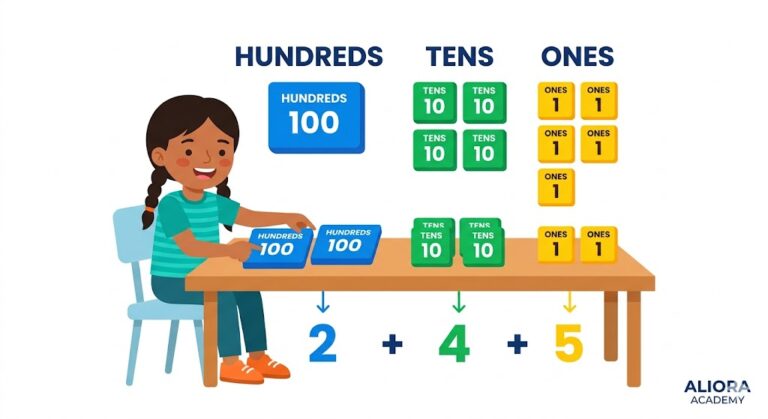
- Breaking numbers into tens and ones
- Using number bonds (10 + 5, 20 + 7)
- Practicing skip counting for multiplication basics
Grade 4 Strategies
For Grade 4 students, mental math becomes more advanced:
- Rounding numbers to make calculations easier
- Using compensation (49 + 23 → 50 + 22)
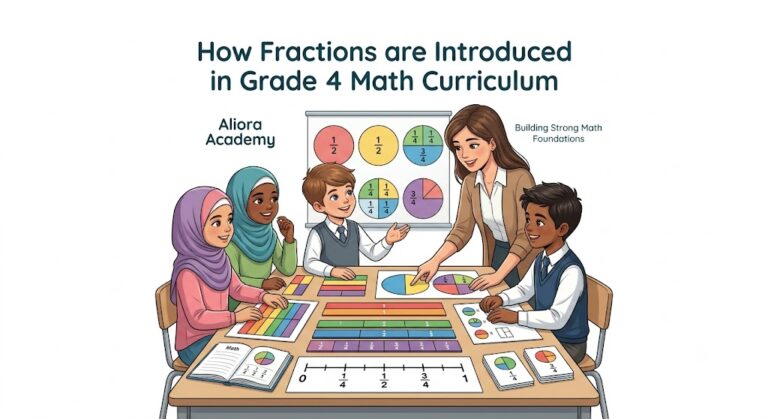
- Quick fraction comparisons using visual thinking
Grade 5 Strategies
For Grade 5 students, the focus shifts to multi-step thinking:
- Estimation before solving exact answers
- Mental division using multiplication facts
- Simplifying fractions in the head
These techniques are commonly taught in structured math classes for Grade 4, where students gradually move from basic to advanced mental calculations. For younger learners, foundational skills are built in math classes for Grade 3.
Example: Instead of solving 98 × 5 step-by-step, a student can think (100 × 5) - (2 × 5) = 500 - 10 = 490. This shows how flexible thinking improves speed.
Why do children struggle with mental calculations in early grades?
Many children struggle with mental math because they are trained to depend on written methods too early. They learn "how to write answers" before they learn "how to think with numbers."
Common reasons include:
- Weak understanding of place value
- Lack of daily number practice
- Fear of making mistakes
- Over-dependence on calculators or written steps
In Grade 3 and Grade 4, students often struggle with multiplication practice and basic arithmetic because they have not built strong number relationships. Without this foundation, mental calculation becomes difficult.
Another reason is that classroom teaching often focuses on final answers instead of thinking processes. When students do not understand why a method works, they cannot apply it mentally in different situations. If you're noticing persistent difficulties, it may help to review the signs your child is falling behind in math to catch issues early.
To fix this, guided support through a structured math learning program helps students rebuild confidence step by step and understand numbers logically instead of memorizing blindly.
How can parents support mental math learning at home effectively?
Parents play a major role in developing mental math habits. Even 10–15 minutes of daily practice at home can significantly improve calculation speed over time.
Simple methods parents can use:
- Ask quick oral questions during daily routines
- Use shopping scenarios for real-life addition and subtraction
- Practice multiplication tables during travel or free time
- Encourage estimation before giving exact answers
For example, while buying groceries, a parent can ask, "If milk costs 120 and bread costs 80, what is the total in your head?" This helps children connect math with real life.
Another important approach is patience. Parents should avoid rushing the child. Mental math is a skill that develops gradually, not instantly.
Children enrolled in structured math classes for Grade 3 often show faster improvement because they receive consistent practice combined with expert guidance.
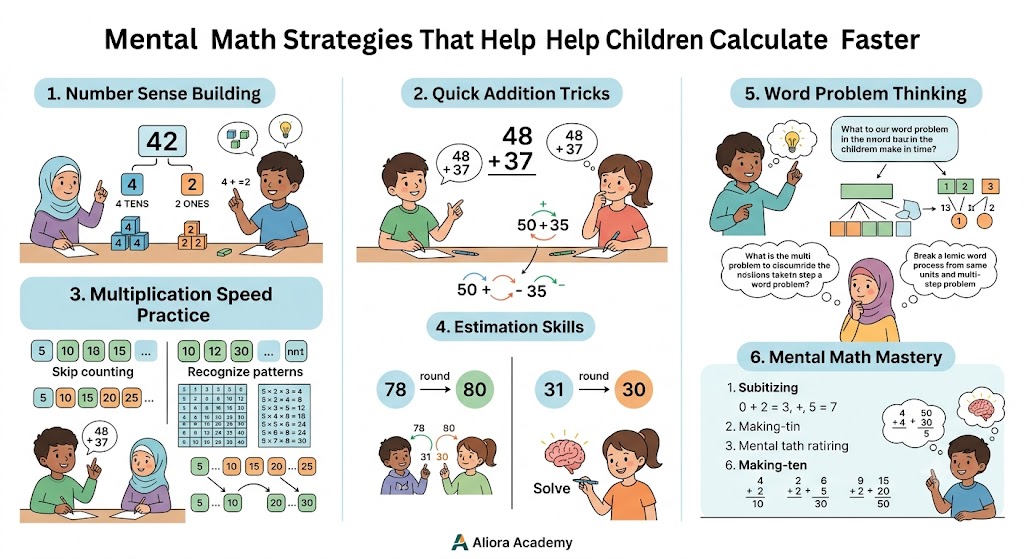
How can students improve mental math confidence and accuracy?
Confidence in math comes from repeated success and gradual challenge building. When students solve problems correctly in their head, they naturally start trusting their abilities. This is central to understanding how to improve mental math skills in primary school students.
Practical steps for improvement: start with easy problems and slowly increase difficulty, practice daily for short sessions instead of long study hours, focus on understanding patterns not memorization, and review mistakes calmly to learn from them.
A Grade 4 student struggling with fractions, for example, can use visual thinking like slicing a pizza into equal parts to understand better. This builds both clarity and confidence.
Students who join structured math classes for Grade 5 often develop stronger confidence because they learn how to break complex problems into smaller mental steps, especially in multi-step word problems. For older students, online math tutoring for Grade 5 can provide personalized support.
Real-Life Learning Examples
Example 1: Grade 3 Student Improving Multiplication Skills
A student struggled with slow multiplication recall. The challenge was weak table memory. The solution involved daily skip counting and number pattern games. The result was faster recall and improved classroom participation.
Example 2: Grade 4 Student Mastering Fractions
A student found fractions confusing in textbooks. The solution was using visual diagrams like dividing shapes into equal parts. The outcome was clearer understanding and better test performance.
Example 3: Grade 5 Student Solving Multi-Step Problems
A student had difficulty with word problems involving multiple steps. The solution was breaking problems into smaller parts mentally. The result was improved accuracy and reduced exam stress.
FAQs
How can my child improve math skills at home?
Regular short practice, real-life math examples, and daily oral questions can significantly improve understanding and speed.
What is the best way to learn multiplication tables?
Consistent repetition, skip counting, and pattern recognition are the most effective methods for mastering tables.
How do online math classes help students succeed?
They provide structured learning, expert guidance, and regular practice that strengthens both understanding and confidence.
Conclusion
Mental calculation skills are essential for building strong mathematics ability in children. With consistent practice, students improve number sense, problem solving, and math confidence. Whether in Grade 3, Grade 4, or Grade 5, developing mental math habits early helps students perform better in exams and everyday situations. Parents and teachers who focus on small daily improvements can build a strong foundation for long-term academic success. Explore our math learning resources for more tips and structured guidance.