Best Homeschool Math Programs For Elementary Students
The best homeschool math programs for elementary students are becoming a major need for parents who want structured and effective learning at home. Imagine a Grade 4 child who can read fluently but struggles with fractions or multi-step word problems. The parent tries to help, but the child quickly loses confidence and avoids math homework altogether. This is a common situation in many homes.
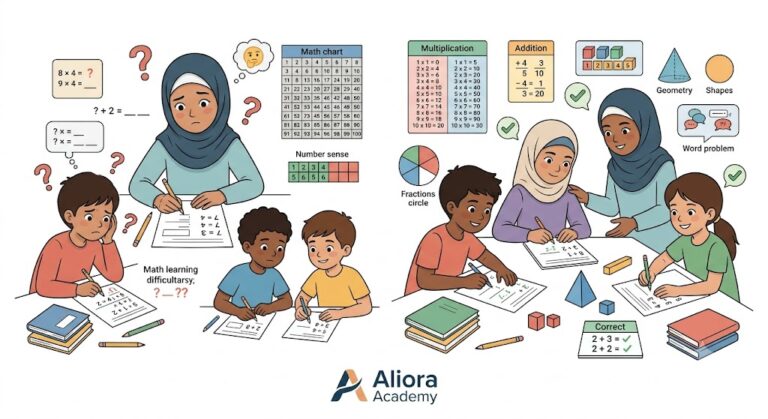
The real issue is not lack of effort, but lack of a clear learning system. Many children struggle because they miss foundational skills like number sense, arithmetic fluency, and problem-solving strategies. Without these basics, even simple math becomes stressful.
Homeschooling math becomes successful when it follows a structured path, starting from basics and gradually moving toward advanced concepts like decimals, geometry, and critical thinking. A good program builds confidence step by step, instead of overwhelming the child.
This is where guided learning systems, structured practice, and expert-designed programs like Aliora Academy’s math learning approach can make a measurable difference.
What makes a homeschool math program effective for elementary students?
A strong homeschool math program is not just worksheets or random practice. It must follow a structured learning progression that matches how children actually learn mathematics. This is the foundation of best ways to teach elementary math at home.
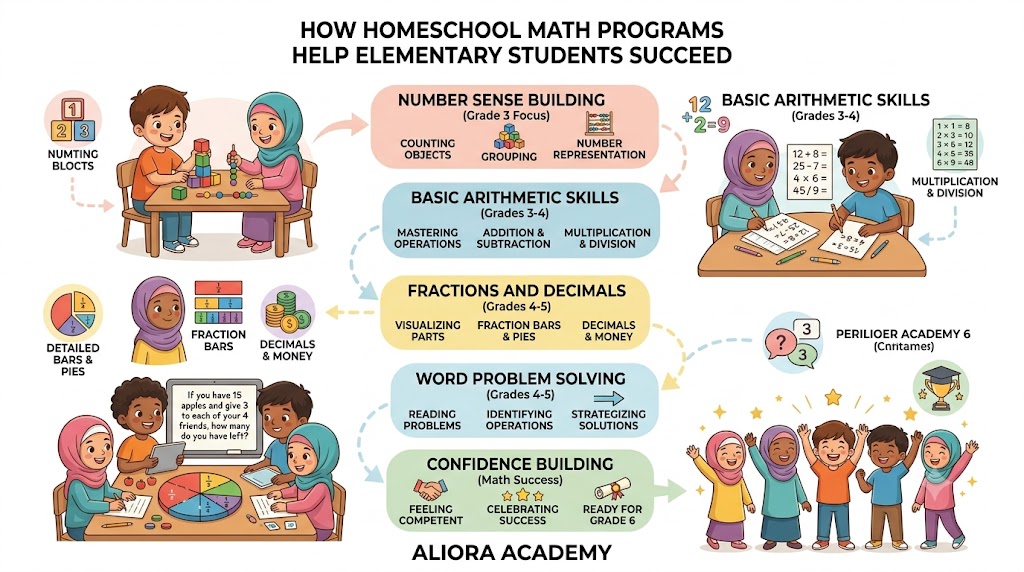
An effective program focuses on:
- Building number sense first
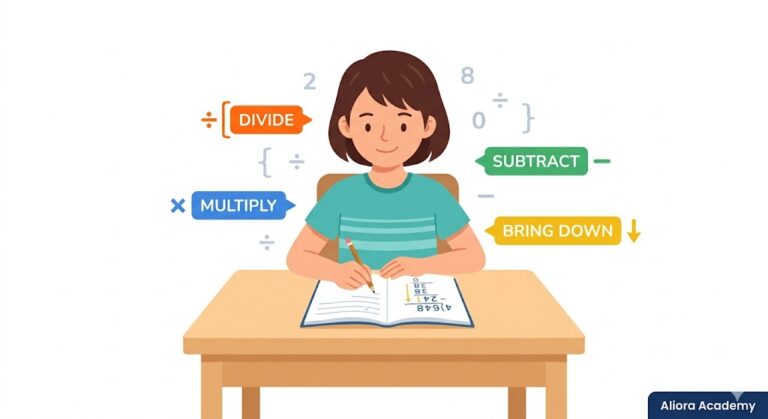
- Strengthening addition, subtraction, multiplication, and division
- Gradually introducing fractions and decimals
- Encouraging logical thinking and word problem solving
For example, Grade 3 students need repetition in multiplication tables and place value understanding before moving to complex word problems. Without this step, confusion builds quickly.
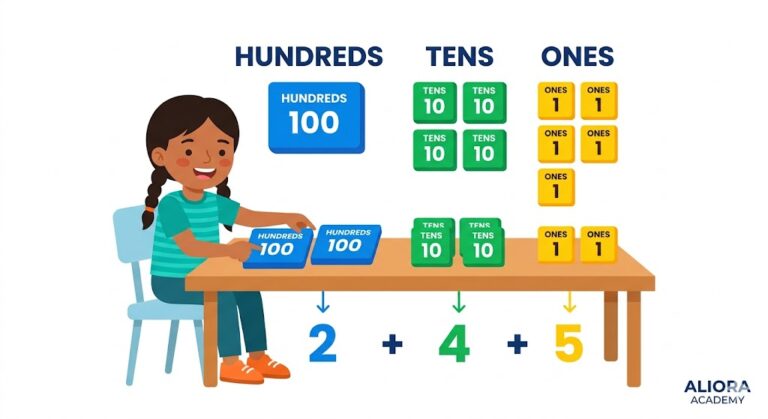
A good program also includes visual learning tools. Many children understand math better when they see it through objects, diagrams, or real-life examples like money, time, or measurements.
Programs such as structured math learning program are designed to follow this progression in a systematic way.
Ultimately, effectiveness depends on consistency, clarity, and step-by-step skill development rather than speed.
Why do children struggle with math in homeschool learning environments?
Children often struggle with math at home because learning becomes unstructured and inconsistent. Unlike school classrooms, homeschool environments may lack routine practice and expert feedback.
The most common reasons include:
- Weak foundational arithmetic skills
- Lack of daily practice in multiplication and division
- Poor understanding of word problems
- Limited exposure to visual or applied learning
For instance, a Grade 3 student may know addition but struggle when it appears in story problems. The issue is not math ability, but comprehension and application.
Another major reason is emotional pressure. When parents try to teach without proper methods, children may feel stressed or confused, leading to math anxiety.
Structured guidance, such as math classes for Grade 3, helps remove this confusion by providing step-by-step instruction and practice routines.
The key is consistency. Even 20–30 minutes of focused daily practice can significantly improve understanding over time.
How can students improve math confidence at home?
Math confidence is built through small, repeated successes. When a child solves problems independently, even simple ones, their confidence naturally increases.
To build confidence:
- Start with easy problems before moving to harder ones
- Use real-life examples like shopping or cooking
- Encourage mental math instead of relying only on calculators
- Praise effort, not just correct answers
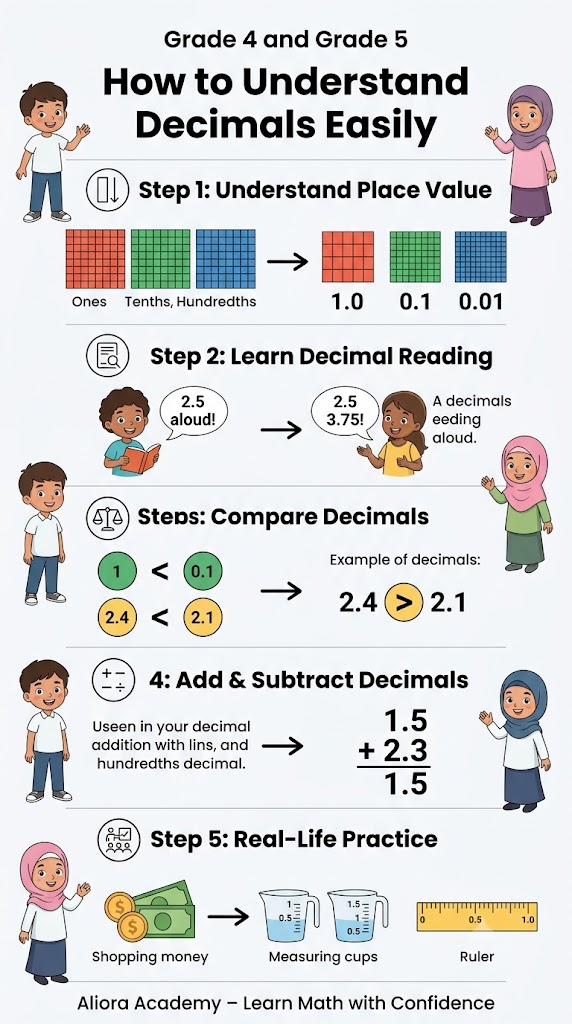
For example, a Grade 5 student struggling with decimals can start by working with money calculations. This makes abstract concepts more concrete.
Confidence also improves when children understand “why” behind answers, not just memorizing steps. Programs like online math tutoring for Grade 5 students help students learn at their own pace with guided support.
When children feel they can solve problems independently, they begin to enjoy mathematics instead of fearing it.
How do homeschool math programs support Grade 3, 4, and 5 learning levels?
Each grade level has different math needs, and a strong program must adapt accordingly. This is central to providing online math support for Grade 3, 4, and 5 students.
Grade 3 Focus
Grade 3 focuses on place value understanding, basic multiplication and division, simple word problems, and number patterns. For targeted support, math classes for Grade 3 help solidify these foundational skills.
Grade 4 Focus
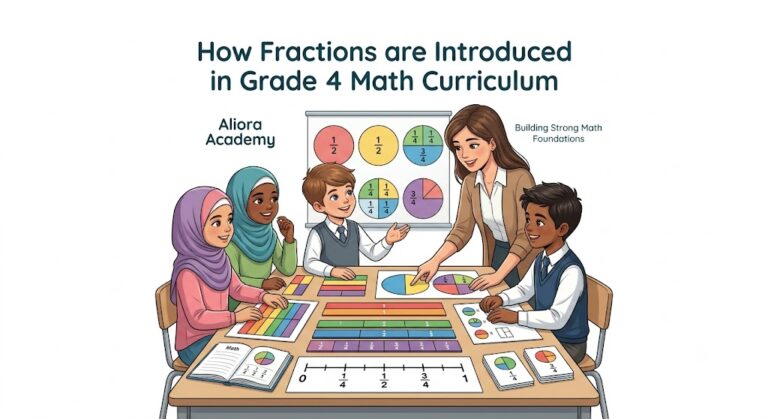
Grade 4 introduces multi-digit operations, fractions and measurement, geometry basics, and more complex problem solving. A structured system such as math classes for Grade 4 ensures that each topic is taught in a logical sequence, reducing learning gaps.
Grade 5 Focus
Grade 5 builds advanced skills including fractions and decimals, multi-step word problems, logical reasoning, and early algebra concepts. Programs like math classes for Grade 5 integrate real-life examples to make learning concrete.
When students progress step by step, their understanding becomes stable and long-lasting.
Can real-life examples improve elementary math learning at home?
Yes, real-life examples are one of the most effective ways to teach math. Children understand better when math connects to daily life situations. This is a key element of an elementary math learning program for parents to implement at home.
Example 1: Grade 3 Multiplication Practice
A student struggled with memorizing tables. The solution was using daily objects like counting toys in groups. After consistent practice, the child improved speed and accuracy.
Example 2: Grade 4 Fractions Learning
A student found fractions confusing. Using pizza slices and visual charts helped the child understand parts of a whole, improving performance in school tests.
Example 3: Grade 5 Word Problems
A student struggled with multi-step problems. Breaking the question into smaller steps and using real-life money examples improved problem-solving ability significantly.
These examples show that learning becomes easier when math is connected to real experiences instead of abstract formulas. For students who struggle with decimals, understanding decimals for Grade 4 and 5 provides additional visual strategies.
How can parents support math learning effectively at home?
Parents play a major role in shaping a child’s math experience. Support does not mean solving every problem for the child, but guiding them in the right direction. This is a key part of choosing a homeschool math curriculum for kids at home.
Effective strategies include:
- Setting a fixed daily study routine
- Encouraging independent problem solving
- Using mistakes as learning opportunities
- Avoiding pressure or comparison with others
One important factor is patience. Children often take time to understand concepts like division or decimals, and rushing them can reduce confidence.
Another key strategy is linking math with daily life activities such as budgeting, cooking measurements, and time management. This builds practical understanding. For additional techniques, mental math strategies for kids can accelerate calculation speed and confidence.
Structured support systems like online math classes can also guide parents in teaching methods that align with school curriculum standards.
Why are structured homeschool math programs better than random practice?
Random practice often leads to uneven learning. A child may know multiplication but still struggle with fractions or geometry because there is no learning sequence.
Structured programs ensure:
- Step-by-step concept building
- Balanced practice across topics
- Continuous skill reinforcement
- Clear learning goals
Without structure, gaps in understanding grow over time. This is especially visible in Grade 4 and Grade 5 students who suddenly struggle with complex problems.
A guided system prevents confusion and builds long-term mathematical understanding. If your child already shows signs of falling behind, review the signs your child is falling behind in math to catch issues early. For rebuilding confidence, helping a child who hates math offers practical guidance.
FAQs
How can my child improve math skills at home?
Consistent practice, real-life examples, and step-by-step learning help children improve math skills. Focus on daily short sessions instead of long, stressful study hours.
What is the best way to learn multiplication tables?
Regular repetition combined with visual methods like grouping objects or flashcards works best. Understanding patterns makes memorization easier.
How do online math classes help students succeed?
Online classes provide structured lessons, expert guidance, and personalized pacing. They help students build confidence and improve problem-solving skills effectively.
Conclusion
The right homeschool math approach builds strong foundations in number sense, problem solving, and logical thinking. When learning is structured, children move from confusion to clarity step by step.
Parents should focus on consistency, patience, and practical learning methods instead of pressure. Elementary math success depends on building confidence early and strengthening core skills gradually. Explore our math learning resources for more tips and structured guidance.
With the right guidance, students in Grade 3, Grade 4, and Grade 5 can develop strong mathematical abilities that support long-term academic success.