Signs Your Child Needs Extra Homework Support This School Year
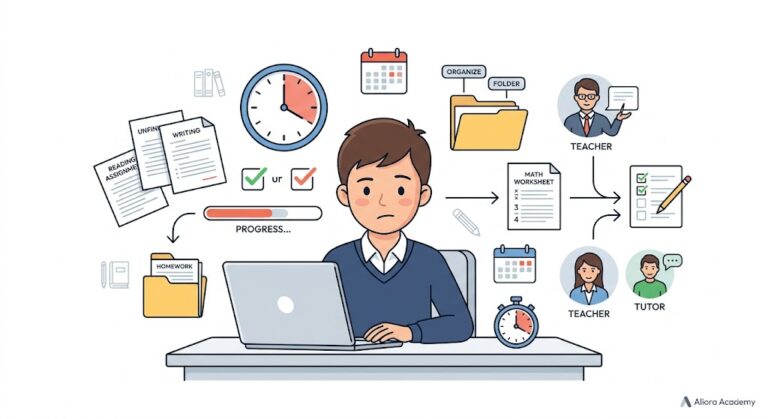
Signs Your Child Needs Extra Homework Support This School Year often appear quietly at home, especially when a child starts spending long evenings struggling with assignments. A parent may notice a Grade 3 student sitting with a simple math sheet for an hour, or a Grade 5 student avoiding homework altogether after school. These small changes usually signal a deeper learning or confidence gap that should not be ignored.
In many homes, homework becomes a daily stress point instead of a learning routine. Children may forget instructions, take too long to complete tasks, or rely heavily on parents for even basic questions. These patterns can affect academic confidence, study habits, and long-term classroom performance if not addressed early.
Common causes include weak foundational skills, lack of time management, poor understanding of concepts, or simply not having the right learning support system. The good news is that with structured guidance and consistent support, students can rebuild confidence and become independent learners again.
Why does my child struggle to complete homework?
One of the most common early signs of homework struggle in children is slow or incomplete homework. When a child consistently takes too long or avoids finishing tasks, it usually points to missing academic foundations or weak understanding of classroom lessons. If this sounds familiar, you may want to read about why your child takes so long to finish homework for deeper insight.
In Grade 3, this often appears in basic math confusion or difficulty reading instructions. In Grade 4, students may struggle with comprehension tasks or organizing written answers. By Grade 5, challenges often shift toward multi-step problems, essays, and subject coordination.
Key reasons include:
- Weak concept understanding in core subjects
- Poor reading comprehension skills
- Lack of structured study habits
- Distraction and low focus at home
For example, a Grade 3 child may know the answer but cannot read the question properly. This is not laziness—it is a learning gap that needs targeted support. Parents often assume the child is careless, but in reality, they may need guided instruction.
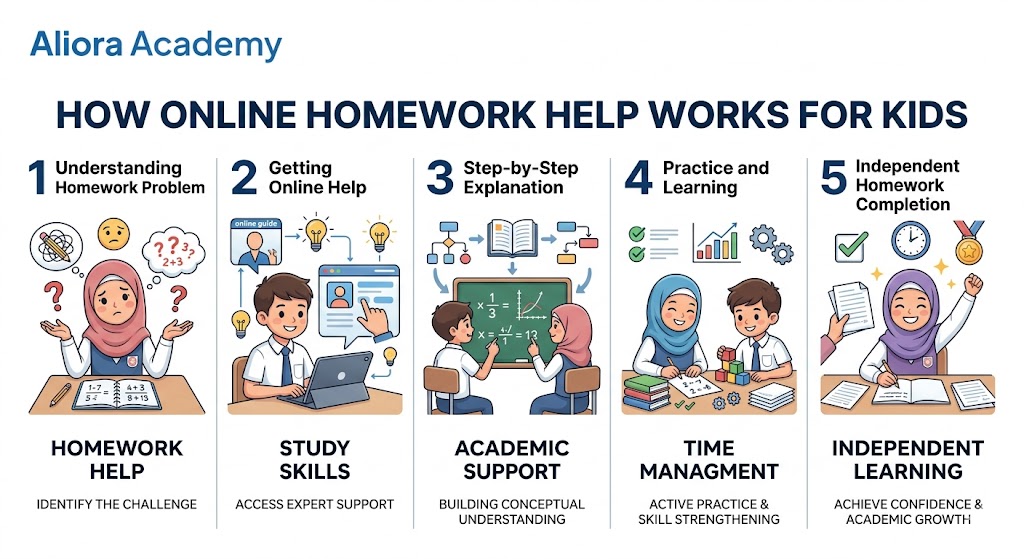
A structured system like an online homework help approach can help identify these gaps early and build consistent learning routines that reduce daily struggle.
What causes homework stress in elementary students?
Homework stress is often a result of pressure building up over time. When children feel overwhelmed, they begin to associate homework with frustration instead of learning. This is one of the strongest homework difficulty indicators for elementary students.
Stress commonly appears when:
- Assignments are too difficult for current skill level
- Instructions are unclear
- The child lacks independent learning skills
- Work is rushed due to poor planning
A Grade 4 student, for example, may understand reading content but struggle to organize answers properly. This leads to frustration and avoidance. Similarly, Grade 5 students may feel stressed when juggling multiple subjects without a clear study plan. For practical strategies, check out our guide on how to help your child complete homework without stress.
Parents can help by:
- Breaking tasks into smaller steps
- Setting a fixed homework routine
- Encouraging short breaks between tasks
- Avoiding pressure-based correction
Over time, reducing stress improves not only homework completion but also academic confidence and motivation.
How can parents support homework without doing it for their child?
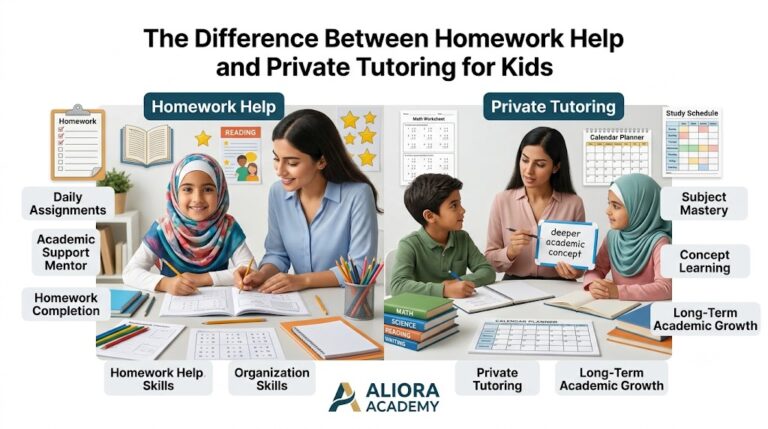
Many parents unintentionally take over homework, which reduces the child's independence. A better approach is guided support, not direct solving. This builds problem-solving skills and long-term learning ability. Understanding when students need academic homework assistance at home helps parents strike the right balance.
A balanced support system includes:
- Asking guiding questions instead of giving answers
- Helping the child read instructions carefully
- Encouraging the child to explain the answer in their own words
- Creating a distraction-free study environment
For example, if a Grade 4 student struggles with a writing task, instead of writing it for them, a parent can ask: "What is the main idea you want to explain?" This builds thinking skills.
If difficulties continue, structured support such as a homework help program can provide step-by-step guidance while still keeping the child actively involved in learning.
Why do some students take longer to finish assignments?
Extended homework time is one of the clearest homework completion warning signs. If a child consistently takes much longer than expected, it usually means they are missing efficiency skills, not intelligence. This is often how parents discover how to know if your child needs homework help program support.
Common causes include:
- Poor time management skills
- Re-reading instructions multiple times due to confusion
- Lack of focus or frequent distractions
- Weak foundational knowledge in previous grades
A Grade 3 student may spend too long on simple math because of hesitation. A Grade 5 student may delay essays because they don't know how to start structuring ideas.
Example improvement strategies:
- Set a timer for short homework sessions
- Teach step-by-step task breakdown
- Use visual planners or checklists
- Encourage daily reading habits
With practice, students gradually improve speed, accuracy, and confidence.

How can students become more independent learners?
When students rely too much on help, they struggle in higher grades. Developing independent learning skills is essential for long-term academic success.
Independence grows when students:
- Learn to read instructions carefully
- Practice solving problems before asking for help
- Build consistent study routines
- Reflect on mistakes and improve
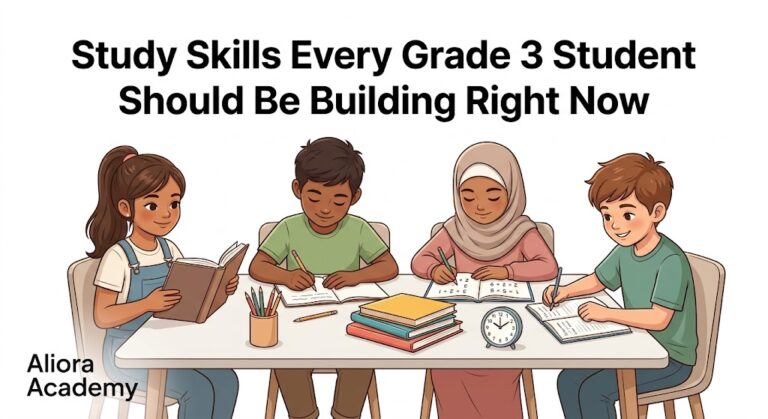
For Grade 3 students, independence starts with simple tasks like reading aloud and solving basic math independently. Grade 4 students should focus on organizing homework and managing short projects. Grade 5 students should gradually handle research tasks and essay writing with minimal guidance.
A structured homework help for Grade 3 approach builds early foundations, while Grade 4 homework help and Grade 5 homework support programs strengthen higher-level skills like planning, writing, and analysis. For a broader overview, you can also explore online homework help programs for elementary students.
Real-Life Examples of Homework Challenges and Solutions
Example 1: Grade 3 student struggling to finish homework on time
A child spends more than an hour on basic math worksheets and becomes frustrated.
Solution: Break homework into small parts and use guided reading techniques for instructions.
Outcome: The child completes tasks faster and gains confidence in basic problem-solving.
Example 2: Grade 4 student improving organization skills
A student forgets assignments and submits incomplete work.
Solution: Introduce a daily checklist and structured homework schedule.
Outcome: Improved organization skills and consistent assignment completion.
Example 3: Grade 5 student managing multi-subject homework
The student feels overwhelmed by math, science, and English homework on the same day.
Solution: Teach priority planning and subject-wise time allocation.
Outcome: Better student productivity and reduced homework stress.
Why is homework completion important for academic growth?
Homework is not just practice—it builds discipline, responsibility, and concept clarity. Students who complete homework regularly develop stronger classroom performance and better exam readiness.
Without consistent homework habits, gaps in understanding grow over time. This affects future topics, especially in subjects like math and science where concepts build step-by-step.
How can parents reduce homework stress at home?
Parents play a key role in shaping homework experience. A calm and structured environment reduces pressure and improves focus.
Effective strategies include:
- Fixed homework timing every day
- Quiet study space without distractions
- Encouragement instead of criticism
- Short breaks during long tasks
When stress reduces, children naturally perform better and show more interest in learning. For additional tips and resources, visit our homework category for more articles on building strong study habits.
FAQs
How can I help my child finish homework faster?
Focus on routine and structure. Set a fixed time, remove distractions, and break tasks into smaller steps. Encourage your child to attempt answers independently before helping.
What should I do if my child refuses to do homework?
Check the root cause first. It may be difficulty, stress, or lack of understanding. Start with small tasks and gradually rebuild confidence instead of forcing long study hours.
How does online homework help improve academic performance?
It provides structured guidance, concept clarity, and step-by-step learning support. Programs like homework help for Grade 5 focus on building independence and subject mastery.
Conclusion
Recognizing early learning challenges is important for every parent. Signs like slow homework completion, stress, avoidance, and lack of independence should not be ignored. These indicators often point to gaps in study skills, time management, or academic understanding.
With the right support, students can develop stronger study habits, improved academic confidence, and better independent learning skills. Consistent guidance, structured routines, and proper homework support can significantly improve performance across Grade 3, Grade 4, and Grade 5.
Aliora Academy's homework help program is designed to bridge these learning gaps and build stronger educational foundations for children at every stage.