Math Homework Help for Elementary Students: Strategies That Actually Work
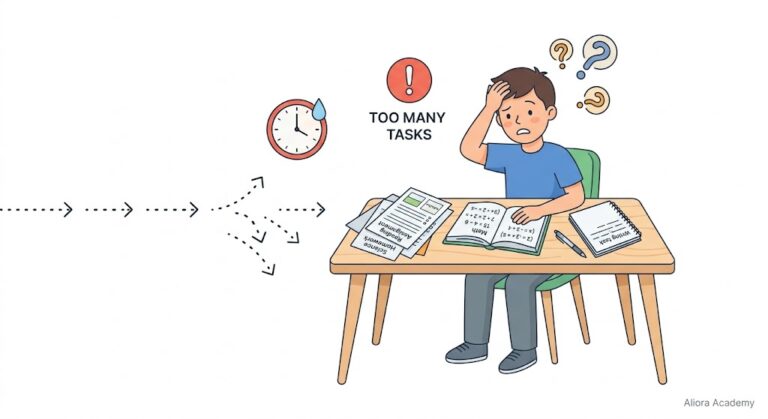
effective math homework strategies for elementary students are something every parent starts searching for when evenings become stressful and homework turns into a daily struggle. Imagine a Grade 3 child sitting at the dining table, staring at simple addition problems but taking 40 minutes just to finish a few questions. The parent tries to help, but the confusion grows, frustration builds, and what should be a learning moment turns into stress for both.
This situation is very common in early education. Many children struggle not because they are weak in math, but because they lack study structure, clear understanding, or independent learning habits. Some students move too fast in class and miss basics, while others simply need more guided practice at home.
The goal of this guide is to explain why math homework becomes difficult and how parents can turn it into a simple, structured, and confidence-building routine. These strategies are designed to improve homework completion, focus, and academic confidence for Grades 3, 4, and 5 learners.
Why does my child struggle to complete math homework?
Many parents assume poor performance is the issue, but in reality, most homework struggles come from foundational gaps. When students lack understanding of earlier concepts, even simple problems feel complex.
One major reason is weak concept clarity. For example, a Grade 3 student who does not fully understand place value will struggle with addition carrying. Without clarity, frustration increases and homework takes longer.
Another common issue is lack of focus and routine. Children often switch between distractions like mobile phones, TV noise, or tiredness after school. This reduces their ability to concentrate on math tasks.
A third reason is missing step-by-step problem-solving skills. Students try to solve everything in one step instead of breaking problems into smaller parts.
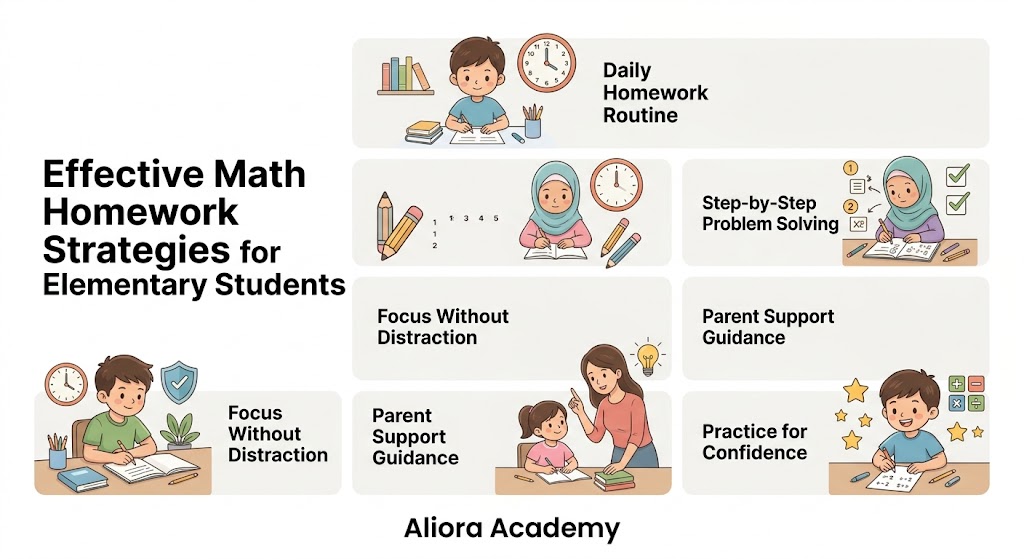
Simple improvements include:
- Setting a fixed homework time daily
- Explaining one concept at a time
- Using real-life examples like counting money or objects
- Encouraging short breaks between tasks
Structured learning support such as an online homework help program can also guide students with step-by-step explanations and reduce confusion. If your child seems to take unusually long with assignments, it might be worth reading about why children take so long to finish homework.
How can students improve math understanding with better study habits?
Building strong study habits is more effective than repeating the same worksheet multiple times. When children develop the right approach, even difficult math becomes manageable.
Students need consistent practice routines. For example, solving 10–15 minutes of math daily is more effective than long weekend study sessions. This builds memory and speed.
Another important habit is active learning. Instead of just reading questions, students should:
- Write each step clearly
- Use diagrams or drawings for word problems
- Check answers by reverse calculation
Grade 4 students especially benefit from this approach because they begin handling multi-step problems.
Parents can also introduce structured guidance using homework help for Grade 4 programs that focus on improving independent problem-solving skills and academic organization. For younger children, foundational strategies found in study skills for Grade 3 can make a real difference.
Over time, students develop:
- Better accuracy
- Faster problem-solving
- Improved confidence in math tasks
Why is homework taking too long for some students?
Long homework time is one of the biggest concerns for parents. A simple 20-minute assignment can stretch into an hour due to multiple hidden issues.
One key reason is lack of understanding of instructions. Many students do not fully read what the question is asking, especially in word problems.
Another reason is poor time management skills. Children often spend too much time on one question and lose track of overall progress.
Distractions also play a big role. Even small interruptions can break concentration and slow down completion speed.
To solve this, parents can:
- Divide homework into small sections
- Use a timer for each subject
- Remove distractions during study time
- Encourage short mental breaks
For example, a Grade 5 student handling multiple subjects can benefit from homework help for Grade 5, which teaches structured planning for complex assignments. Additionally, building structured homework sessions into the daily routine can significantly reduce wasted time.

How can parents support homework without doing it for the child?
Parents play an important role, but direct solving can reduce a child’s independence. The goal is guidance, not replacement.
Instead of giving answers, parents should ask guiding questions like:
- “What do you understand from this question?”
- “Which step should we try first?”
This helps children think independently.
Another effective approach is creating a fixed homework environment. A quiet space with minimal distractions improves focus significantly.
Parents should also encourage learning responsibility. For example:
- Let the child check their own answers first
- Encourage re-attempts instead of correcting immediately
- Praise effort, not just correct answers
For structured support, a homework help program can help parents maintain balance between guidance and independence. If your child is showing persistent avoidance or emotional outbursts around math, it may be worth considering the signs your child needs extra homework support this school year.
Why do some children avoid homework every day?
Homework avoidance is usually a sign of emotional or academic difficulty, not laziness. Children often avoid tasks they feel unsure about.
One major cause is fear of making mistakes. If a child has struggled repeatedly, they may start avoiding homework altogether.
Another reason is lack of motivation. Without understanding why learning matters, students lose interest quickly.
Tiredness after school also contributes. Younger learners, especially Grade 3 students, often need rest before starting assignments.
Solutions include:
- Breaking homework into short sessions
- Making learning more interactive
- Using real-world examples like shopping math or measuring objects
- Encouraging small achievements daily
For early learners, homework help for Grade 3 focuses on building confidence through simple, engaging practice. More broadly, online homework help programs for elementary students can provide the consistency many children need to overcome math anxiety.
Real-Life Learning Examples
Example 1: Grade 3 student struggling with completion
A student was taking more than one hour to finish basic addition homework. The issue was not ability but confusion with steps.
Solution: The teacher introduced step-by-step breakdown and short 10-minute practice sessions.
Outcome: Homework time reduced, and confidence improved significantly.
Example 2: Grade 4 student improving organization skills
A student often forgot assignments and mixed subjects.
Solution: A daily checklist and structured homework routine were introduced.
Outcome: Improved organization and timely homework submission.
Example 3: Grade 5 student handling multi-subject workload
A student struggled with math, science, and English homework together.
Solution: Time-block scheduling and guided practice were used.
Outcome: Better time management and independent study habits.
FAQs
How can I help my child finish homework faster?
Focus on routine, remove distractions, and break tasks into small parts. Encourage understanding instead of memorization. Consistency improves speed naturally.
What should I do if my child refuses to do homework?
First understand the reason. It may be difficulty, fatigue, or fear. Start with easier tasks, offer support, and avoid pressure. Build confidence gradually.
How does online homework help improve academic performance?
Structured online homework help provides step-by-step explanations, personalized learning support, and improves understanding of difficult topics, especially in math.
Conclusion
Strong math learning is built through consistency, not pressure. When students develop proper study habits, structured routines, and guided learning support, homework becomes easier and less stressful.
Focusing on homework completion, time management, independent learning, and academic confidence helps children succeed in Grades 3, 4, and 5.
With the right approach and supportive learning environment, every child can improve their math skills and develop long-term academic confidence.