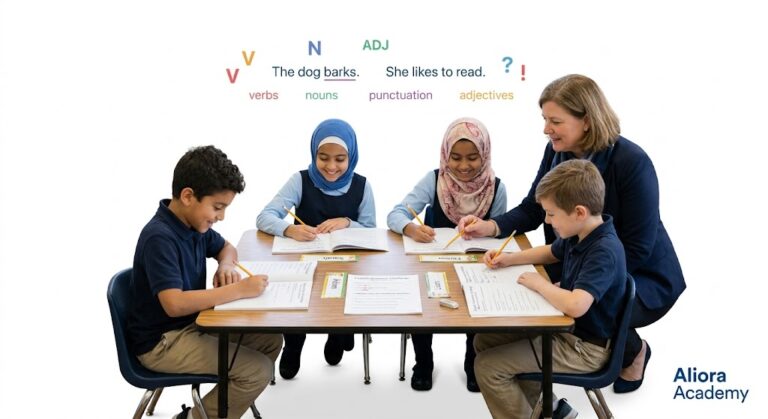
How to Build Your Child's Confidence in Speaking English
Many parents notice a common situation at home: a child knows basic English words but becomes silent when asked to speak. For example, a Grade 3 student may understand simple sentences like “What is your name?” but struggle to answer confidently in class. This lack of confidence is not about intelligence; it is about language exposure, practice, and fear of mistakes.
This challenge often appears when children do not get enough speaking practice in real situations. In many cases, they are taught grammar rules but are not encouraged to speak freely. As a result, they hesitate, pause too much, or switch back to their native language.
Building English speaking confidence is important because it directly affects academic performance, classroom participation, and long-term communication skills. A confident speaker learns faster, participates more, and develops stronger English communication skills over time.
The good news is that confidence in speaking English can be developed step by step through structured learning, daily practice, and supportive teaching methods.
Why do children struggle with English speaking confidence?
Children often struggle to speak English confidently due to psychological and environmental reasons rather than lack of knowledge. Even when they understand grammar or vocabulary, they hesitate to speak.
One major reason is fear of making mistakes. Many students feel that if they say something wrong, they will be corrected or laughed at. This creates mental pressure and blocks natural speaking ability.
Another reason is lack of speaking practice at home or school. Students may read and write English but rarely get the chance to speak full sentences in real conversations.
Common causes include:
- Limited English conversation exposure
- Over-focus on memorization instead of communication
- Fear of teacher or peer judgment
- Weak listening skills affecting response speed
For example, a Grade 4 student may write correct answers in exams but stay quiet during oral activities because they are not used to speaking in full sentences.
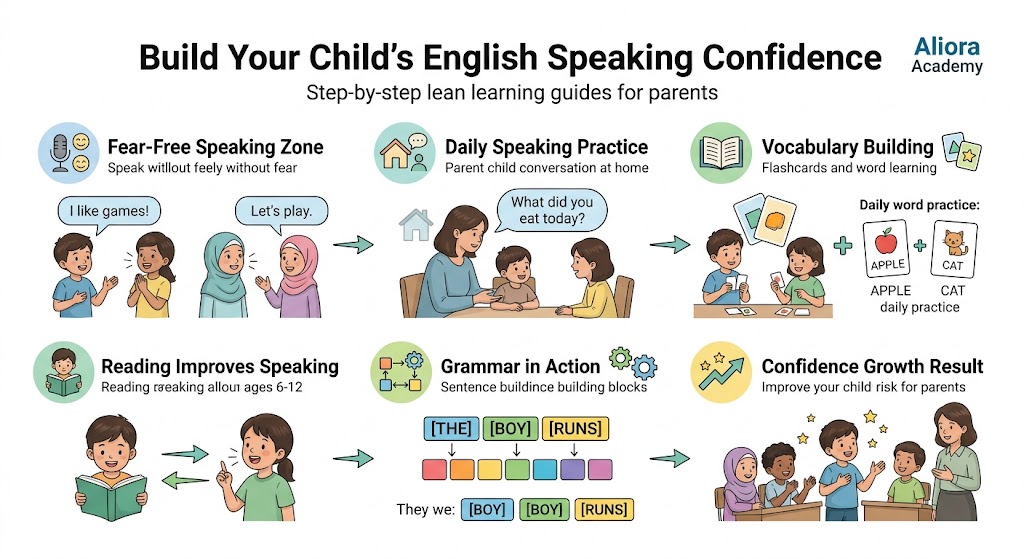
To overcome this, children need a safe learning environment where speaking mistakes are treated as part of learning, not failure. Structured programs like online English classes for kids help students practice speaking regularly in a guided environment.
How can parents support English speaking practice at home?
Parents play a critical role in building a child’s English speaking confidence. The home environment can either encourage or limit language development.
Children learn faster when English becomes part of daily life. Simple actions at home can significantly improve their speaking ability.
Practical ways parents can help:
- Ask simple daily questions in English like “What did you eat today?”
- Encourage children to describe objects around them
- Allow them to speak without correcting every small mistake
- Use short English conversations during routines
For example, a Grade 3 child learning basic vocabulary can be asked to describe toys or fruits in English. This builds natural speaking habits. You can also use creative writing activities for Grade 3 kids to connect speaking with simple writing practice.
A structured learning approach through an English learning program can further support parents by providing guided speaking exercises and lesson plans.
The key is consistency. Even 10–15 minutes of daily speaking practice can gradually reduce hesitation and improve fluency.
Why is vocabulary development important for speaking confidence?
Vocabulary is the foundation of speaking confidence. Without enough words, children struggle to express their thoughts clearly, even if they understand grammar rules.
When children have a strong vocabulary base, they can speak more smoothly, think faster, and form complete sentences without long pauses.
A common issue is that students know meanings but cannot recall words during speaking. This creates hesitation and lowers confidence.
Ways to improve vocabulary for speaking:
- Learn 5–10 new words daily
- Use new words in sentences immediately
- Read short stories and highlight new terms
- Practice word usage in conversations
For example, a Grade 3 student reading daily can learn words like “happy,” “quick,” and “beautiful” and use them in real sentences like “I am happy today.” For more targeted vocabulary strategies, read how to improve English vocabulary for Grade 3.
Strong vocabulary support through English classes for Grade 3 helps students build early communication confidence in a structured way, and the importance of vocabulary for academic success extends well beyond speaking.
How does reading improve English speaking ability?
Reading plays a direct role in improving speaking confidence because it exposes children to sentence structure, vocabulary, and natural language flow.
When children read regularly, they unconsciously learn how sentences are formed. This helps them speak more naturally in real conversations.
Reading also improves thinking speed, which is essential for speaking without hesitation.
Benefits of reading for speaking:
- Improves sentence formation skills
- Expands vocabulary naturally
- Strengthens grammar understanding
- Builds confidence in expressing ideas
For example, a Grade 4 student who reads short paragraphs daily can later use similar sentence patterns while speaking in class discussions.
Programs like English classes for Grade 4 focus on reading comprehension and speaking integration to build stronger communication skills.
Reading is not just an academic activity; it is a speaking development tool when used correctly.
What role does grammar play in speaking English confidently?
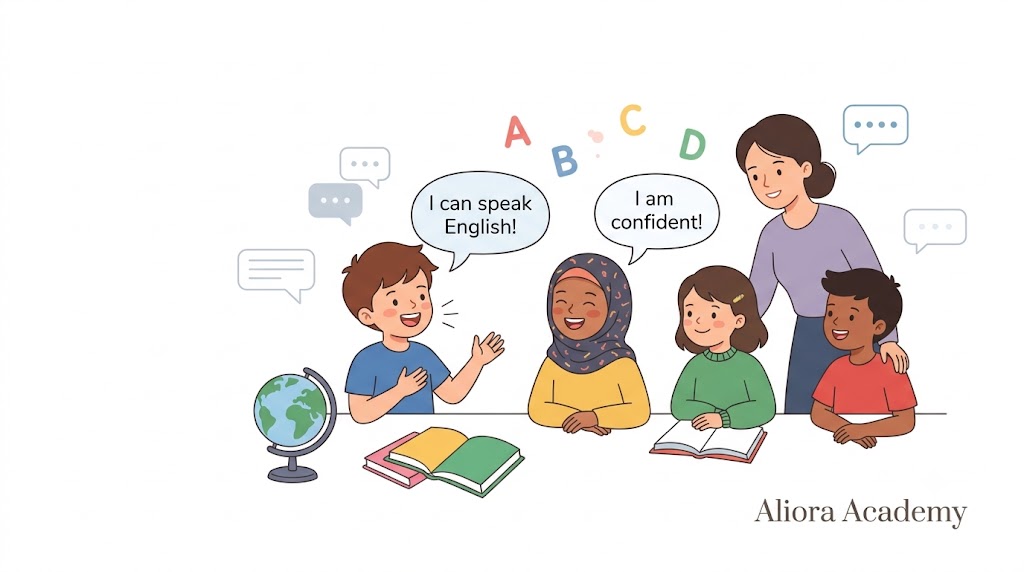
Grammar gives structure to speech. Without proper grammar understanding, children may speak broken sentences, which affects confidence.
However, grammar should not be taught only as rules. It should be connected with speaking practice so children understand how it works in real communication.
Key grammar areas for speaking confidence:
- Sentence structure (subject + verb + object)
- Tense usage in daily communication
- Question formation
- Common verb patterns
For example, instead of memorizing “present tense rules,” a student should practice saying: “I go to school every day.” To avoid common errors that undermine confidence, it's helpful to review common grammar mistakes Grade 4 students make.
A Grade 5 student preparing for school tasks benefits from advanced practice through English classes for Grade 5, where grammar is applied in speaking and writing tasks. If your child shows persistent hesitation, you might also check the signs your Grade 5 student needs extra English support.
When grammar becomes practical, speaking becomes more natural and less stressful.
Real-Life Learning Examples
Example 1: Grade 3 Vocabulary Growth
A Grade 3 student struggled to speak in class. The challenge was limited vocabulary. The solution was daily reading and word practice. After two weeks, the student started using simple sentences like “This is my book.” The learning outcome was improved confidence and basic speaking ability.
Example 2: Grade 4 Paragraph Speaking Practice
A Grade 4 student could write but not speak paragraphs. The solution was oral paragraph reading practice every day. The student learned to speak 4–5 sentence ideas clearly. The outcome was better classroom participation. Structured paragraph writing instruction also reinforces the organizational skills needed for spoken responses.
Example 3: Grade 5 Academic Speaking Skills
A Grade 5 student faced difficulty in presentations. The solution included structured speaking practice and topic discussions. The outcome was improved fluency and confidence in academic English tasks.
FAQs
How can my child improve English speaking skills?
Regular practice is the key. Encourage daily speaking in simple English, reading aloud, and using new vocabulary in sentences. Consistency matters more than long study hours.
What is the best age to improve English vocabulary?
Early childhood, especially Grade 3 to Grade 5, is the most effective stage because children absorb language naturally and build long-term communication habits.
How do online English classes help students learn faster?
They provide structured lessons, speaking practice, and guided feedback. This helps students build confidence and improve fluency in a controlled learning environment.
Conclusion
Building English speaking confidence in children requires patience, practice, and the right learning environment. Strong vocabulary development, regular reading, proper grammar understanding, and daily speaking practice all work together to improve communication skills.
Parents and teachers should focus on creating a supportive environment where children feel safe to speak without fear of mistakes. Over time, this builds real confidence and fluency.
With consistent practice and guided support through structured learning programs like online English tutoring for kids, children can develop strong English communication skills that support their academic and personal growth. Explore our English learning resources for more strategies.