Why Strong Vocabulary Skills Give Children an Academic Advantage
Why strong vocabulary skills matter for students becomes clear when a child starts struggling to explain simple ideas in school. Imagine a Grade 3 student who understands a science lesson but cannot express the answer in English. Or a Grade 4 learner who knows the concept but cannot write a proper paragraph because of limited words. These situations are very common in classrooms.
This problem usually does not come from lack of intelligence. It often comes from weak vocabulary development, limited reading habits, or low exposure to English language learning. When children do not know enough words, they lose confidence in speaking, writing, and even understanding questions properly.
Vocabulary is the foundation of all English skills. Without it, grammar, writing, and comprehension become difficult. With it, students start thinking more clearly, writing better answers, and performing strongly in exams. This is why building vocabulary early gives students a long-term academic advantage.
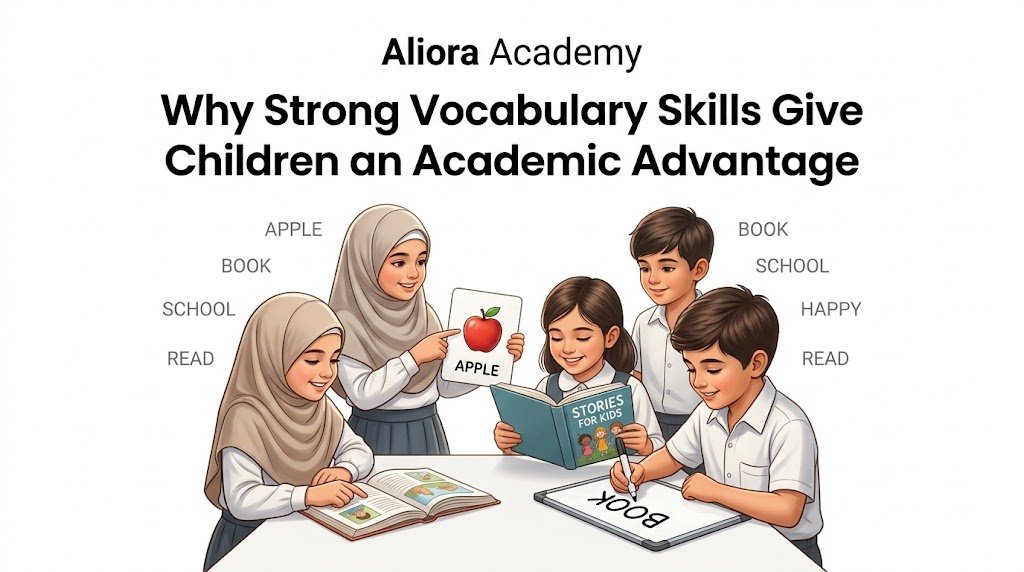
Why does vocabulary development play a key role in academic success?
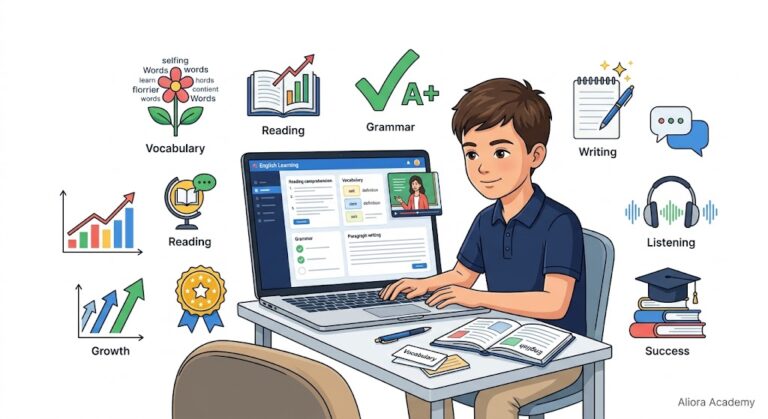
Vocabulary is not just about learning new words. It directly affects how children understand lessons, answer questions, and communicate ideas in school. A strong vocabulary improves reading comprehension, writing clarity, and critical thinking.
When students know more words, they can:
- Understand textbook instructions quickly
- Write clearer and more structured answers
- Speak with confidence in class discussions
- Perform better in exams that require explanation-based answers
For example, a Grade 5 student with strong vocabulary can explain "environment pollution" using precise words like "harmful gases," "ecosystem damage," and "human activities," while a weak vocabulary student may struggle to form even one correct sentence.
This is why schools increasingly focus on vocabulary development as part of academic English growth. Parents seeking structured support can explore Aliora Academy's English program which integrates vocabulary building at every stage.
How does vocabulary improve reading comprehension and understanding?
Reading comprehension becomes easier when students already know the meaning of most words in a text. Without vocabulary knowledge, children spend more time guessing meanings instead of understanding the message.
Strong vocabulary helps students:
- Read faster with better understanding
- Identify main ideas in passages
- Answer comprehension questions accurately
- Connect ideas across sentences
A Grade 3 student reading daily storybooks slowly builds vocabulary and begins recognizing words naturally. Over time, reading becomes smoother and more enjoyable instead of stressful.
In structured learning environments like English classes for Grade 3, vocabulary is taught through stories, visuals, and interactive reading exercises, which improves understanding step by step. For additional vocabulary strategies, parents can read our guide on how to improve English vocabulary for Grade 3.
Why does vocabulary directly improve writing and sentence structure?
Writing skills depend heavily on word choice. When students lack vocabulary, their sentences become short, repetitive, and unclear. With strong vocabulary, writing becomes structured and meaningful.
Good vocabulary helps students:
- Build better sentence structure
- Use descriptive words in essays
- Avoid repetition in writing
- Express ideas logically and clearly
For example, instead of writing "The boy is happy," a student with better vocabulary may write "The boy feels extremely joyful after winning the competition."
A Grade 4 learner practicing paragraph writing often shows major improvement when guided with structured learning like English classes for Grade 4, where vocabulary is connected with writing practice. You can also learn more about this connection in our article on how to teach paragraph writing to Grade 4 students.
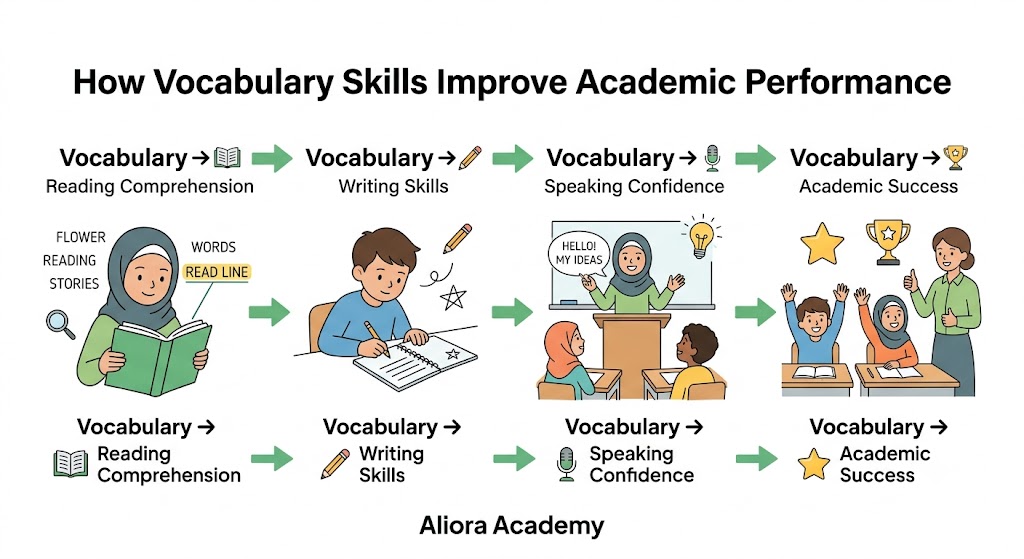
What real examples show the impact of vocabulary learning?
Example 1: Grade 3 student improving through reading practice
A student struggled to understand simple stories due to limited vocabulary. The challenge was confusion during reading. The solution was daily reading of short stories with new word learning. After a few weeks, the student began recognizing common words and reading more confidently. For young learners, creative writing activities for Grade 3 kids can further reinforce new vocabulary through active use.
Example 2: Grade 4 student improving paragraph writing
A Grade 4 student could not write complete paragraphs. The challenge was repetitive and weak vocabulary. The solution included vocabulary lists and writing exercises. The outcome was improved paragraph structure and better expression of ideas.
Example 3: Grade 5 student handling advanced school work
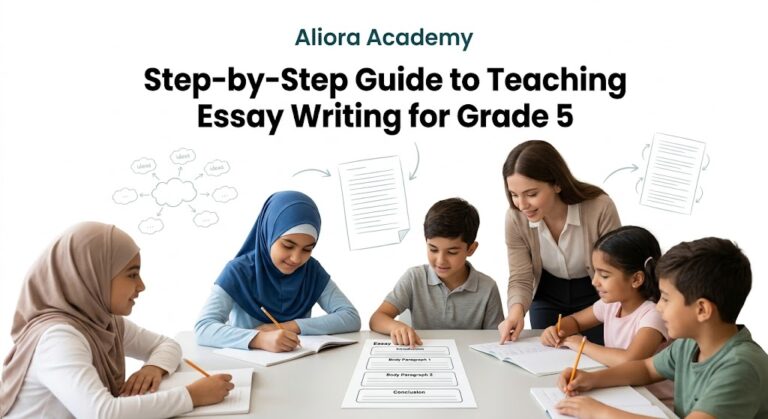
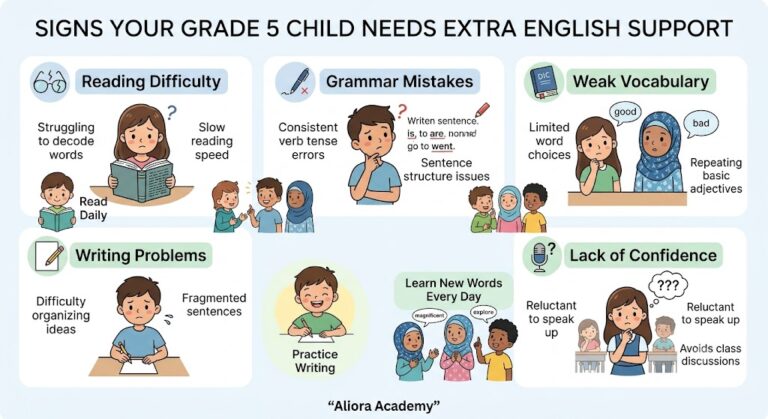
A Grade 5 student faced difficulty in essay writing. The issue was lack of academic vocabulary. After structured practice through English classes for Grade 5, the student started using advanced words and writing more analytical answers. Parents who notice persistent writing challenges may also want to check the signs your Grade 5 student needs extra English support.
Why do children struggle with English vocabulary?
Children often struggle with vocabulary due to limited exposure and lack of guided practice. Many students do not read regularly, which slows down word learning. Others depend only on classroom teaching without additional practice.
Common reasons include:
- Low reading habits at home
- No structured vocabulary learning plan
- Memorizing without understanding meaning
- Lack of speaking practice in English
The solution is consistent exposure to English through reading, writing, and guided learning activities. Programs like Aliora Academy's English learning program help students build vocabulary in a structured way across all elementary grade levels.
How can parents support vocabulary development at home?
Parents play an important role in building strong vocabulary habits. Simple daily actions can make a big difference in a child's language growth.
Effective strategies include:
- Reading short English stories together
- Asking children to explain new words
- Encouraging sentence formation using new vocabulary
- Practicing 5–10 new words daily
Even 15 minutes of daily vocabulary practice can significantly improve language skills and academic English performance over time.
Parents who want structured guidance can explore online English tutoring for kids for consistent learning support with trained educators.
How does reading improve vocabulary and overall English skills?
Reading is one of the strongest tools for vocabulary development. When children read regularly, they naturally encounter new words in context, which makes learning easier and long-lasting.
Reading helps students:
- Understand word meaning through context
- Improve spelling and grammar awareness
- Strengthen writing and speaking ability
- Build long-term English fluency
This is why reading is a core part of English learning at every grade level, from Grade 3 to Grade 5. The structured English curriculum at Aliora Academy ensures that vocabulary development, reading practice, and writing skills grow together in a balanced way.
FAQs
1. How can my child improve English vocabulary quickly?
Regular reading, daily word practice, and using new words in sentences are the most effective methods. Consistency matters more than speed.
2. What is the best age to start vocabulary development?
Early primary school years, especially Grade 3, are ideal because children absorb new words faster through stories and activities.
3. Do online English classes help in vocabulary building?
Yes. Structured learning in online English classes helps students learn new words systematically with practice, reading, and speaking activities.
Conclusion
Strong vocabulary is the backbone of English learning. It directly improves reading comprehension, writing ability, grammar usage, and communication skills. When children develop vocabulary early, they perform better in school and gain long-term academic confidence.
Whether it is Grade 3 reading basics, Grade 4 paragraph writing, or Grade 5 essay development, vocabulary plays a central role in success. With consistent practice, reading habits, and guided learning, every child can improve their English skills naturally and effectively.