How to Build a Consistent Homework Routine for Elementary Students
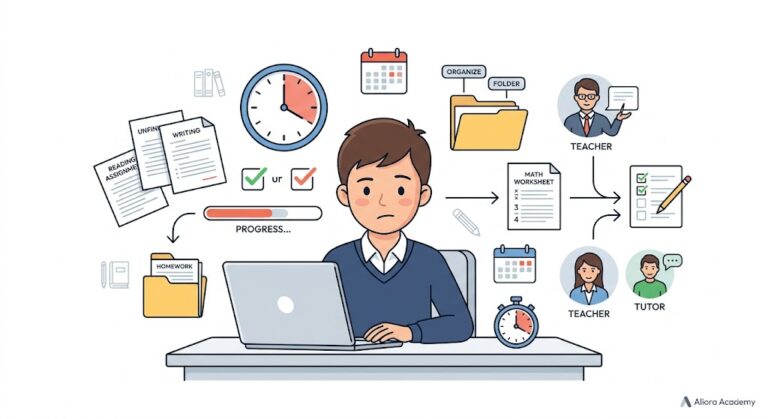
Building a consistent homework routine for elementary students can transform stressful evenings into productive learning time. Many parents experience the same challenge: their child comes home from school, takes a long break, gets distracted by screens, and suddenly homework becomes a late-night struggle. Missing assignments, unfinished worksheets, and frustration often become part of the daily routine.
A consistent homework routine helps children develop structure, responsibility, and confidence. Elementary students are still learning how to manage time, organize assignments, and work independently. Without guidance, they can easily become overwhelmed by reading tasks, writing assignments, math practice, and school projects.
The good news is that strong homework habits can be taught. With the right environment, clear expectations, and ongoing support, students can learn to complete assignments more efficiently and with less stress. Whether your child is in Grade 3, Grade 4, or Grade 5, creating a predictable homework routine can improve academic performance and make learning more enjoyable.
Why Do Elementary Students Need a Consistent Homework Routine?
A homework routine provides structure and predictability. Children perform better when they know what to expect each day. Instead of negotiating homework time every evening, students learn that homework is simply part of their daily schedule.
A regular routine also reduces decision fatigue. When children know where, when, and how homework will be completed, they spend less energy resisting the task and more energy focusing on learning.
Consistent routines strengthen important executive functioning skills such as planning, organization, and self-monitoring. These skills support success not only in school but throughout life.
Students who follow a routine often experience:
- Better homework completion rates
- Improved time management
- Stronger organization skills
- Greater academic confidence
- Reduced homework stress
- Increased independent learning
Many families who use structured study schedules notice fewer arguments and smoother evenings because expectations are clear.
Why Do Children Struggle to Complete Homework Consistently?
Homework challenges rarely happen because a child is lazy. Most struggles have underlying causes that parents can address.
Some children have difficulty understanding assignment instructions. Others become distracted easily or feel overwhelmed when facing multiple tasks.
Common reasons include:
- Lack of a daily schedule
- Poor organization habits
- Difficulty understanding schoolwork
- Limited focus and attention
- Fear of making mistakes
- Homework fatigue after school
For example, a Grade 3 student may spend twenty minutes searching for a missing worksheet instead of actually completing the assignment. In this situation, organization—not ability—is the real issue.
Parents can benefit from understanding the specific challenge before introducing solutions. When the root cause is identified, improvement becomes much easier.
Families seeking additional guidance often use an online homework help resource to clarify assignments and reinforce classroom learning naturally.
How Can Parents Create an Effective Homework Environment?
The environment where homework takes place significantly affects productivity.
Choose a quiet, well-lit area with minimal distractions. Some students work best at a kitchen table, while others prefer a dedicated study space.
Before homework begins, make sure students have:
- Pencils and erasers
- Paper and notebooks
- Textbooks
- Reading materials
- Calculators when needed
- School supplies
Reducing interruptions is equally important. Televisions, gaming devices, and unnecessary phone use can quickly derail concentration.
Parents should also establish consistent expectations. Homework time should occur at approximately the same time each school day. Predictability helps children develop positive learning habits.
A supportive environment encourages independence rather than dependence. Instead of immediately providing answers, guide children toward problem-solving strategies.
How Can Students Build Strong Homework Habits Every Day?
Strong homework habits develop through repetition and consistency.
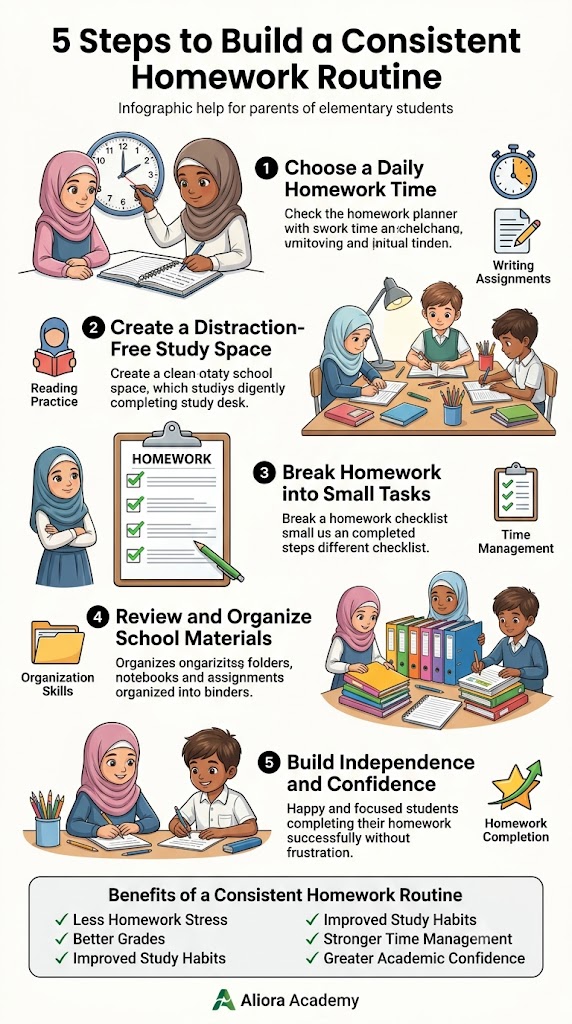
Start by creating a simple after-school routine. Students benefit from having a short break, a healthy snack, and a designated homework period.
A practical homework routine may look like this:
- Arrive home from school
- Take a 20–30 minute break
- Organize assignments
- Complete homework tasks
- Review finished work
- Pack school materials for the next day
Children should learn to prioritize assignments based on deadlines and difficulty levels. Completing more challenging tasks while energy levels are highest often improves efficiency.
Students also benefit from breaking larger assignments into smaller sections. This strategy reduces overwhelm and increases motivation.
These routines strengthen long-term study skills and support consistent academic growth. For more detailed guidance, check out our tips on structuring homework sessions effectively.
Why Is Homework Completion Important for Academic Success?
Homework reinforces classroom instruction. It gives students opportunities to practice concepts independently and identify areas where they need more support.
Regular homework completion helps students:
- Retain information
- Improve problem-solving abilities
- Strengthen reading comprehension
- Develop writing skills
- Practice mathematical reasoning
- Build personal responsibility
When students consistently complete assignments, teachers gain a clearer understanding of their progress and learning needs.
Homework also develops accountability. Children learn that effort, preparation, and consistency contribute to success.
For students who need additional guidance, a structured homework help program can provide extra support while encouraging independent learning habits.
How Can Grade 3 Students Develop Better Homework Routines?
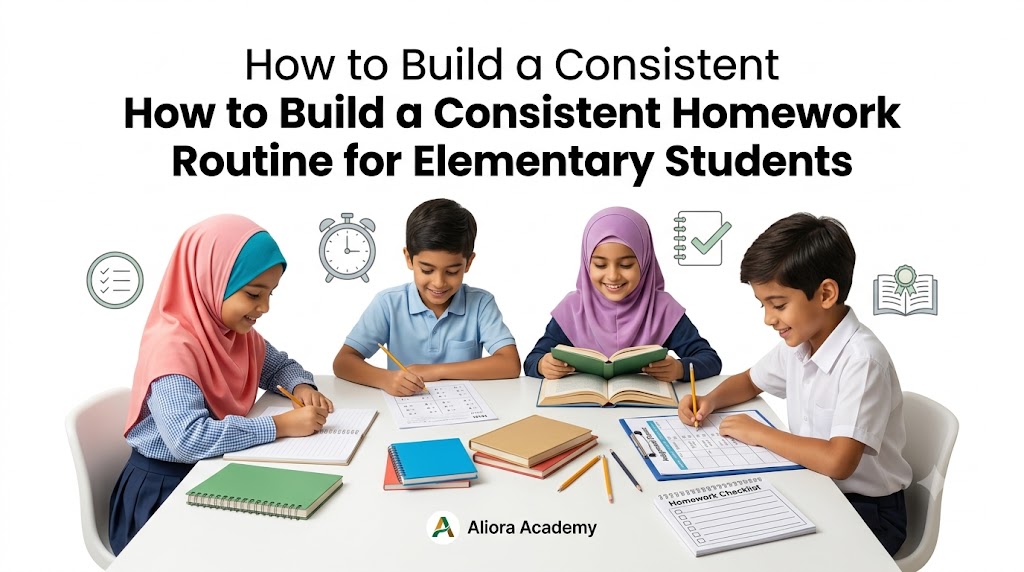
Grade 3 is often when homework expectations become more structured. Students begin managing reading assignments, vocabulary activities, and basic math practice with increasing independence.
Real-Life Example: Grade 3 Student
A Grade 3 student struggled to finish homework on time each evening. Reading assignments often took much longer than expected because materials were scattered throughout the house.
The solution was simple:
- Create a homework folder
- Establish a fixed homework time
- Use a reading checklist
Within several weeks, homework completion improved significantly. The learning outcome was greater confidence, improved organization, and less frustration during homework sessions. Parents looking for additional support can explore homework help for Grade 3 resources that focus on assignment understanding and study habit development.
How Can Grade 4 Students Improve Organization and Assignment Management?
Grade 4 students often face more complex reading comprehension activities, writing assignments, and classroom projects. Organization becomes increasingly important.
Students should learn to:
- Use assignment planners
- Track due dates
- Organize folders by subject
- Break projects into smaller steps
- Review instructions carefully
Real-Life Example: Grade 4 Student
One Grade 4 student frequently forgot project deadlines. Although capable academically, poor organization affected performance. The family introduced a weekly homework planning system and color-coded subject folders. As a result, assignment completion improved, and the student became more confident managing responsibilities independently. Families can reinforce these skills through homework help for Grade 4 support focused on academic organization and problem-solving.
How Can Grade 5 Students Manage Multi-Subject Homework Independently?
Grade 5 students often juggle advanced math homework, research assignments, essay writing, and long-term projects. At this stage, independence becomes a critical goal.
Students should learn:
- Time-blocking techniques
- Assignment prioritization
- Research planning
- Goal setting
- Self-monitoring strategies
Real-Life Example: Grade 5 Student
A Grade 5 student felt overwhelmed by multiple assignments from different subjects. The solution involved creating a weekly homework planner and dividing large projects into manageable milestones. Over time, the student became more organized and completed work with less parental assistance. The learning outcome included stronger academic planning skills and improved readiness for middle school expectations. Additional homework help for Grade 5 programs often focus on developing these advanced learning habits.
How Can Parents Reduce Homework Stress Without Doing the Work?
Parents play an important role in supporting homework, but completing assignments for children can reduce learning opportunities. Instead, parents should act as coaches.
Helpful strategies include:
- Asking guiding questions
- Encouraging problem-solving
- Providing praise for effort
- Teaching organization skills
- Monitoring progress
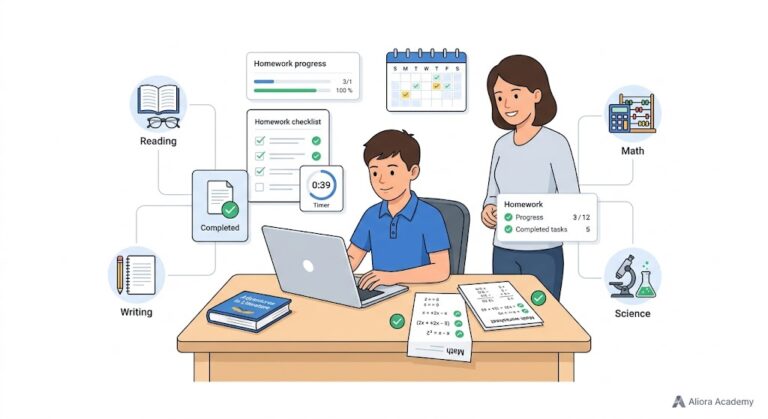
For example, instead of giving the answer to a math problem, ask: "What strategy did your teacher teach? Can you solve part of the problem first? What information do you already know?" This approach develops independent thinking and academic confidence.
Parents who notice ongoing struggles may benefit from professional online homework help support that complements classroom instruction. If you're unsure whether your child's difficulties signal a deeper issue, review the signs your child needs extra homework support to identify potential gaps early.
How Can Students Stay Motivated to Complete Homework?
Motivation improves when students experience success. Children are more likely to complete homework when they understand the purpose of assignments, experience manageable challenges, receive positive feedback, track their progress, and celebrate small achievements.
Parents can create visual progress charts or weekly goals to help students see improvement over time. Short breaks between longer assignments can also help maintain focus and productivity. Most importantly, students should understand that homework is not simply about finishing tasks—it is an opportunity to practice skills that support long-term classroom success.
If homework sessions consistently take far longer than expected, you might find useful insights in our guide on why your child takes so long to finish homework. For a broader overview of available resources, explore online homework help programs for elementary students.
FAQs
How can I help my child finish homework faster?
Create a consistent routine, reduce distractions, organize materials in advance, and encourage students to work on the most challenging tasks first. Avoid multitasking during homework time.
What should I do if my child refuses to do homework?
Identify the reason behind the resistance. Some children feel overwhelmed, confused, tired, or frustrated. Break assignments into smaller tasks and provide encouragement while maintaining clear expectations.
How does online homework help improve academic performance?
Online homework support can clarify difficult concepts, strengthen understanding, improve assignment completion, and build confidence while encouraging students to develop independent learning skills.
Conclusion
A consistent homework routine provides far more than completed assignments. It helps elementary students develop strong study habits, time management skills, organization strategies, and academic confidence.
Children who learn how to manage homework effectively become more independent learners and are better prepared for future academic challenges. Whether a student is working on reading practice in Grade 3, writing assignments in Grade 4, or multi-subject projects in Grade 5, a structured routine creates the foundation for long-term success.
With patience, consistency, and the right support, families can reduce homework stress and help children build lifelong learning habits that extend far beyond the classroom.