How to Help Your Grade 4 Child Write a Strong Introduction Paragraph
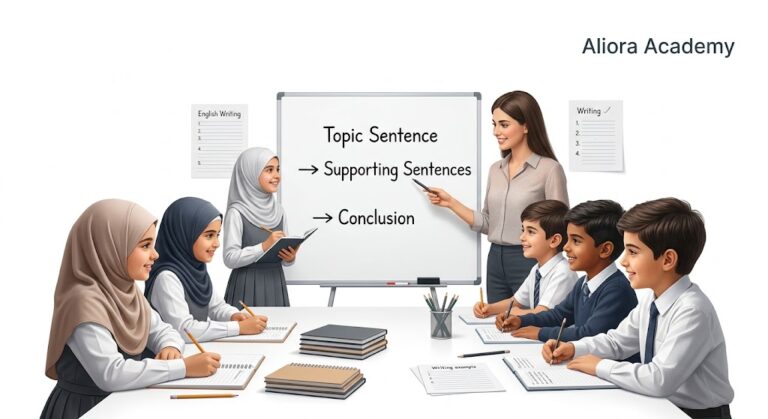
In Grade 4, children move from writing single sentences to writing whole paragraphs — and the introduction is the hardest part. It has to grab the reader, set the scene and say what the piece is about, all in three or four sentences. Here is the framework that makes it manageable.
Why the Introduction Is the Hardest Paragraph
Grade 4 is the year children are asked to write a proper paragraph rather than a group of sentences. And of all the paragraphs in a piece, the introduction carries the most weight — because it decides whether the reader keeps reading at all.
The difficulty is that the introduction has to do three jobs at once. It has to grab the reader's attention, give them just enough context to understand the topic, and state what the whole piece is going to be about. Most Grade 4 children can do one of those well. Doing all three in three or four sentences is the skill being taught this year.
The good news is that it is highly teachable. A fixed structure — hook, background, main idea — turns an overwhelming blank page into a short, manageable sequence.
- The Hook
- Background Context
- The Main Idea
- Sentence Order
- One Idea Per Sentence
- Read Aloud & Revise
A Strong Introduction Has Four Parts
Teach these four parts in order and the introduction almost writes itself. Skip any one of them and the paragraph stops working.
Part 1: Open With a Hook
First SentenceThe first sentence has one job — make the reader want to read the second. A hook can be a question, a surprising fact, a sound or sense detail, or a short bold statement. Whatever form it takes, it must connect to the topic.
- A question the reader wants answered
- A surprising fact or number
- A sound, smell or sense detail
- A short, bold statement
Part 2: Add One or Two Sentences of Background
ContextAfter the hook, the reader needs just enough context to understand what the piece is about. One or two sentences is plenty. This is where the child describes the situation — not yet what they think about it.
- Set the scene in one sentence
- Give only what the reader needs
- Do not list all the reasons here
- Keep it connected to the hook
Part 3: End With the Main Idea
ThesisThe last sentence of the introduction states what the whole piece is about. For Grade 4, this can be a simple, clear sentence. Everything that comes after should support it — if it does not, the main idea is wrong.
- One clear sentence, not two
- Answers the question or prompt directly
- Every later paragraph should support it
- No new reasons introduced here
Part 4: Keep It Short and in Order
ShapeA Grade 4 introduction is three to four sentences — hook, background, main idea. Longer is not better. One idea per sentence, and the order matters: hook first, main idea last. Reading it aloud is the fastest way to check.
- Three to four sentences maximum
- One idea per sentence
- Hook first, main idea last
- Read it aloud to check the flow
Four Habits That Build This Skill at Home
None of these need extra worksheets or a tutor. They need a few minutes and a bit of consistency — which is what actually moves writing forward.
Say It Out Loud First
Ask your child to tell you the introduction before writing it. Spoken sentences are far easier to organise than written ones.
Get Speaking PromptsUse a Three-Sentence Frame
Hook, background, main idea. Three lines on the page. The frame removes the blank-page problem entirely.
Get the FrameRewrite the Hook Together
Leave the first sentence for last. Write it three different ways and let your child choose the best one.
Get Hook ExamplesRead Real Introductions Aloud
Open a favourite book and read just the first paragraph. Ask what made you want to keep reading.
Get Book SuggestionsWeak vs Strong Introductions at a Glance
A practical comparison showing each part of the introduction, what it is for, and what weak and strong versions look like side by side.
| Part | What It Does | Weak vs Strong | Ask |
|---|---|---|---|
| The Hook Sentence 1 | Grabs attention and connects to the topic. |
Weak: "I am going to tell you about playing
outside." Strong: "Most children today spend more time indoors than their grandparents did." |
|
| Background Sentences 2–3 | Gives the reader just enough context to follow. |
Weak: "Playing outside is fun. It is healthy. It
is good." Strong: "Screens, homework and busy schedules keep them inside." |
|
| Main Idea Final Sentence | States what the whole piece is about. |
Weak: "There are many reasons." Strong: "Playing outside is one of the best things a child can do — for the body, the mood and the imagination." |
|
| Length Shape | Keeps the paragraph focused and readable. |
Weak: Six or seven sentences. Strong: Three or four sentences. |
|
| Focus One Idea Per Sentence | Keeps each sentence clear and easy to follow. |
Weak: "Playing outside is good and also it is fun
and you can meet friends and it is healthy too." Strong: "Playing outside helps children stay healthy." |
|
| Order Sequence | Hook first, main idea last — this order matters. |
Weak: Main idea buried in the middle, hook
tacked on at the end. Strong: Hook → background → main idea. |
|
| Connection Hook to Topic | Keeps the hook relevant rather than just dramatic. |
Weak: Dramatic hook about space, then an essay
about football. Strong: Hook about screens → topic about playing outside. |
|
| Revision Final Check | Catches awkward phrasing and repeated ideas. |
Weak: Written once and handed in. Strong: Read aloud and rewritten at least once. |
Want Feedback on Your Child's Writing?
Share your child's age, school grade and a recent piece of their writing. You will get a clear picture of what to work on first — and a simple routine to build the introduction habit at home.
Send a Writing Sample
One paragraph is enough to see where the structure is breaking down and what to fix first.
Send a SampleTalk Through the Structure
Tell us what your child struggles with — starting, staying focused, or knowing when to stop.
Discuss StrugglesPlan a Weekly Routine
Tell us how much time you have, and we will suggest a realistic writing routine for the week.
Discuss RoutineSix Common Introduction Mistakes
These are the patterns that appear again and again in Grade 4 writing. Naming them is often enough to stop them.
"I Am Going to Tell You About..."
This announces the topic rather than interesting the reader. It is the most common opening in Grade 4 writing — and the weakest.
No Main Idea at All
The paragraph lists facts without saying what the whole piece will be about. The reader finishes it with no idea where it is going.
A Hook That Does Not Match
A dramatic opening about space, followed by an essay about football. The hook must connect to the topic, not just be exciting.
An Introduction That Is Too Long
Six or seven sentences means the child has started writing the body of the piece inside the introduction. Three or four is plenty.
Repeating the Same Idea
Three sentences that say the same thing in different words. This looks like length but is actually padding.
Copying the Question
Turning the prompt into the first sentence — "This essay is about why children should play outside" — wastes the hook entirely.
How to Build the Introduction in Four Steps
A practical sequence you can use with your child this week.
Talk It Through First
Ask your child to tell you the whole introduction out loud before writing anything. Spoken sentences organise themselves.
Write the Main Idea First
Start with the last sentence — what the piece is about. Working backwards makes the rest much easier.
Add Background, Then the Hook
One or two sentences of context, then write the hook last. Write the hook three ways and pick the best one.
Read It Aloud and Rewrite
Reading aloud catches awkward phrasing instantly. If a sentence is hard to say, it is hard to read.
Introduction Paragraph Checklist
- The first sentence makes the reader want to keep reading.
- The hook connects to the topic, not just something dramatic.
- One or two sentences of background follow the hook.
- The last sentence states the main idea of the whole piece.
- The main idea answers the question or prompt directly.
- The introduction is three to four sentences long.
- Each sentence contains one clear idea, not several.
- The hook comes first and the main idea comes last.
- No sentence begins with "I am going to tell you about..."
- Nothing is repeated in different words to pad the paragraph.
- Every later paragraph will support the main idea sentence.
- The paragraph has been read aloud and rewritten at least once.
Frequently Asked Questions
Common questions parents ask about Grade 4 introduction paragraphs.
How long should a Grade 4 introduction paragraph be?
Three to four sentences is the right length for Grade 4. One sentence for the hook, one or two for background, and one for the main idea. Longer introductions almost always mean the child has started writing the body of the piece inside the introduction, which then has to be repeated later. If your child is consistently writing six or seven sentences, the issue is usually not knowing where the introduction ends — the three-part structure solves this quickly.
What is a hook, and does my Grade 4 child really need one?
A hook is simply the first sentence, designed to make the reader want to read the second. Yes, it matters — even at this age. A paragraph that opens with "I am going to tell you about playing outside" gives the reader no reason to continue, and more importantly it teaches the child that writing is about announcing rather than engaging. Good hooks for Grade 4 include a question, a surprising fact, a sense detail or a short bold statement. They do not need to be dramatic — they just need to connect to the topic.
What if my child only wants to start with "I am going to tell you about..."?
This is extremely common, and it is a habit rather than a lack of ability. The quickest fix is to let them write it, then ask them to cover that first sentence and read the rest aloud. Almost always, the paragraph works better without it. Once they hear that for themselves, the habit fades quickly. A useful rule to teach is: the first sentence should make the reader curious, not just informed.
What is a "main idea" sentence at this age?
At Grade 4, a main idea sentence is simply one clear sentence that says what the whole piece is about. It does not need to be complex or use academic language. "Playing outside is one of the best things a child can do" is a perfectly good main idea sentence — it is clear, it states a position, and everything that follows can support it. What matters is that the child can point at the sentence and say: "this is what my whole piece is about."
Should the introduction be written first or last?
For Grade 4, it is usually easier to write the main idea sentence first, then the background, and the hook last. Working in that order means the child already knows what the piece is about before trying to make it sound interesting. The hook is also the hardest sentence to write, so leaving it until the end means the child is not stuck on sentence one while the rest of the paragraph waits.
My child writes very long introductions. How can I help?
Long introductions usually mean the child has started listing reasons, which belongs in the body of the piece. The fix is to give them a physical limit — three lines on the page, or three sentences — and to show them where the extra material should go instead. Ask: "is this sentence telling the reader what the piece is about, or is it giving a reason?" If it is a reason, it belongs in the next paragraph. This distinction is the main thing Grade 4 writing teaches.
What if the hook has nothing to do with the topic?
This is a natural stage — children often enjoy writing dramatic openings and then move to a completely different topic. The easiest check is to ask: "does the last sentence still make sense after the first one?" If the hook is about space and the piece is about football, the answer is obviously no, and the child can usually see it themselves when it is pointed out. A useful rule: a hook should narrow the topic, not change it.
How can I get help assessing my child's writing?
You can reach out directly on WhatsApp at +92 300 123 4567. Share your child's age, school grade and a recent piece of their writing — even one paragraph is enough. You will get a clear picture of what to work on first, and a simple routine to build the introduction habit at home.
Turn the Hardest Paragraph Into the Easiest One
Share your child's age, school grade and a recent piece of their writing. You will get a clear picture of what to work on first — and a simple routine to build the introduction habit at home.
How to Help Your Grade 4 Child Write a Strong Introduction Paragraph
Grade 4 is the year children move from writing single sentences to writing proper paragraphs — and of all the paragraphs in a piece, the introduction carries the most weight. It has to grab the reader's attention, give just enough context to understand the topic, and state what the whole piece is going to be about. Most Grade 4 children can do one of those well. Doing all three in three or four sentences is the skill being taught this year. The good news is that it is highly teachable — a fixed structure turns an overwhelming blank page into a short, manageable sequence.
Part 1: open with a hook
The first sentence has one job — make the reader want to read the second. A hook can be a question, a surprising fact, a sense detail or a short bold statement. It does not need to be dramatic, but it does need to connect to the topic. The most common Grade 4 opening, "I am going to tell you about...", announces the topic rather than interesting the reader, and it is the single habit worth breaking first. For a fuller picture of how writing develops across the primary years, see step-by-step guide to teaching essay writing for Grade 5.
Part 2: add one or two sentences of background
After the hook, the reader needs just enough context to follow what comes next. One or two sentences is plenty. This is where the child describes the situation — not yet what they think about it. A common mistake here is listing reasons, which belongs in the body of the piece. Asking the child "is this sentence telling the reader what the piece is about, or is it giving a reason?" is usually enough to redirect them.
Part 3: end with the main idea
The last sentence of the introduction states what the whole piece is about. At Grade 4, this can be a simple, clear sentence — "Playing outside is one of the best things a child can do" works perfectly well. What matters is that the child can point at the sentence and say: this is what my whole piece is about. Everything that follows should support it. If a later paragraph does not support it, either the paragraph or the main idea needs to change.
Part 4: keep it short and in order
A Grade 4 introduction is three to four sentences — hook, background, main idea. Longer is not better. Six or seven sentences almost always mean the child has started writing the body of the piece inside the introduction, which then has to be repeated later. One idea per sentence, and the order matters: hook first, main idea last. Reading the paragraph aloud is the fastest way to check whether it flows — if a sentence is hard to say, it is hard to read.
Common mistakes to avoid
Watch for these patterns:
- "I am going to tell you about..." — announces rather than interests the reader.
- No main idea at all — the paragraph lists facts without a point.
- A hook that does not match the topic — dramatic opening, unrelated content.
- Too long — six or seven sentences means the body has crept in.
- Repeating the same idea — three sentences saying the same thing in different words.
- Copying the question — turning the prompt into the first sentence.
For the sentence-level errors that often accompany these, see common English grammar mistakes Grade 4 students make.
How to build the habit at home
Four habits do most of the work: ask your child to say the introduction out loud before writing it, use a three-sentence frame (hook, background, main idea), write the hook last after trying it three different ways, and read real introductions aloud from books they enjoy. The spoken step matters more than it sounds — children organise sentences far more easily in speech than on paper, and the transition from one to the other is exactly what Grade 4 writing is about.
Stronger vocabulary supports stronger writing
Clear word choice makes every sentence easier to write and easier to read. A child who has a wider vocabulary finds it easier to produce a hook that is precise rather than vague, and to write a main idea sentence that actually says something. For strategies that build vocabulary properly, see best vocabulary-building strategies for Grade 5 students.
Reading and writing develop together
A child who reads widely meets hundreds of introductions a year and internalises the pattern without ever being taught it directly. Reading aloud from books your child enjoys — and pausing after the first paragraph to ask "what made you want to keep reading?" — is one of the most effective ways to teach introductions. For the reading side, see how to support a child who struggles with reading comprehension and improve your child's reading speed with comprehension.
When to consider structured support
If writing is limiting performance across several subjects, targeted support works better than general practice. Structured online lessons can focus on sentence structure, paragraph organisation or vocabulary rather than covering everything at once. Our guide to what makes an online English program effective sets out what to look for before enrolling — and online English tutoring for kids covers reading, writing, vocabulary and speaking with live teachers, built around what the individual child actually needs.
Get help assessing your child's writing
If you would rather not work through every check yourself, you can send your child's age, school grade and a recent piece of their writing directly on WhatsApp at +92 300 123 4567. Even one paragraph is enough to give you a clear picture of what to work on first — and a simple routine to build the introduction habit at home.