Creative Writing Activities for Grade 3 Kids That Actually Work
A common situation many parents face is this: a Grade 3 child can read simple sentences but struggles to express their own ideas in writing. For example, a child may know the word “dog,” but when asked to write a short story, they freeze or write only two unclear sentences. This gap between thinking and writing is very common in early English learning.
The main reason behind this issue is not lack of intelligence, but lack of structured writing practice, limited vocabulary exposure, and low confidence in forming sentences. Many children also do not get enough guided practice in creative writing skills at an early stage.
This is where well-designed creative writing activities for grade 3 kids make a real difference. When children learn through guided storytelling, picture prompts, and simple daily writing tasks, their brain starts organizing ideas naturally. Over time, they develop stronger sentence structure, better vocabulary use, and improved confidence in expressing thoughts.
At Aliora Academy, we observe that consistent writing practice combined with simple creative tasks can transform even hesitant learners into confident young writers.
Why do children struggle with English writing at Grade 3 level?
Children in Grade 3 often struggle with writing because their learning process is still developing from oral language to written expression. They may speak fluently but cannot convert thoughts into structured sentences.
One major reason is weak sentence formation skills. Many students know words but do not understand how to arrange them correctly. For example, they may write “dog park go” instead of “The dog goes to the park.”
Another issue is limited vocabulary development. Without enough words, children cannot express ideas clearly, which leads to short or incomplete writing.
A third reason is lack of regular practice. Writing is a skill that improves only through repetition. Without daily engagement, progress remains slow.
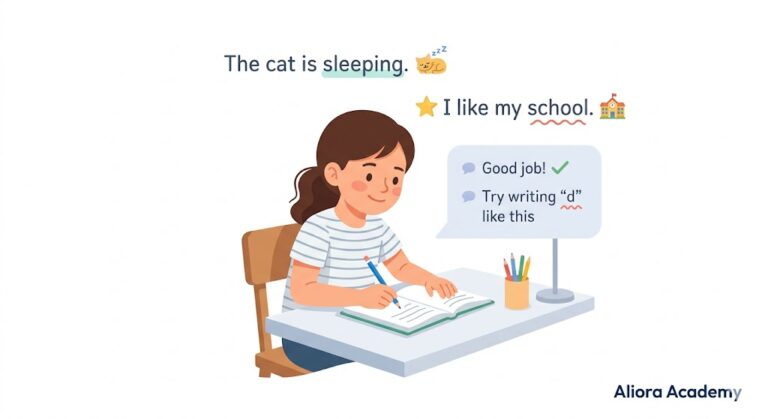
Finally, many children fear making mistakes. This reduces their willingness to try, which directly affects writing confidence.
Simple solutions include:
- Daily 10-minute writing practice
- Picture-based storytelling
- Word banks for support
- Encouragement instead of correction pressure
What are the best creative writing activities for Grade 3 kids?
The most effective writing activities are those that feel like play but build real language skills. At Grade 3 level, learning should be visual, simple, and imagination-based.
Some proven activities include:
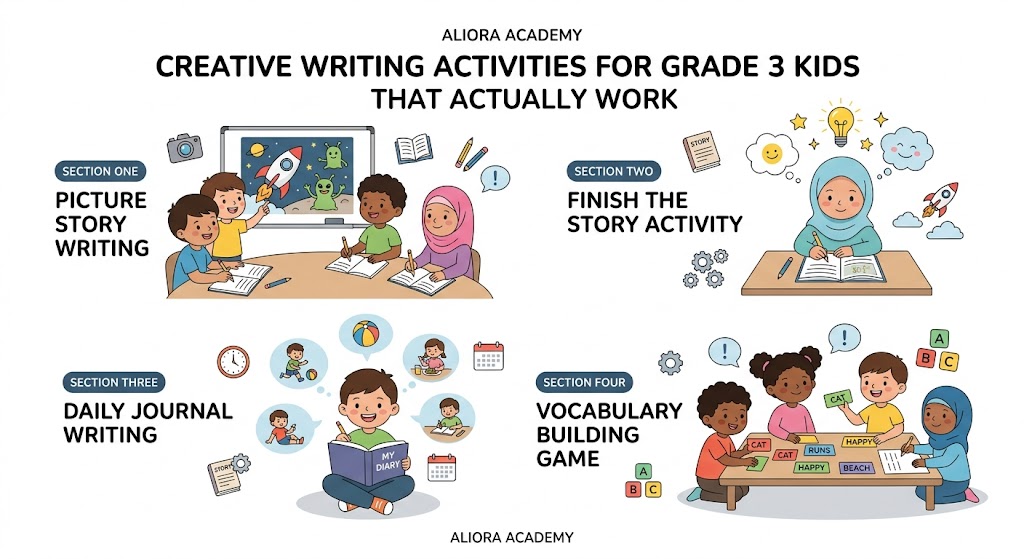
- Picture Story Writing — Show a simple image and ask the child to describe what is happening. This builds observation and sentence formation.
- “Finish the Story” Activity — Start a short story like “One day, I found a magic box…” and let the child complete it. This improves imagination and flow of ideas.
- Daily Journal Writing — Ask children to write 3–5 sentences about their day. This improves consistency and vocabulary use.
- Word Expansion Game — Give one word like “school” and ask the child to write related words and sentences. This builds semantic understanding.
These creative writing activities for grade 3 kids help students learn structure naturally instead of memorizing rules.
A Grade 3 student who practices these activities regularly begins to write longer and more meaningful sentences within weeks.
How can parents support English writing skills at home effectively?
Parents play a key role in building early English learning habits. The goal is not to teach grammar like a teacher but to create a supportive learning environment.
One effective approach is reading together daily. When children read simple books, they naturally learn sentence patterns and vocabulary usage.
Another important method is encouraging “talk before writing.” Ask the child to explain their idea verbally before writing it. This improves clarity of thought.
Parents can also use simple writing prompts like:
- “What made you happy today?”
- “Describe your favorite animal.”
- “What would you do if you had a robot?”
To make learning structured, many parents also choose guided support like an online English classes program where trained educators help build consistent writing habits.
A simple routine works best:
- 10 minutes reading
- 10 minutes writing
- 5 minutes discussion
This routine builds long-term language skills without pressure.
How does vocabulary development improve creative writing skills?
Vocabulary is the foundation of strong writing. Without enough words, children cannot express ideas clearly or creatively.
When students improve vocabulary, their writing becomes:
- More detailed
- More expressive
- More structured
For example, instead of writing “The boy is happy,” a child with better vocabulary might write “The boy is very excited and smiling brightly.”
Vocabulary development also improves reading comprehension, which directly supports writing improvement. Children who read more naturally absorb new words and sentence patterns.
Practical methods include:
- Learning 5 new words daily
- Using new words in sentences
- Reading short stories aloud
- Word matching games
A Grade 3 student who improves vocabulary consistently shows noticeable improvement in writing clarity within a few weeks. For more targeted vocabulary strategies, you can explore how to improve English vocabulary for Grade 3.
Can structured English programs improve writing skills faster?
Yes, structured learning programs significantly improve writing skills because they provide guided practice and correction at the right stage.
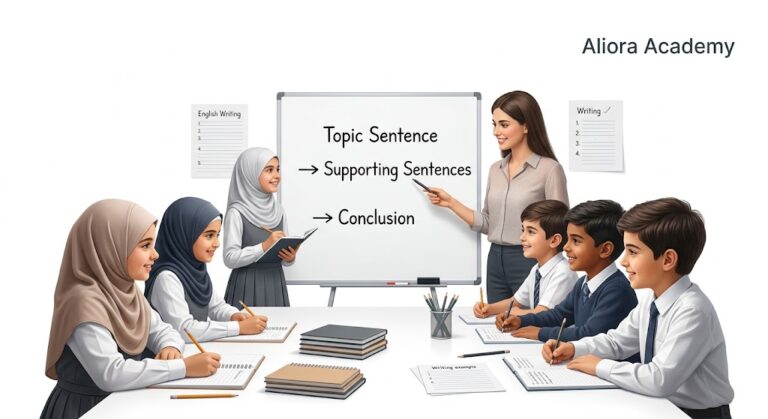
For example, in a Grade 4 student, writing often moves from simple sentences to paragraph writing, so structured guidance becomes important to avoid confusion. You can learn more about this transition in our guide on how to teach paragraph writing to Grade 4 students.
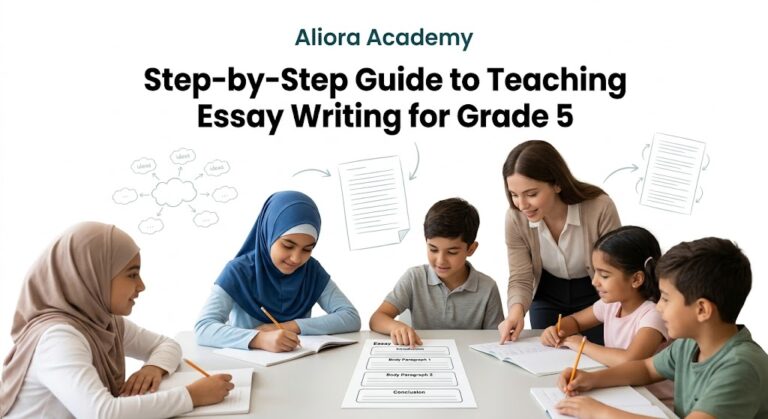
Similarly, Grade 5 students need support in essay writing, critical thinking, and academic expression. Without proper guidance, they may struggle with organizing ideas logically. If you suspect your older child might need help, it's worth checking the signs your Grade 5 student needs extra English support.
At Aliora Academy, structured programs such as English classes for Grade 3 focus on building writing confidence step by step. For fourth graders, English classes for Grade 4 further develop paragraph structure and idea organization.
Benefits include:
- Step-by-step skill building
- Regular feedback
- Structured grammar practice
- Improved writing confidence
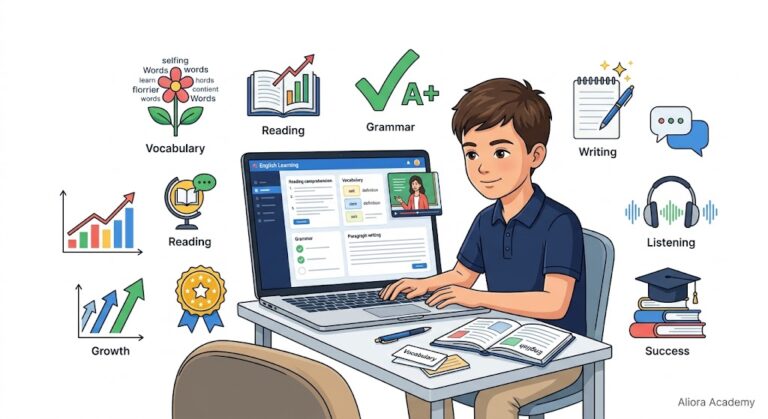
This approach ensures students grow steadily without gaps in learning. Browse our English learning resources to see how we support literacy at every stage.
Real-Life Learning Examples
Example 1: Grade 3 Student Improving Vocabulary Through Reading
A student struggled to write more than one sentence. After daily reading practice and word learning, the student started writing 4–5 connected sentences. The challenge was limited vocabulary. The solution was daily reading and word usage practice. The outcome was improved sentence clarity and confidence.
Example 2: Grade 4 Student Strengthening Paragraph Writing
A Grade 4 learner could write sentences but not paragraphs. Through guided paragraph activities and storytelling, the student learned structure (beginning, middle, end). The challenge was disorganized writing. The solution was structured writing practice. The outcome was clear paragraph formation.
Example 3: Grade 5 Student Preparing for Advanced Writing Tasks
A Grade 5 student struggled with essay writing. With consistent practice in planning ideas and using academic vocabulary, the student improved significantly. The challenge was idea organization. The solution was structured essay planning. The outcome was improved academic writing performance.
Why does reading improve writing skills in children?
Reading and writing are deeply connected. When children read regularly, they learn how sentences are formed, how ideas flow, and how vocabulary is used in context.
Reading improves:
- Sentence structure understanding
- Vocabulary exposure
- Grammar intuition
- Creative thinking
Children who read more often naturally write better because their brain stores sentence patterns subconsciously.
For example, a child who reads short stories daily starts using similar sentence structures in their own writing without realizing it.
FAQs
How can my child improve English writing skills at home?
Encourage daily short writing tasks, reading simple books, and speaking ideas before writing. Consistency matters more than length.
What is the best age to start creative writing practice?
Grade 2 and Grade 3 are ideal because children are developing language structure and imagination together at this stage.
Do online English classes help improve writing skills?
Yes, structured guidance, feedback, and regular practice in an English learning program help children improve faster and more consistently.
Conclusion
Strong writing skills develop through consistent practice, not memorization. When children engage in structured reading, vocabulary building, and guided writing tasks, their English communication skills improve naturally.
For Grade 3 learners, focusing on simple sentence formation, imagination-based writing, and daily practice builds a strong foundation. As they progress to Grade 4 and Grade 5, these early habits support advanced writing like paragraphs and essays.
With the right guidance and regular practice, every child can become a confident writer over time.