The Difference Between Homework Help and Private Tutoring for Kids
The difference between homework help and private tutoring for kids often becomes clear when a parent sits beside a child every evening watching them struggle to finish basic assignments. A Grade 4 student may spend more than an hour on simple math problems, or a Grade 3 child may repeatedly avoid reading tasks because they feel confused or overwhelmed. In many homes, this leads to stress, frustration, and a growing gap in learning confidence.
This challenge matters because homework is not just schoolwork—it builds discipline, thinking skills, and independent learning habits. When children cannot manage homework properly, it affects their classroom performance, motivation, and long-term academic growth. Common causes include weak study habits, lack of understanding in class, poor time management, and absence of structured academic support.
Understanding the difference between homework help and private tutoring for kids is important for parents because both approaches serve different learning needs. One focuses on completing daily assignments with clarity, while the other builds deeper subject understanding over time. Choosing the right support can significantly improve a child’s confidence and school performance.
Why do children struggle with homework and how can it be solved effectively?
Children struggle with homework due to several learning and environmental factors that directly affect their ability to focus and understand tasks. One major issue is gaps in foundational knowledge, especially in subjects like math and reading. When basic concepts are unclear, even simple assignments feel difficult.
Another reason is lack of structured study habits. Many students do not follow a consistent homework routine, which leads to delays, distractions, and incomplete tasks. In such cases, guided support like a structured homework help program can make a noticeable difference in improving daily learning discipline.
Emotional factors also play a role. Some children feel anxious when they cannot solve problems independently. This creates resistance toward homework and lowers academic confidence. Parents often misinterpret this as laziness, but it is usually a sign of learning struggle.
To solve this, students need a combination of guidance and practice:
- Breaking homework into smaller tasks
- Setting a fixed homework time daily
- Using simple explanations instead of complex instructions
- Encouraging short breaks to maintain focus
For example, Grade 3 students learning basic multiplication often improve faster when concepts are explained through real-life objects like toys or snacks instead of only textbook methods.
How is homework help different from private tutoring for academic growth?
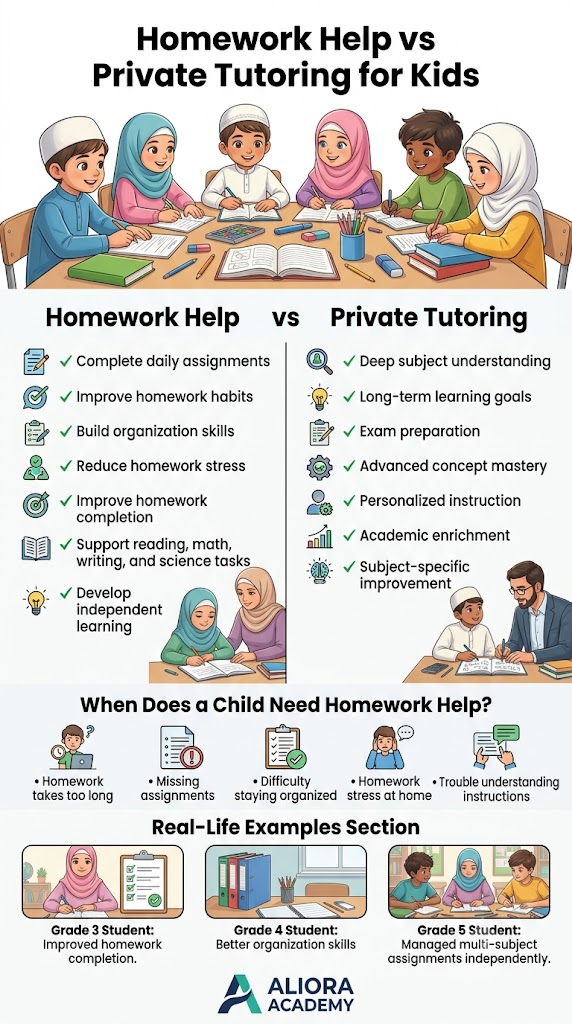
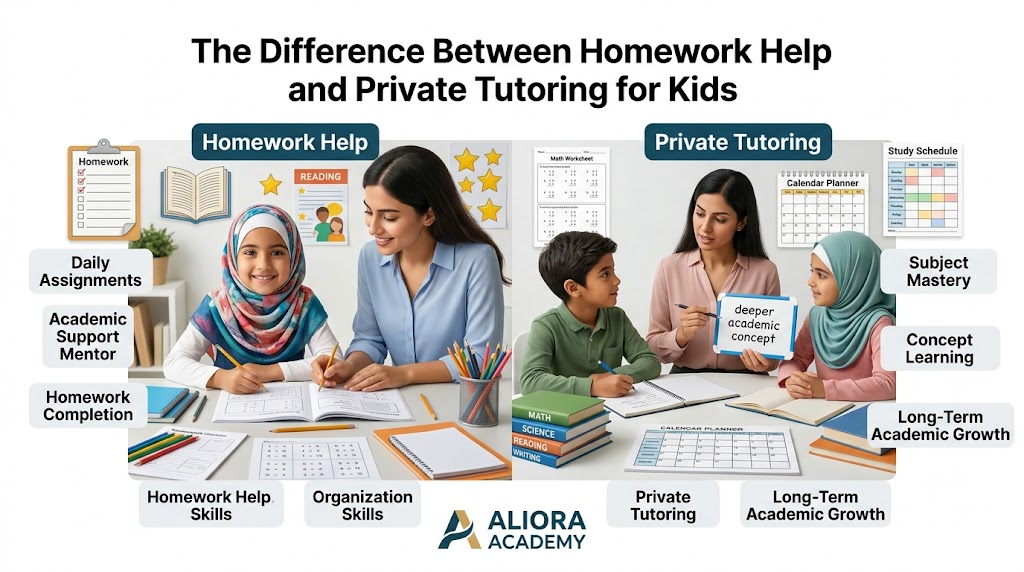
Homework help focuses on assisting students with daily assignments, ensuring they understand instructions and complete tasks correctly. It is practical, immediate, and centered on assignment completion support. In contrast, private tutoring focuses on long-term academic development, deeper subject mastery, and exam preparation.
Homework help is especially useful for Grade 3, Grade 4, and Grade 5 students who need structured guidance to complete schoolwork without confusion. It builds consistency and reduces daily stress. Private tutoring, however, goes beyond homework and focuses on concept-building in subjects like advanced math, science reasoning, and essay writing.
Another key difference is time and purpose. Homework support is short-term and task-based, while tutoring is long-term and curriculum-driven. Many parents combine both approaches depending on their child’s needs.
For example, Aliora Academy’s homework help program focuses on helping children complete assignments efficiently while also improving understanding step by step. This makes it suitable for students who need daily academic structure.
In simple terms:
- Homework help = “Complete today’s work correctly”
- Private tutoring = “Master the subject deeply over time”
What role does structured academic support play in Grade 3, Grade 4, and Grade 5 learning?
Structured academic support plays a critical role in building strong learning habits during elementary school years. At this stage, children are still developing study skills, time management, and independent thinking abilities.
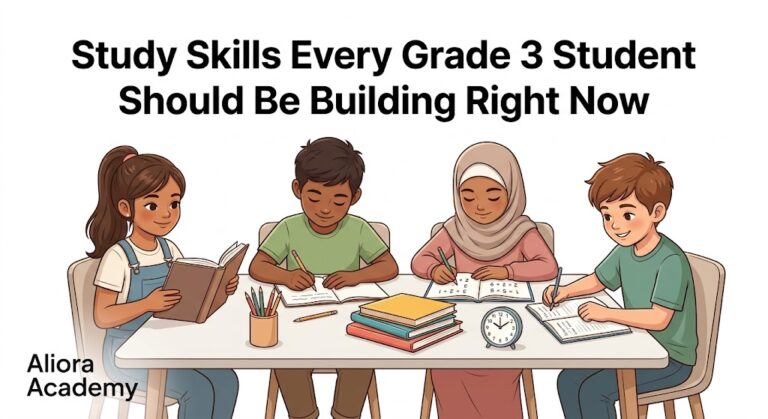
For Grade 3 students, structured support focuses on reading practice, basic math, vocabulary, and understanding simple instructions. Many children at this level struggle because they are still adapting to formal school expectations. A dedicated homework help for Grade 3 program can provide exactly this foundational support.
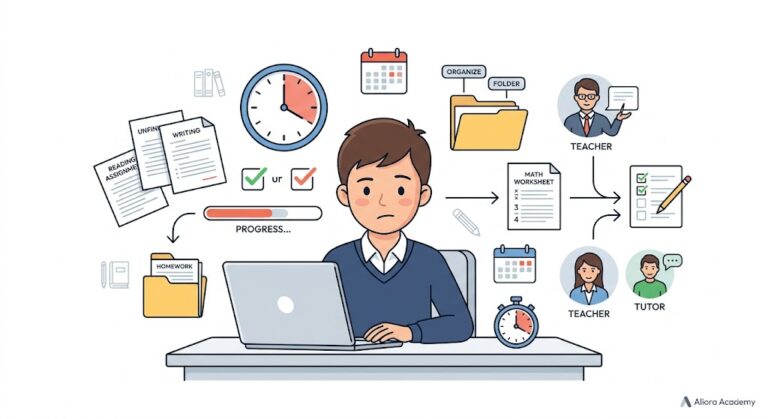
For Grade 4 students, the focus shifts toward independence. They start handling writing tasks, reading comprehension, and small projects. At this stage, organization skills become important, especially in managing multiple subjects. That's why homework help for Grade 4 is designed to help students organize their work and improve problem-solving skills step by step.
For Grade 5 students, academic expectations increase significantly. Students begin working on research assignments, essay writing, and more advanced math concepts. Without proper guidance, they often feel overwhelmed by workload. Homework help for Grade 5 supports students in handling these complex assignments and preparing for middle school expectations.
Key benefits of structured support include:
- Better homework completion rates
- Improved academic confidence
- Stronger independent learning habits
- Reduced homework stress at home
How can parents support homework without replacing their child’s learning responsibility?
Parents play a major role in shaping a child’s attitude toward homework, but over-involvement can reduce independence. The goal is to guide, not complete the work for them. This balance is essential for developing independent learning skills.
A common mistake is solving problems directly for the child. Instead, parents should focus on asking guiding questions such as “What do you think comes next?” or “Can you check your notes?” This builds critical thinking.
A practical approach includes:
- Setting a fixed homework time
- Creating a distraction-free study space
- Monitoring progress without interfering
- Encouraging effort instead of only correct answers
Aliora Academy’s guide on how to help your child complete homework explains how parents can support learning without creating dependency.
For example, a Grade 4 student improving organization skills learned to use a simple checklist for daily tasks. Initially, the parent helped structure the list, but over time the child began managing it independently, improving both confidence and responsibility.
This balance ensures children develop discipline while still receiving the support they need.
Why do some students avoid homework and how can motivation be improved?
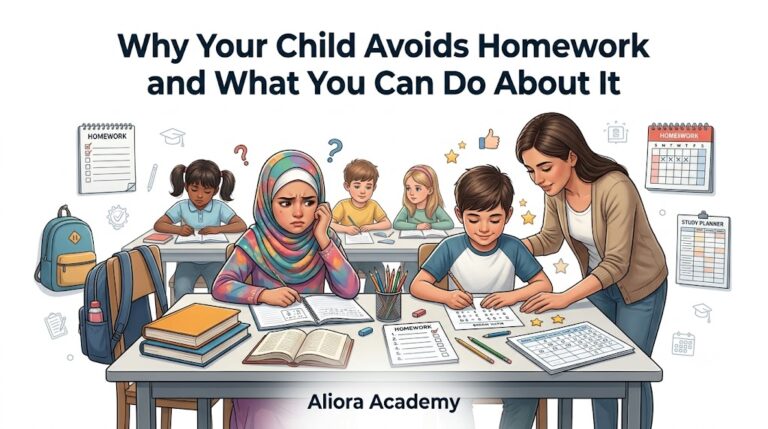
Students often avoid homework due to lack of understanding, boredom, or fear of failure. When assignments feel too difficult, children naturally delay or avoid them. This is a common issue in elementary education.
Another reason is lack of motivation. If students do not see purpose in their work, they may not take it seriously. This is where learning motivation strategies become important in building interest.
Solutions include:
- Breaking tasks into smaller, achievable steps
- Using real-life examples to explain concepts
- Rewarding effort instead of only results
- Providing consistent academic support
For instance, a Grade 5 student managing multi-subject homework improved performance after learning how to divide tasks into daily sections instead of completing everything at once. This reduced pressure and improved focus.
If you’re seeing ongoing resistance, it’s worth checking the signs your child needs extra homework support this school year to identify whether deeper intervention is needed.
Real-Life Examples of Homework Challenges and Solutions
Example 1: Grade 3 Student Struggling with Daily Homework
A Grade 3 child was taking more than two hours to complete basic reading and math tasks. The challenge was weak reading comprehension and confusion in instructions. With structured homework support and step-by-step guidance, the student began finishing assignments within normal time and showed improved reading confidence.
Example 2: Grade 4 Student Improving Organization Skills
A Grade 4 student often forgot assignments and submitted incomplete work. The solution involved creating a simple homework planner and teaching task prioritization. Within weeks, the student developed better organization skills and became more independent in managing schoolwork. For more strategies, check out online homework help for Grade 3 students which also applies helpful planning techniques for older grades.
Example 3: Grade 5 Student Managing Multi-Subject Homework
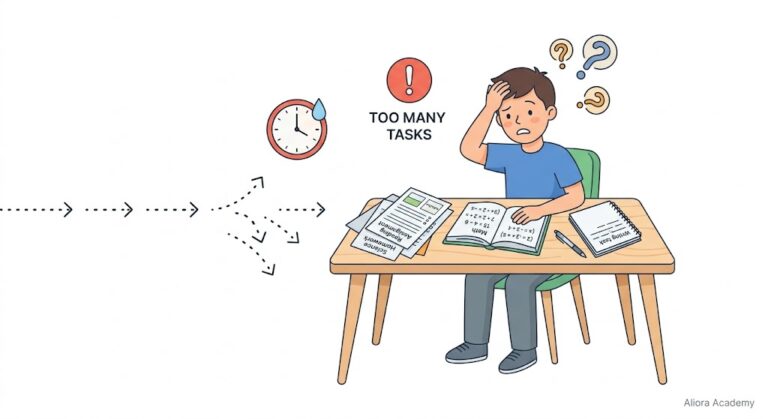
A Grade 5 student struggled with balancing math, science, and writing assignments. The solution was time-blocking study sessions and dividing tasks into smaller goals. This improved student productivity and reduced homework stress significantly. Families dealing with similar multi-subject challenges may find useful insights in online homework help programs for elementary students.
FAQs
How can I help my child finish homework faster?
Focus on creating a fixed routine, removing distractions, and breaking tasks into smaller parts. Avoid doing the work for them. Encourage short breaks and consistent study habits to improve speed naturally.
What should I do if my child refuses to do homework?
First identify the reason—confusion, stress, or lack of understanding. Then provide calm guidance, simplify instructions, and offer support without pressure. In some cases, structured homework help can improve engagement.
How does online homework help improve academic performance?
Online homework support provides step-by-step guidance, helping students understand assignments clearly. It improves academic confidence, builds consistency, and strengthens independent learning skills over time.
Conclusion
Understanding the difference between homework help and private tutoring for kids helps parents choose the right learning support for their child. Homework help focuses on daily assignment completion, while tutoring builds deeper academic understanding.
When combined with strong study habits, time management, and structured guidance, children develop better confidence and independence. Whether it is Grade 3 reading practice, Grade 4 organization skills, or Grade 5 advanced assignments, consistent support plays a key role in academic success.
Aliora Academy continues to support students in building strong learning foundations through structured academic guidance and practical homework assistance designed for real classroom needs.