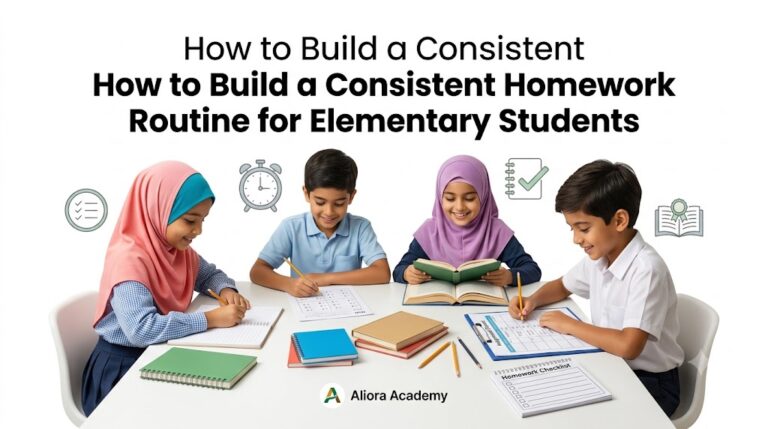
How to Help Your Child Complete Homework Without Daily Struggles
How to Help Your Child Complete Homework Without Daily Struggles
Many parents want to help your child complete homework successfully, but every evening turns into a battle. A child sits at the table, gets distracted, forgets instructions, or spends hours on assignments that should take much less time. Over time, homework becomes stressful for both students and parents.
Homework challenges are common in elementary school. Some children struggle with organization, while others find certain subjects difficult. Many students simply do not have strong study habits yet. As a result, unfinished assignments, frustration, and declining confidence can become part of the daily routine.
The good news is that homework struggles are usually not a sign of laziness or lack of ability. In most cases, students need better routines, clearer strategies, and the right level of support. When parents understand the causes behind homework difficulties, they can guide children more effectively.
This article explains practical ways to help your child complete homework, reduce stress, build independence, and improve academic success. It also explores how structured academic support can benefit students in Grades 3, 4, and 5.
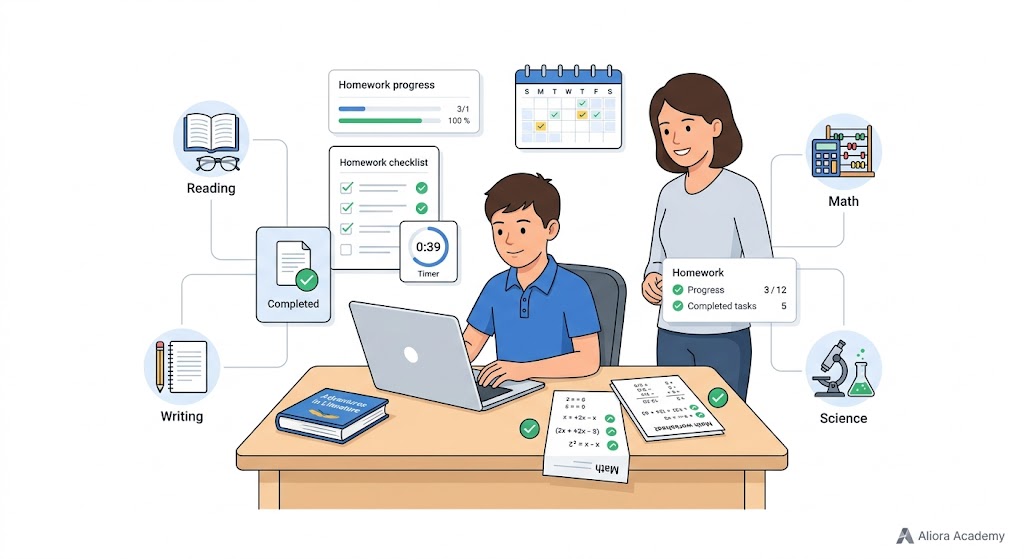
Why Does My Child Struggle to Complete Homework?
Many children struggle with homework because they are still developing important executive functioning skills. These include planning, organization, focus, and time management.
Some students understand classroom lessons but forget instructions when they get home. Others become overwhelmed when assignments involve multiple steps or several subjects.
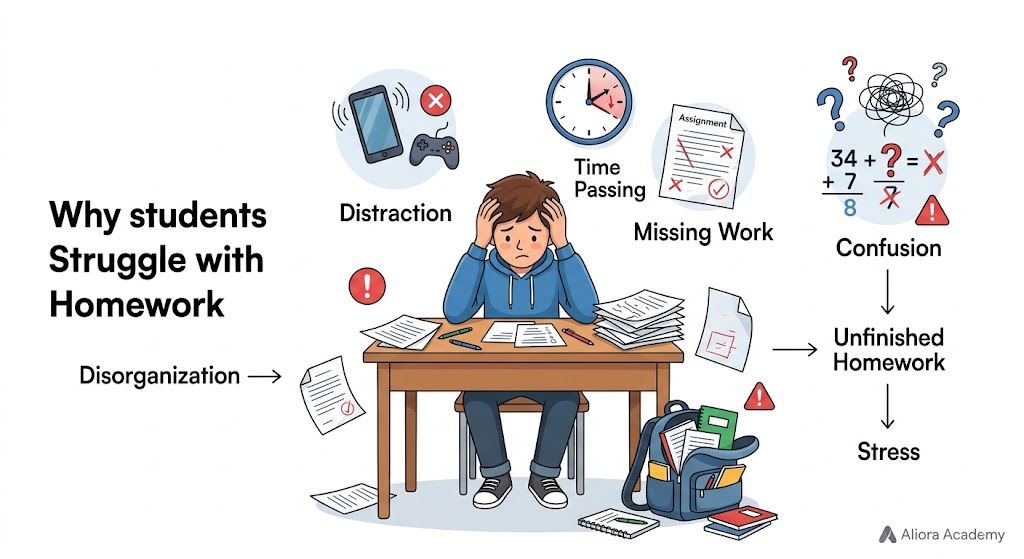
Common reasons children struggle with homework include:
- Difficulty understanding assignment instructions
- Poor time management
- Lack of organization
- Limited concentration
- Academic skill gaps
- Homework anxiety
- Excessive distractions at home
A Grade 3 student may know how to solve math problems in class but become confused when working independently at home. Without guidance, simple assignments can feel difficult.
Parents should also remember that children learn at different speeds. Comparing one child to another often increases pressure instead of improving performance.
When the root cause is identified, it becomes much easier to provide effective support and create positive learning habits.
Why Is Homework Completion Important for Academic Success?
Homework is more than just extra schoolwork. It gives students opportunities to practice concepts learned in class and strengthen understanding through repetition.
Regular homework completion helps students develop:
- Stronger study habits
- Better problem-solving abilities
- Academic responsibility
- Time management skills
- Independent learning habits
When students consistently complete assignments, they gain confidence in their abilities. This confidence often carries into classroom participation, tests, and long-term academic growth.
Homework also allows teachers to identify areas where students need additional support. Missing assignments can hide learning gaps that may become larger over time.
Students who learn to manage homework effectively often transition more smoothly into higher grade levels where academic expectations increase.
For families seeking additional guidance, Aliora Academy’s online homework help through the Homework Help page can provide structured academic assistance while encouraging independent learning.
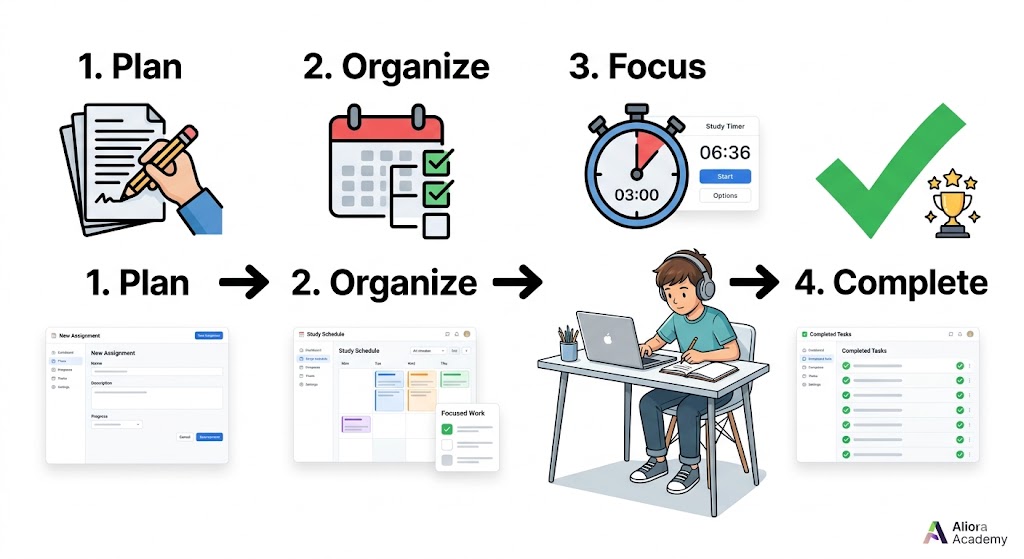
How Can Parents Support Homework Without Doing It for Their Child?
One of the biggest mistakes parents make is completing homework for their child. While this may solve an immediate problem, it prevents students from developing essential learning skills.
Parents should act as guides rather than problem solvers.
Effective support strategies include:
- Clarifying instructions
- Breaking large tasks into smaller steps
- Asking guiding questions
- Encouraging effort
- Monitoring progress
For example, instead of providing the answer to a math problem, ask:
- What did your teacher show you?
- Which step comes first?
- Can you explain your thinking?
This approach promotes critical thinking and independent problem-solving.
Parents should also praise effort, persistence, and improvement rather than focusing only on correct answers. Children become more motivated when they feel their hard work is recognized.
Students who need regular structured assistance may benefit from a homework help program that reinforces classroom learning while encouraging responsibility.
What Homework Routine Helps Children Stay Consistent?
A predictable homework routine removes much of the daily stress associated with assignments.
Children perform better when they know exactly when and where homework will be completed.
An effective homework routine includes:
- A consistent homework time
- A quiet study space
- Limited distractions
- Necessary school supplies
- Scheduled breaks
For example, a student may spend:
- 10 minutes organizing materials
- 25 minutes working
- 5-minute break
- Repeat as needed
Consistency trains the brain to associate a specific time and location with focused learning.
Parents should avoid scheduling homework immediately before bedtime when students are tired and less productive.
Over time, routines help children develop stronger self-management skills and greater academic independence.
Why Do Some Students Take Longer to Finish Assignments?
Not all homework delays are caused by academic difficulties.
Some students spend excessive time on homework because they:
- Get distracted easily
- Perfectionism slows their work
- Lack organization
- Misunderstand instructions
- Work inefficiently
A Grade 4 student might spend more time searching for materials than actually completing assignments. Improving organizational habits can significantly reduce homework time.
Parents can help by teaching students to:
- Review assignment requirements first
- Gather materials before starting
- Prioritize difficult tasks
- Track deadlines
- Use simple checklists
These productivity habits often improve both homework quality and completion speed.
Students needing additional structure may benefit from homework help for Grade 4 available through Aliora Academy’s Grade 4 Homework Help resources.
How Can Students Become More Independent Learners?
Independence is one of the most important goals of homework.
Students should gradually take ownership of their learning rather than relying entirely on adults.
Parents can encourage independence by:
- Allowing children to solve problems first
- Teaching planning skills
- Using homework checklists
- Encouraging self-assessment
- Setting realistic goals
Example:
Instead of asking, “Did you finish your homework?” ask:
“What assignments do you need to complete today?”
This simple change encourages responsibility and planning.
Independent learners are better prepared for future academic challenges because they understand how to manage their own workload and seek help appropriately.
Developing these habits early supports long-term classroom success and academic confidence.
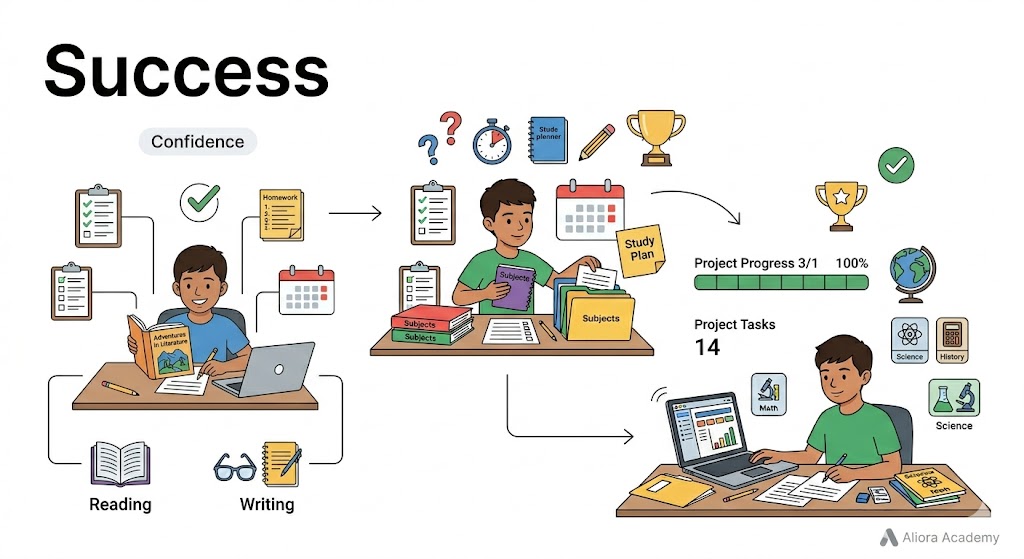
How Can Homework Help Support Grade 3, Grade 4, and Grade 5 Students?
Homework needs change as students move through elementary school.
Grade 3 Homework Example
A Grade 3 student struggles to complete reading assignments and basic math homework on time.
Challenge:
The student becomes distracted and forgets assignment instructions.
Solution:
A structured homework schedule, reading practice, and assignment review improve consistency.
Outcome:
Homework completion improves and the student gains confidence.
Families seeking targeted support can explore homework help for Grade 3 designed specifically for younger elementary learners.
Grade 4 Homework Example
A Grade 4 student frequently loses worksheets and misses assignment deadlines.
Challenge:
Poor organization affects academic performance.
Solution:
The student begins using folders, planners, and homework checklists.
Outcome:
Assignment completion becomes more reliable and stress decreases.
Grade 5 Homework Example
A Grade 5 student struggles to balance research projects, essay writing, science assignments, and advanced math tasks.
Challenge:
Managing multiple subjects independently.
Solution:
The student learns planning techniques, subject prioritization, and weekly scheduling.
Outcome:
Improved academic organization and stronger middle-school readiness.
Students facing these challenges can benefit from homework help for Grade 5 focused on multi-subject academic support and independent learning skills.
How Can Parents Reduce Homework Stress at Home?
Homework should support learning, not create daily conflict.
Parents can reduce stress by creating a positive learning environment.
Helpful strategies include:
- Staying calm during homework sessions
- Avoiding arguments about mistakes
- Providing encouragement
- Setting realistic expectations
- Celebrating progress
Children are more willing to engage with homework when they feel supported rather than pressured.
Parents should also remember that occasional mistakes are part of the learning process. Growth happens when students have opportunities to think, struggle appropriately, and improve.
A balanced approach helps children view homework as a learning opportunity rather than a daily burden.
FAQs
How can I help my child finish homework faster?
Focus on organization, reduce distractions, create a consistent homework routine, and break large assignments into smaller tasks. Better planning often improves efficiency more than simply working longer.
What should I do if my child refuses to do homework?
Identify the underlying reason. Some children feel overwhelmed, while others struggle academically. Start with small goals, offer encouragement, and provide structured support rather than punishment.
How does online homework help improve academic performance?
Online homework support provides guidance, assignment clarification, study strategies, and subject-specific assistance. It can help students strengthen understanding while building independent learning habits.
Conclusion
Learning how to help your child complete homework successfully requires patience, structure, and consistency. Most homework challenges stem from organization issues, weak study habits, limited time management skills, or a lack of confidence rather than a lack of ability.
By creating routines, teaching organizational strategies, encouraging independent learning, and providing appropriate academic support, parents can reduce homework stress and improve learning outcomes.
Strong homework habits help students develop responsibility, academic confidence, productivity skills, and long-term success in school. Whether a child is in Grade 3, Grade 4, or Grade 5, consistent support and positive learning habits can make homework a valuable part of their educational journey.