Study Skills Every Grade 3 Student Should Be Building Right Now
Study skills for Grade 3 students are becoming more important than ever because this is the stage where children start moving from “learning to read” to “reading to learn.” A common situation many parents face is a child sitting at the dining table for hours, struggling to finish homework, getting distracted easily, or needing constant help for even simple tasks. This creates stress for both the child and the parent and often leads to frustration during homework time.
At this stage, children are still developing independent learning habits, so they may not understand how to organize tasks, manage time, or approach assignments step by step. Common causes include lack of structured routine, weak reading comprehension, and limited attention span. Without proper guidance, these small gaps can grow into long-term academic struggles.
Building strong study habits early helps children become confident learners who can manage assignments, understand instructions, and complete work with less pressure. With the right guidance and structured support like Aliora Academy’s academic programs, students gradually learn how to study smarter, not harder.
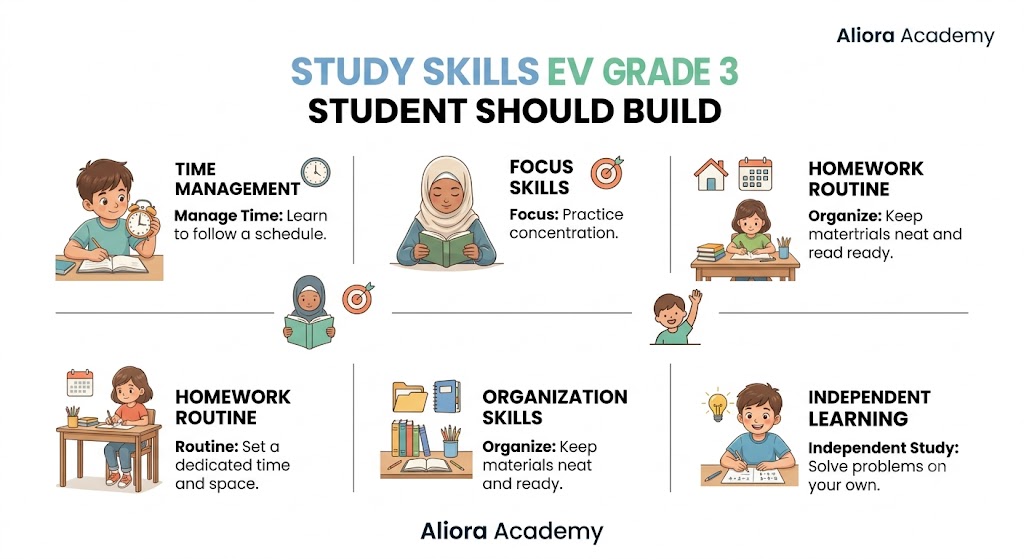
Why are study skills important for Grade 3 students?
Grade 3 is a foundation year where students transition into more structured learning. Subjects like math, English, and science start requiring more focus, reading, and understanding rather than memorization alone. Without strong study habits, children often feel overwhelmed.
Children at this stage benefit from learning simple systems such as:
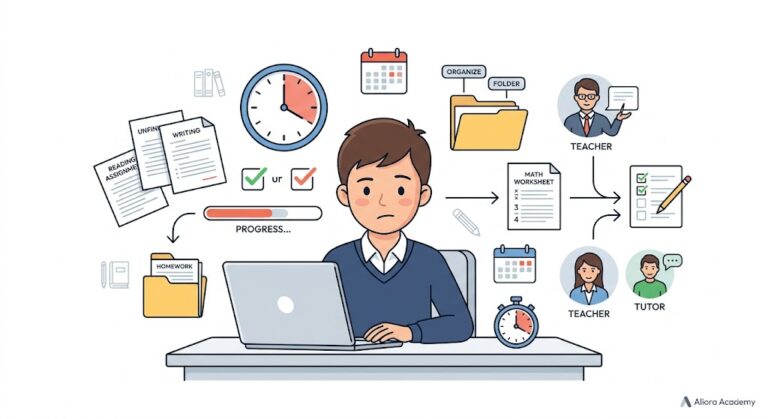
- How to break homework into small steps
- How to manage time after school
- How to check their own work
- How to focus for short study periods
These skills reduce confusion and improve homework completion speed. When students develop these habits early, they perform better not only in Grade 3 but also in Grade 4 and Grade 5.
For example, a child who learns to organize homework in a fixed order (easy → medium → difficult) becomes more confident and less stressed during study time.
Parents looking for structured guidance can explore homework help for Grade 3 to support early academic development.
Why do Grade 3 students struggle with homework completion?
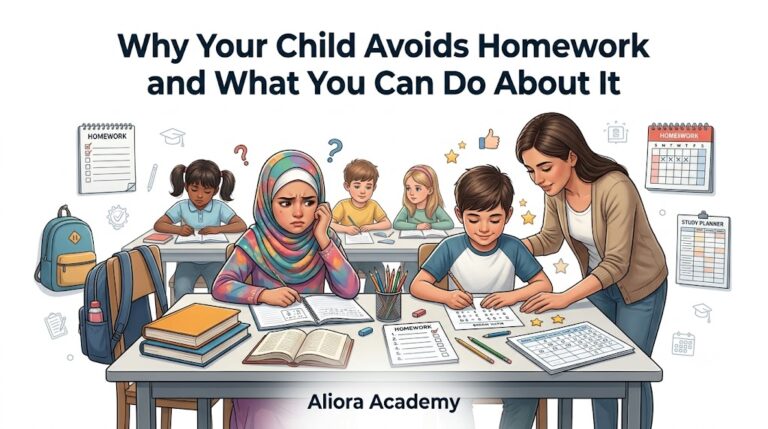
Many Grade 3 students struggle with homework not because they are weak learners, but because they lack proper study structure. They often do not know where to start or how to stay focused.
Common reasons include:
- Poor time management skills
- Short attention span
- Difficulty understanding instructions
- Lack of reading confidence
- No fixed homework routine
For instance, a child may spend 20 minutes just looking at a math question without knowing how to begin. This is not a knowledge problem; it is a study skill gap.
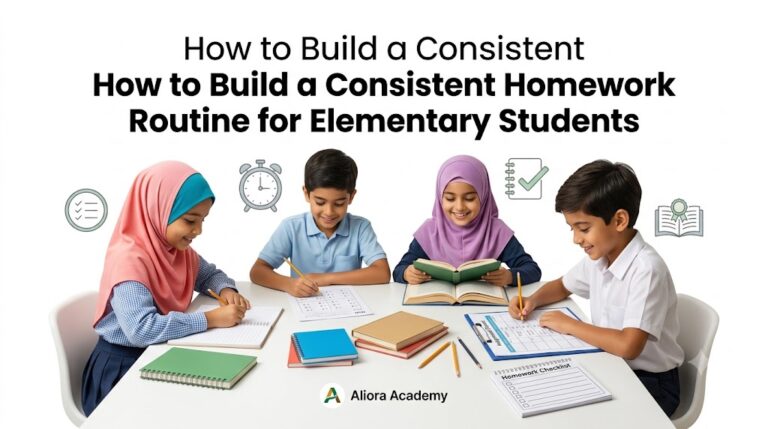
To solve this, parents should create a simple daily structure:
- 10 minutes break after school
- 30–45 minutes focused homework time
- Short review before finishing
Consistent routines help children understand expectations and reduce resistance to homework over time.
How can parents support study habits without doing homework for their child?
Parents play a critical role in developing independent learners, but helping does not mean doing the work for the child. Instead, the focus should be on guidance and structure.
Effective strategies include:
- Sitting nearby but allowing the child to attempt answers
- Asking guiding questions instead of giving answers
- Encouraging short breaks during long tasks
- Praising effort, not just correct answers
A simple example is when a child struggles with a reading assignment. Instead of explaining everything, the parent can ask, “What do you think this paragraph is saying?” This builds critical thinking.
Over time, this approach strengthens academic independence and reduces homework stress at home.
Parents who want structured methods can explore a homework help program designed to build independent learning habits step by step.
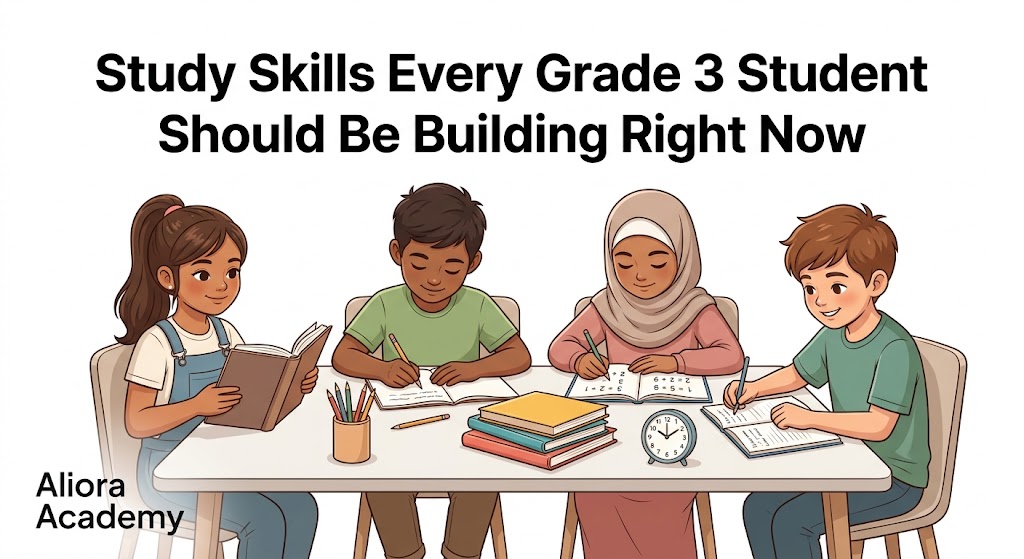
How can Grade 3 students improve focus and organization skills?
Focus and organization are core study skills for Grade 3 students that directly affect homework performance. Without them, even simple tasks take too long.
Students can improve by practicing:
- Keeping a clean study space
- Using a checklist for homework tasks
- Working in short focused sessions (10–15 minutes)
- Keeping books and materials organized
For example, a child doing vocabulary homework can first write all words, then focus only on meanings, and finally revise. This step-by-step method reduces confusion.
Teachers and parents should also encourage self-checking habits, where students review their work before submission. This builds responsibility and reduces repeated mistakes.
How does structured academic support improve learning in Grade 3?
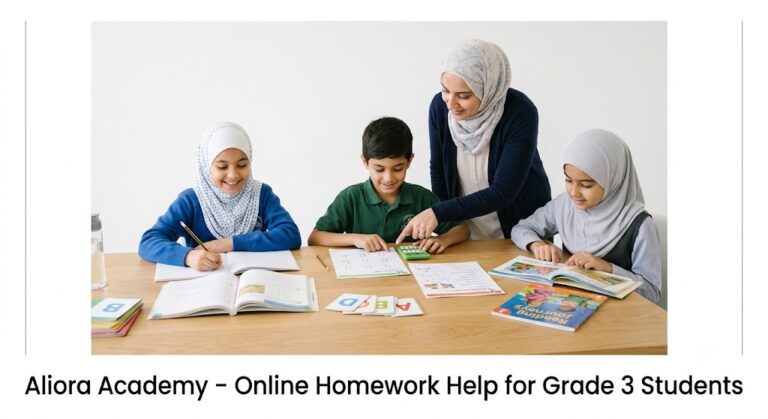
Structured support plays a major role in shaping strong learners. When students receive guided assistance, they learn how to approach different types of homework correctly instead of guessing.
For example:
- Math homework becomes easier when steps are explained clearly
- Reading tasks improve with guided comprehension practice
- Writing assignments improve through structured feedback
A Grade 3 student struggling with daily homework can benefit from consistent guidance that focuses on understanding rather than memorization.
Programs like online homework support help children build these skills gradually through expert-led practice sessions. To see how study skills evolve in later grades, you can also explore Grade 4 homework help and academic support for Grade 5.
Real-Life Learning Examples
Example 1: Grade 3 student struggling with homework completion
A student was taking over two hours to finish simple assignments. The issue was lack of structure. After introducing a fixed routine and step-by-step guidance, homework time reduced significantly, and the child became more confident.
Example 2: Grade 4 student improving organization skills
A Grade 4 student often forgot assignments. After learning to use a checklist and planner, the student started submitting homework on time and improved overall academic performance. This builds on the foundation established with strong homework help for Grade 3.
Example 3: Grade 5 student managing multiple subjects independently
A Grade 5 student struggled with different subjects daily. After learning time-blocking techniques and subject-wise planning, the student began handling workload independently and reduced stress. These advanced skills are often refined through homework help for Grade 5.
FAQs
How can I help my child finish homework faster?
Create a fixed routine, reduce distractions, and break homework into smaller parts. Encourage short focused sessions instead of long tiring study hours.
What should I do if my child refuses to do homework?
Check for the cause—stress, confusion, or difficulty understanding. Use simple guidance, not pressure. Make homework time consistent and calm.
How does online homework help improve academic performance?
It provides structured guidance, step-by-step explanations, and consistent practice, helping students understand concepts instead of memorizing answers.
Conclusion
Strong study skills for Grade 3 students are essential for building long-term academic success. When children learn how to manage time, stay organized, and work independently, homework becomes easier and less stressful.
Parents play a key role in shaping these habits, but structured guidance and consistent routines make the biggest difference. With proper support, students gradually build confidence in math, reading, writing, and overall learning.
Early investment in study habits leads to stronger performance in Grade 4, Grade 5, and beyond, creating a solid foundation for lifelong academic success.